
India's pharmaceuticals and medical devices industries are still hopeful that trade negotiations with the US could cut a fairer deal for both sides, after President Donald Trump announced a 25 per cent tariff rate on India on a social networking platform without divulging the finer details.

According to the Department of Pharmaceuticals' annual report for 2024-25, India imported medical devices worth $8.1 billion, while exports stood at $3.7 billion in the financial year 2023-24 (FY24)

This will be the first full-year Budget of the BJP-led National Democratic Alliance government since it came to power for a third consecutive term in July last year.
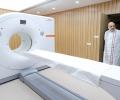
Do we have enough trained oncologists and medical professionals in India to man these over 4,500 beds in the public sector?

The Centre is considering a proposal on increasing coverage under the Ayushman Bharat scheme to Rs 10 lakh from the current Rs 5 lakh.
The Centre has appointed senior IAS officers Vumlunmang Vualnam and Neeraj Mittal as new secretaries in the ministry of civil aviation and the department of telecommunications respectively in a major secretary-level bureaucratic reshuffle, a government order stated.

The top 300 pharmaceutical brands in the country will now bear a quick response (QR) code on their packaging to rein in spurious drugs and ensure better traceability.

The department of personnel and training has asked the Union Public Service Commission to recruit such specialists through "lateral entry" mode in 12 government departments/ministries, he said.
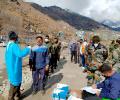
The minister will review the COVID-19 situation at 11:30 am on Wednesday 'considering the international scenario', they said.

The Union home ministry said several steps have been taken to augment the production and supply of Remdesivir injections from 38.80 lakh units per month to 74 lakh units per month by early next month, and asked the states to ensure its seamless supply and transport.

Abdul Aala Fazili was arrested from his Humhama residence as the SIA conducted searches at several locations in the city as part of its crackdown on terror and anti-national networks, the official said.

He has been appointed as the TRAI chief for three years or till he attains the age of 65.

He urged people not to panic and clarified that there was no change in the guidelines for international air travel so far.

The Union health ministry on Friday said license has been given to five more manufacturers for production of Amphotericin-B, used in the treatment of black fungus, and they will start producing 1,11,000 vials of the drug per month from July.

India's drug regulator has initiated a probe and sought further details from the WHO after the global health body issued an alert that cough syrups manufactured by an Indian firm could potentially be linked to the death of children in Gambia.

The transition of Class A and Class B medical device makers to the licensing regime by October 1 seems to be an uphill task with several small and medium manufacturers saying they are still awaiting the audit from the government authorities. If the licenses don't come through, either due to lack of audits or MSME units not clearing the audits, then a few thousand small-scale medical device units will face the issue of business continuity in three weeks. Class A medical devices are those with low to moderate risk to the patient or user (surgical dressings for example), while Class B medical devices refer to devices with moderate risks that require special controls (catheters for example).

India's medical devices imports surged 41 per cent to touch Rs 63,200 crore in 2021-22, led by a 48 per cent year-on-year (YoY) jump in imports from China to Rs 13,538 crore, the commerce ministry data analysed by the Association of Indian Medical Device Industry (AiMeD) has showed. Local industry players say this has led to several small and medium units to shut shop. Rakesh Vaid of Usha Fabs, a garments exporter, had started making N95 masks in his Gurgaon factory during the peak of the Covid-19 pandemic.
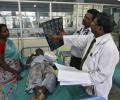
The government is targeting 1,200 technical collaborations between Japanese companies and Indian investors for over Rs 42,000 crore, 200 joint ventures with overseas investors for Rs 14,000 crore, and another Rs 14,000-crore investment from about 50 multinational companies.
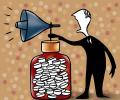
'Gift-giving' - from free dinners and drug samples to promotional merchandise - seems to be driving drugmakers' marketing - a marketing prescription deeply entrenched in the industry. This is a well-oiled racket that sees pharmaceutical (pharma) companies 'gifting' doctors to push their respective drugs under the guise of marketing. But is there a cure in sight to end this unhealthy alliance? The recent controversy following the income-tax raids on Bengaluru-based drugmaker Micro Labs, makers of popular paracetamol brand Dolo-650, has brought this to the fore, again.
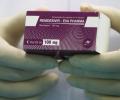
Remdesivir is considered a key anti-viral drug in the fight against Covid-19. In addition, the government has taken three steps to ensure easy access of hospitals and patients to Remdesivir.
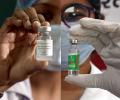
Several states and UTs including Delhi, Maharashtra, Karnataka and Telangana have decided to opt for global tenders for procurement of anti-coronavirus shots with the domestic supply falling short to meet the rising demand.

The smaller players in the business - combined under the Small Pharmaceutical Industries Confederation - have raised objections to the proposed Uniform Code of Pharmaceutical Marketing Practices.

'The Centre is planning to procure five million vials of Remdesivir ahead of the third wave. What's better is that this time, the government is paying us in advance,' said a senior executive of a Mumbai-based pharma player which makes Remdesivir. Sohini Das reports.
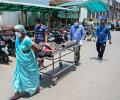
With the world's worst outbreak of COVID-19 severely straining the health system in the country, the government has made sweeping changes in the way departments procure medical supplies, including allowing procurement of the same item at different rates.

The panel of representatives from various ministries and chaired by B K Singh, director, department of pharmaceuticals, has suggested the government negotiate prices of patented medicines based on reference prices of such drugs in other countries such as Britain, Canada, France, Australia and New Zealand.

India is going into the longest lockdown in the world, with the least amount of notice given to its people and the least preparation by its government.
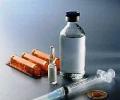
Department of Pharmaceuticals asks NPPA to review Eli Lilly product prices.

Recently, Supreme Court asked the government not to alter the existing pricing mechanism for essential medicines.

The department of pharmaceuticals turned down a review petition by drugmaker Cipla against a price fixation order by the National Pharmaceutical Pricing Authority, slashing the price of Dytor Plus, a medicine for kidney and heart ailments.
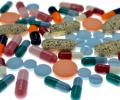
Indian pharmaceutical companies are heavily dependent on China to source fermentation-based active pharmaceutical ingredients and intermediates to manufacture these medicines, but the coronavirus outbreak there has disrupted the supply.

Sadananda Gowda, the minister, also Bengaluru North MP, drove off in an official car with out undergoing institutional quarantine as mandated by the Karnataka government for air travellers coming from high COVID-19 prevalence states after arriving by a commercial airline flight, services of which resumed after two months.


India will export anti-malarial drug hydroxychloroquine, high in demand globally, only to foreign governments and not to private companies, as the product is under prohibited or banned category of exports, sources said. Although exports of this medicine is completely banned, India has decided to export this anti-malarial drug in sync with its global commitment to deal with the coronavirus pandemic.

The pharmaceutical companies may suffer sales loss of Rs 3,000 crore (Rs 30 billion) if the government's span of control increases, as proposed in the new pricing policy for the medicines, a section of the industry said on Monday.

Ties between India and the United States have been strained in recent years because of trade policies and patent disputes.
Exports of 13 APIs - including paracetamol, tinidazole, metronidazole, vitamin B1, vitamin B6, vitamin B12, acyclovir, progesterone - along with formulations made from these APIs, would be restricted.

Concerned over the recent takeover of some firms by MNCs, the domestic pharmaceutical industry has asked the government to protect and promote it by making available funds for research and development.
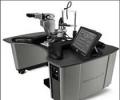
While the manufacturers want higher Customs duty to make imports costlier and encourage the domestic industry, the department has called for a reduction in the duty to bring down the cost of imported devices.

 © 2026 Rediff.com - Advertise with us - Disclaimer - Privacy Policy - Sitemap - Feedback - About us - Terms of use - Grievances