
As quick commerce gains ground, emerging direct-to-consumer (D2C) brands are betting big on digital channels to drive growth. According to Aman Gupta, co-founder of wearables brand BoAt, new-age brands in India have been expanding at a much faster pace than expected, driven by digital channels like quick-commerce. "Investors doubted the potential of D2C brands when we started, but today there are multiple brands in the startup market that are growing on the shoulders of these digital channels," Gupta said while addressing a session at Razorpay's D2C and Retail Summit recently.

Eyewear major Lenskart is gearing up to launch its first pair of AI-powered smart glasses by the end of December, marking a step towards positioning itself as a technology-led lifestyle brand, according to people familiar with the matter.

Vivek Biyani, the nephew of retail veteran Kishore Biyani, will launch a retail chain focused on direct-to-consumer (D2C) brands under the name Broadway, along with actor Rana Daggubati, Apurva Salarpuria of Salarpuria Group and Anuj Kejriwal of Anarock Retail. This new retail format is a multi-brand outlet, which will house D2C brands under one roof. The first store is set to open in Delhi in August this year, and subsequent store launches in Hyderabad and Mumbai are slated in September 2024 and March next year, the company said in its release.

'Stop fearing 'No' and build your empire. 'By embracing rejection, you gain clarity, data and a stronger team, paving the way for inevitable growth,' Mamaearth Co-Founder Ghazal Alagh tells aspiring entrepreneurs.

As quick-commerce players find their foothold among consumers, brands are all set to step up their presence on these platforms.

'Instead of the government and telecom operators solving the mess of their own creation, they're telling us we need to give access to our phones perpetually.'

Eyewear retailer Lenskart plans to add 450 stores in the current financial year, its fastest expansion in three years, as the company prepares for a public listing that could value it at up to $10 billion. The addition would take Lenskart's store count to more than 3,150 across 14 countries, representing a 34 per cent rise from the 334 stores opened last year.

Skincare gift combos, de-tan kits, makeup face palettes, healthy chocolate combos, scent hampers, books and bookmarks, silver bands, rings, gold pendants...

Two young men jostle in a rickshaw as it clatters along a narrow, bustling lane of North Kolkata, each with a leg dangling over the side of the vehicle, a bulging sack of cosmetics nestled between them. The protagonists here are the founders of Emami - Radhe Shyam Agarwal and Radhe Shyam Goenka - childhood friends who gave up cushy corporate jobs to build a fast-moving consumer goods (FMCG) company. From a 200-square-foot rented space on Muktaram Babu Street in North Kolkata, brand Emami stepped into the competitive world of FMCG 50 years back, armed with just three products: Vanishing cream, talcum powder, and cold cream.

'We have reached 70 million monthly active users during this festival season, which is another great milestone for us.'

'Unless a comedian is involved in something society deems unforgivable...'

India's e-commerce market alone is projected to reach $200 billion by 2026, making it a prime industry for ambitious entrepreneurs, explains rediffGURU Harsh Bharwani.

Hit by inflation, higher input costs and pricing measures, fast-moving consumer goods companies are expected to see a contraction in their gross margin and a modest-to-flat operating profit in the October-December quarter. Several FMCG makers are likely to log a low single-digit rise in their revenue, returning to the cycle of value-driven growth.
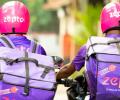
'Domestic investors are opening up to the idea of high-growth Internet companies as a pool of value creation.' 'They like the execution that they see with Zepto, and for us, that is the most important factor.'
The FMCG industry hopes for a revival in consumption growth in 2025 with some 'green shoots' already visible, after having a challenging year amid escalating input costs and a double-digit rise in food inflation, which ultimately slowed down the pace of the urban market growth in the second half of 2024. Soaring prices of commodities such as palm oil, coffee, cocoa and wheat forced FMCG players to go for a hike of 3 to 5 per cent or resort to shrinkflation by reducing pack sizes and grammage to retain attractive price points, fearing a volume loss.

Logistics major Delhivery has had promising Q2FY25 results. The Q2FY25 consolidated revenue was Rs 2,190 crore (up 0.8 per cent quarter-on-quarter or Q-o-Q and 12.8 per cent year-on-year or Y-o-Y). Express parcel revenue was Rs 1,300 crore, (up 1.7 per cent Q-o-Q/7.3 per cent Y-o-Y) alongside better yield (+5 per cent Y-o-Y) in the segment.

From its recent lows, the stock of consumer major Marico is up 7 per cent on the back of a better-than-expected June quarter performance and robust outlook. In a pre-quarter update, the management indicated that domestic volume growth should witness an improvement in FY25, while other segments (growth portfolio, international business) too would see traction going ahead. The near-term trigger is strong sales and operating performance for Q1FY25.

Rasna, which became a household name in the 80s and 90s and is still ruling the pre-mix market, is now looking at overseas franchise arrangements for manufacturing abroad. As part of the arrangement, the franchisee would invest in the plant and machinery and it would also take care of day-to-day operations. Rasna would supply the pre-mix, technical know-how and some financial support.

There are conflicting views on Delhivery. The logistics player's results for the July-September quarter (Q2FY24) are being interpreted as good by some analysts and disappointing by others. As India's largest listed logistics player, the company stands to benefit from the formalisation across the mostly unorganised logistics space. Delhivery provides solutions to 23,113 customers, including e-commerce marketplaces, direct-to-consumer e-tailers, and enterprises across verticals.

The fresh meat and seafood delivery startup Licious plans to set up 500 stores nationwide within the next five years as part of an omnichannel strategy. The aim is to attract new users in the offline channel and encourage them to transact online as well. The move would also help the company in its efforts to achieve profitability and go for an initial public offering (IPO) in the next 24 months, according to the sources.

Tharoor said there could be a surprise result in the election next year as there is an opposition coalition and there are chances of the INDIA alliance coming to power at the Centre by trouncing the BJP-led NDA in the general elections.

'We went from zero to about 10 million users in three months. Paytm came out with the wallet play and we came out with the UPI play.'

While Emami is still struggling to push growth, given weak rural demand, the sale of the group's stake in AMRI Hospitals should ease investor concerns about stake pledges by promoters. It has also carried a series of stake acquisitions which should enable the expansion of its brand portfolio. The Q2 results are likely to see flat volumes and low revenue growth alongside some gross margin expansion.

Funding winter and corporate governance woes separated the men from the boys in the country's startup space in 2023 that saw funds into the segment tapering to just around $8 billion. All said, investors are hopeful of strong growth of the maturing startup ecosystem in the new year. Edtech and health tech segments that grew exponentially during the pandemic plunged into an abyss of financial uncertainties, with several firms shuttering their business, and valuation of prominent players like BYJU'S and PharmEasy plummeting 85-90 per cent.

A young couple sharing a laugh - in the living room over a Polish joke book, on the beach, in the rain - with the tagline, "Made for each other", hung from billboards at prominent street corners from the 1960s to the 1990s. It was a campaign for one of the largest selling cigarette brands in India, Wills (Navy Cut) from the ITC stable, that resonated with a generation of smokers and non-smokers alike till the curtains came down on tobacco advertising in 2004. As we prepare to welcome 2024, ITC has metamorphosed from a tobacco giant into a conglomerate straddling multiple large-sized businesses. In the mind space of Gen Z or millennials, the company represents a gamut of branded products - from frozen food (ITC Master Chef), noodles (YiPPee!), and cookies (Sunfeast) to snacks (Bingo!) and notebooks (Classmate), and so on and so forth.

In the April-June quarter (Q1) of 2023-24 (FY24), growth in sales of FSN E-Commerce Ventures (the parent company of Nykaa) decelerated to 24 per cent year-on-year (Y-o-Y), and 9 per cent quarter-on-quarter (Q-o-Q), compared with 34 per cent in the previous quarter, due to a decline in the beauty & personal care (BPC) and fashion division's gross merchandise value (GMV). But Nykaa claimed it gained market share in both divisions. The earnings before interest, taxes, depreciation, and amortisation (Ebitda) margin of 5.2 per cent expanded 120 basis points (bps) from a year earlier.

'If Threads doesn't become a distinct identity, and just a text version in the shadows of Instagram, then it may fizzle out.'

HUL believes that post Covid, the awareness about health and wellbeing and selfcare, has exploded and there is a mindset change from health as absence of disease, to health as a part of lifestyle.

Food delivery aggregator Swiggy's losses widened 2.24 times to Rs 3,628.9 crore during last financial year, as its expenses surged 227 per cent in a year. This is even as the decacorn's revenue jumped more than twofold to Rs 5,704.9 crore in FY22, according to details from company research platform Tofler. While the company's losses surged from a base of Rs 1,616.9 crore in FY21, its total expense in FY22 touched Rs 9,748.7 crore, from Rs 4,292.8 crore a year ago.

The stock of Aditya Birla Fashion Retail is down 10 per cent from its February high. Even as the revenue performance of the apparel retail major in the October-December quarter's for the 2022-23 financial year (Q3FY23) was better than expected, the company saw brokerage downgrades, given the weak operating performance and the pressure on margins. This the second consecutive quarter of margin miss despite strong traction on the sales front.

Lakme, India's first make-up and beauty brand, turned 70 this year and is also present in Hindustan Unilever's club of brands with a turnover of over Rs 1,000 crore. Over the past seven decades, the brand has evolved and is no longer just a beauty brand, but has also transformed into a skincare brand. Lakme has increased its digital presence as well as innovations and now sees a third of its growth come from new innovations.

By 2025, Uber projects that 25,000-30,000 cars -- or 12 to 16 per cent of vehicle additions -- would be EVs, reports Surajeet Das Gupta.

Breathing polluted air for long periods of time can cause more serious problems. Avoid exercising outdoors on bad air days, suggests Dr Varun Gupta.

Immunity boosting foods and drinks. Sustainable fashion. Beauty products with natural ingredients. There was always a market for these, and the pandemic has only made it bigger. Within beauty, brands have recorded a greater demand for ayurveda products.

Indian startups have raised $42 billion in 2021, up from $11.5 billion in the previous year, a report by Orios Venture Partners said. The report titled 'The Indian Tech Unicorn Report 2021' said India saw 46 unicorns (companies with $1 billion valuations) in 2021 alone, more than doubling the total number of unicorns to 90. These include ShareChat, Cred, Meesho, Nazara, Moglix, MPL, Grofers (now Blinkit), upGrad, Mamaearth, GlobalBees, Acko, Spinny and others. India - with 90 unicorns - is the third-largest unicorn hub behind the US (487) and China (301), and ahead of the UK (39).

First it was called content-led commerce. Then it came to be known as influencer-led commerce. And its latest iteration is creator economy. This evolution of the terminology for online personas impacting buying decisions -- through blogs, memes, bite-sized videos, and podcasts -- has happened over the past five to seven years.


Byju's, Flipkart, PharmEasy and CRED, among others, have taken the acquisition route to grow

'For all of us at Amazon, it is 'Bharat first'.' 'We are keeping the Indian customer at the centre of what we are doing.'

Kataria, 49, an IIT-XLRI alumnus, was quick to implement a number of initiatives during the Covid-19 crisis including launching D2C initiatives such as mobile stores, WhatsApp messaging, video calling and home deliveries. Kataria was also swift to recognise that stay-at-home consumers were keen to buy informal rather than formal footwear, launching new collections quickly to take advantage of this trend, says Viveat Susan Pinto.
 © 2026 Rediff.com - Investor Information - Advertise with us - Disclaimer - Privacy Policy - Sitemap - Feedback - About us - Terms of use - Grievances