
Many analysts argue with limited space for a fiscal stimulus, the burden of lifting growth lies squarely on monetary policy.

Fourth quarter earnings of blue-chips such as Infosys, TCS, Wipro, RIL and inflation data for March will dictate the trend on the bourses in a holiday-shortened week ahead, experts said.

Economy to grow 6.5% in 2016 on better macro conditions, says Mckinsey.

With RBI holding on to rates, investors should avoid longer duration funds for the near future, experts tell Joydeep Ghosh
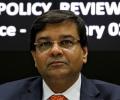
Market participants must appreciate that staying cautious is a virtue for central bankers and should not expect a sudden reversal in the formal monetary policy stance.

On one hand, Operation Greens should help to smoothen volatility in the prices of vegetables, whereas the proposal to enhance and extend minimum support prices to augment farmer incomes, may emerge as an inflation risk.

While the farmers are not getting remunerative prices for their produce, at the same time they are forced to pay high prices for items they consume.

RBI Governor Raghuram Rajan on Friday said keeping inflation low is the key task for sustainable economic growth of the country.

Rate cuts are unlikely to be aggressive, in our view.

Raghuram Rajan, who was Chief Economic Advisor in the Finance Ministry before taking over as RBI Governor on September 4, is scheduled to announce the next mid-quarter policy review on December 18.

Costlier fruits and vegetables such as onions and tomatoes pushed retail inflation to a nine-month high of 11.24 per cent in November, making it harder for the Reserve Bank to lower interest rates.

India's gross domestic product growth rate slipped to 7%.

Sources said Rajan will make the customary call on the Finance Minister on Monday, a day before he presents the policy.

As per the recommendations of the 2nd National Commission on Labour, the ministry is codifying existing 44 central labour laws into four codes by simplifying, amalgamating and rationalising the relevant provisions of the legislations.

Retail inflation measured by the consumer price index has risen sharply across food and non-food constituents, including services, keeping inflation expectations high, the Reserve Bank of India said in its Second Quarter Review of Monetary Policy 2013-14.

In the context of RBI's view that the real interest rate, defined as the repo rate less "look forward" CPI, should be around 150-200 basis points.

The central bank had revised its inflation forecast significantly downward in the last policy

Government's food subsidy bill tends to rise in tandem with the MSP increase.

The internals of the food inflation are worrying, given a broad-based uptick across categories that tend to be sticky, such as proteins, and a narrower-than-expected reduction in inflation for vegetables.

Slowdown in industrial production notwithstanding, a marginal increase in inflation raised the clamour for another round of rate cut by the Reserve Bank on April 4 to boost economic activity.

The central bank, however, warned that the downside risks to growth could play out if global recovery slows.
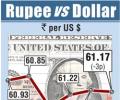
The rupee had gained seven paise to close at 61.15 on Friday on suspected RBI intervention in the forex market.

The repo rate could be reduced by 50 bps in the current year.

In another round of economic booster, Sitharaman announced steps to help homebuyers and push exports.

'The slide in growth has arisen primarily because we have an NBFC crisis on top of a banking crisis,' points out T T Ram Mohan.

Jaitley said inflation has been under control for long and is likely to remain so on the back of good monsoon and unlikely spike in oil prices.

'Rather than cutting and pasting from advanced economies, we should use basic economic principles to think about what is right for India at the stage of development at which we are,' says Chief Economic Advisor Krishnamurthy Subramanian.

A little away from the city in the northern suburbs, vegetables are 15-30 per cent costlier.

El Nino, which refers to warmer-than-average sea surface temperatures in the central and eastern tropical Pacific Ocean, will likely to keep CPI inflation up at 8-10 per cent in the second half of 2014 and will pose a 50-70 basis point risk to this fiscal's growth expectation, the report by financial services major Bank of America Merrill Lynch said.
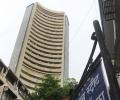
Investors will keenly watch US Fed meet starting Tuesday

The government hopes of registering GDP growth rate ranging between 6.1-6.7 per cent in 2013-14.
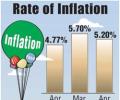
Food prices rose 8.64 per cent year-on-year last month, slower than an annual rise of 9.90 per cent in March.
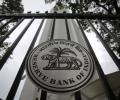
By no means do economists see the Reserve Bank of India stop at just a 25-bp cut. Some of the economists such as Soumyakanti Ghosh of State Bank of India are of the firm view that rates have room to fall by a total of 75 bps in the current financial year, starting with 25 bps in the August 7 policy.

Industrial production (IIP) grew to a three-year high of 6.4 per cent in August, up from 4.1 per cent in July.

The Centre is likely to announce next month a hike in dearness allowance by 10 per cent to 100 per cent, benefiting about 50 lakh employees and 30 lakh pensioners.

The official data on April-June GDP will be released on August 31.

In the mid-quarter review on December 18, the Reserve Bank left key policy rates unchanged but said it will hike interest rates if inflation does not subside.
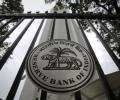
Some say the MPC will raise the rate, while others are of the view that there is already de facto interest rate tightening through rising bond yields, which might prompt the central bank to go for a pause.

In the last policy review in December, RBI had decided to keep policy rate unchanged.

In the current fiscal so far, retail inflation stabilised around 5 per cent, while wholesale price-based inflation averaged around 2.9 per cent during April-December.
 © 2026 Rediff.com - Investor Information - Advertise with us - Disclaimer - Privacy Policy - Sitemap - Feedback - About us - Terms of use - Grievances