
In terms of industries, 10 out of 23 industry groups in the manufacturing sector showed positive growth during November 2018.

'We will have to wait for one more year to cross the 7% mark, which should be possible in the absence of any disruptive reform,' points out CARE Ratings Chief Economist Madan Sabnavis.
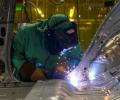
The manufacturing sector, which constitutes 77.63 per cent of the IIP, contracted by 0.4 per cent in March as compared to 5.7 per cent expansion in the year-ago month.

Milk and its products too were less expensive with inflation print of 4.21 per cent, cereals and products at 2.10 per cent, meat & fish at 3.31 per cent while for eggs the prices grew at a slower pace of 8.51 per cent.

The rate of price rise in the vegetable segment almost doubled to 7.47 per cent as against 3.92 per cent in September.

Prices have continued to move up in Delhi's markets, wholesale and retail, on supply worries and spoilage due to record cold weather.

In terms of industries, 22 out of 23 industry groups in the manufacturing sector showed positive growth during July 2018.

Andhra Pradesh posted 8.14% consumer inflation in October.

In terms of industries, 16 out of 23 industry groups in the manufacturing sector have shown positive growth during December 2017 as compared to the same month year ago.
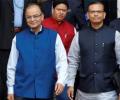
Securing the GDP estimates a month in advance would be a challenge and the government should take the Central Statistics Office on board before embarking on the new schedule for Budget presentation

The inflation in the food basket spiked to 7.89 per cent in October 2019 as against 5.11 per cent the preceding month.

In terms of industries, 17 out of 23 industry groups in the manufacturing sector have shown negative growth.

The previous low at 1.8 per cent was recorded in October 2017.

The NSE index Nifty ended above the 10,500-mark.

Capital goods output rose by a robust 20 per cent in the month under review as against a contraction of 2.4 per cent earlier.

Top Sensex gainers include Hero MotoCorp, Bajaj Auto, Asian Paints, IndusInd Bank, HUL, and Maruti, rallying up to 5.87 per cent. While, ICICI Bank, NTPC and ITC slipped up to 0.13 per cent.

The panel noted that the macro-economic fundamentals of the economy are sound but challenges remain, several of which are structural in nature.

Growth in 2012-13 slipped to a decade-low of 4.5 per cent. The economy expanded 4.6 per cent in the first half (April-September) of this financial year.

The previous high was recorded at 7.5 per cent in the July-September quarter of 2016-17.

The Indian economy appears to have slowed down in 2018-19 due to lower private consumption, tepid growth in fixed investment and muted exports, a finance ministry report has said.

Niti Aayog vice-chairman Rajiv Kumar said that the two major constraints being faced by the investors are less availability of finance and high interest rates.

Recalibrating data of past years using 2011-12 as the base year instead of 2004-05, the Central Statistics Office estimated that India's GDP grew by 8.5% in the financial year 2010-11 and not at 10.3% as previously estimated.

Fruits, vegetables and eggs continued to witness deflationary trend during January this year, with their prices declining 4.18 per cent, 13.32 per cent and 2.44 per cent, respectively.

Crisil Research expects retail inflation to rise 60 basis points to 4 per cent this fiscal from 3.4 per cent in 2018-19.

Output of capital goods -- a proxy for infrastructure investments in the country -- contracted 1 per cent in July

In fact, India's investment activity growth is also estimated to touch a 17-year low in FY20. With overall demand not showing signs of revival, investment activity may take longer to recover, economists said.

Capital goods, a barometer of investments, showed a sharp increase in output by 14.6 per cent in January, 2018 as against a decline of 0.6 per cent year ago.

The Reserve Bank of India, which mainly factors in retail inflation to decide its monetary policy, has been tasked by the government to ensure the rate of price rise remains around 4 per cent.

India's monthly per capita income, the measure of standard of living, is likely to be at Rs 7,378.17.
The economy has shown sharp resilience in the past and has also bounced back in good time. We could hence expect a similar trajectory next year, observes Madan Sabnavis, chief economist, CARE Ratings.
Finance secretary Ajay Bhushan Pandey on Sunday hinted that the government was working on another stimulus package but he refrained from giving a timeframe.

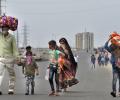
In the manufacturing sector, output is expected to decline by about 70 per cent as only food-processing, and drugs and pharma industries are allowed to operate while other segments, such as engineering and metals, have shut operations.
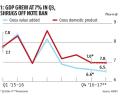
It is difficult to reconcile the GDP numbers with other economic indicators.

Remonetisation exercise will eliminate cash squeeze by April 2017

Indian economy is witnessing stable growth momentum, says OECD.

The previous low was recorded at 3.8 per cent in May this year.

Manufacturing sector, which constitutes over 77 per cent of the index, showed a decline of 0.4 per cent in June as compared to a growth of 7.5 per cent in the same month last year.

The CSO said that the first revised estimates for 2016-17 have been compiled using industry-wise/institution-wise detailed information instead of using the benchmark-indicator method employed at the time of release of Provisional Estimates on May 31, 2017.

The pace of retail price rise in January 2016 is the highest since 6.46 per cent in September 2014.

It came on the back of tepid dispatches in the March quarter as consumer sentiment took a knocking, owing to uncertainty ahead of the general election.
