
An escalation in the already simmering tensions between North and South Korea, China and Taiwan, and Russia and Ukraine could prove to be a bigger worry for the markets over the next few months rather than central bank policy action, said analysts. The markets, they said, are still not fully factoring in this possibility. "The conflict between Iran and Saudi Arabia is another geopolitical worry.

After selling dollars for the past few months, the Reserve Bank of India (RBI) may take a hands-off approach before its annual account closing by not trying to prop up the rupee as geopolitical tensions show signs of stabilising with global crude oil prices easing from its $140 peak. The central bank was a net buyer of dollars between April and September, and then turned a net seller in the following months, the data released by the RBI showed. The RBI continued to be a net buyer of $36.6 billion in this fiscal year - between April and January. In 2020-21, it purchased $68 billion on a net basis.

Silver, which is currently trading at Rs 68,453 per kilogram, has appreciated 21.7 per cent over the past three months. Investors, however, shouldn't get carried away by its recent performance and put their money in it. Instead, they should evaluate its pros and cons and then take a considered decision based on their risk appetite.

The Reserve Bank of India (RBI) has given its approval to two Russian banks for opening special vostro account for rupee trade. Sberbank, JSC VTB - the largest and second largest bank of Russia - are the first foreign lenders to receive this approval after the central bank announced the norms on INR trade in July. Both lenders have branch presence in India. Earlier this month, state-run UCO Bank received the RBI's approval to open a special Vostro account with Gazprombank of Russia. While the Kolkata-based lender is in the process of opening the account, the bank has received requests from various foreign lenders for opening such an account.
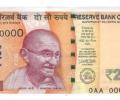
Dismissing reports, the Reserve Bank on Monday said there is no proposal to replace the face of Mahatma Gandhi with that of others on currency notes. In a statement, the central bank said there are reports in certain sections of the media that the Reserve Bank of India is considering changes to the existing currency and banknotes by replacing the face of Mahatma Gandhi with that of others.

The Securities and Exchange Board of India (Sebi) has proposed stricter disclosure norms for certain foreign portfolio investors (FPIs) to bring in more transparency and trust against the backdrop of the Adani-Hindenburg Research saga. Under the new norms, FPIs with an exposure of more than 50 per cent to a single group or with assets of over Rs 25,000 crore will be tagged as 'high risk' and will be required to provide additional information such as full identification of their ownership, economic interests, and control rights. A failure to provide these disclosures will lead to invalidation of the FPI registration.

India's forex reserves dropped by $4.85 billion to $532.66 billion as on September 30, the Reserve Bank said on Friday. The reserves, which have been dipping as the central bank deploys the kitty to defend the rupee amid pressures caused majorly by global developments, had declined by over $8.13 billion to $537.52 billion in the previous reporting week. In October 2021, the country's forex kitty had reached an all-time high of $645 billion.

The rupee depreciated 39 paise to an all-time low of 82.69 against the US dollar in early trade on Monday as elevated crude oil prices and risk-averse sentiment among investors weighed on the local unit. Moreover, a negative trend in domestic equities and firm American currency sapped investor appetite, forex traders said. At the interbank foreign exchange, the rupee opened at 82.68 against the greenback, then slipped further to 82.69, registering a fall of 39 paise over its previous close.
The Reserve Bank may go for a final 25 basis points increase in the current rate hike cycle next week and a reduction would come in only by the end of third quarter of FY24, economists at Axis Bank said on Wednesday. As per media reports, RBI officials met economists on Tuesday, and the latter have suggested the central bank to go for a 25 basis points hike in key rates. Since May 2022, the RBI has hiked rates by 250 basis points, hurting borrowers and some are already concerned about loan tenors extending beyond their working lives as a result of the hikes.

Exactly a fortnight ahead of the Reserve Bank of India's (RBI's) next monetary policy review, a key market indicator of interest rates - the overnight indexed swap (OIS) - suggests that the central bank may tighten policy by 35 basis points and then refrain from further rate hikes. RBI Deputy Governor Michael Patra recently described the OIS as the primary instrument for hedging interest rate risk in India. The six-member Monetary Policy Committee (MPC) of the RBI will meet on December 5-7.

As markets complete the first half of the calendar year 2022 (CY22) with a fall of around 9 per cent, the interest-rate hike trajectory by global central banks, paired with the conundrum of inflation and growth, will move the needle for the market, observe experts. Here's a quick rundown on what they'll react to over the next six months.

Without naming India, S&P said it expects that in regions where inflation already exceeds targets, or which are vulnerable to capital flight, central banks will be forced to raise interest rates.

'A weak monsoon always spells disaster. But it's too early to have a pessimistic view.'

Unlike any other business, banking is a turf where the captain's role is the most critical. Often a bank is defined by the personality of the CEO who runs it. Both HDFC Bank and Kotak Mahindra Bank are the creation of their CEOs, notes Tamal Bandyopadhyay.

She also said there was no independent application of mind by the Reserve Bank of India and only its opinion was sought, which cannot be said to be a recommendation.

The first tranche of sovereign gold bond for 2022-23 will open for subscription for five days from June 20, the Reserve Bank of India said on Thursday.

The Union Budget's focus on capital expenditure is expected to crowd-in private investment and push the GDP growth rate close to 7 per cent in the next financial year beginning April 1, said a Reserve Bank article on 'State of the Economy'. In 2023-24, capital expenditure is budgeted at Rs 10 lakh crore which will constitute 3.3 per cent of GDP. "We believe that India will decouple from macroeconomic projections of current vintage and also from the rest of the world.

Ecuador mints commemorative coin to mark World Cup participation.

The Reserve Bank is working with the government to thrash out a payment settlement solution for Indo-Russian trade, which is hit by the economic sanctions imposed on Moscow after it invaded Ukraine, but asserted that any such solution will be 'sensitive' to the prevailing economic blockade, the central bank said. RBI Governor Shaktikanta Das was quick to add that it is a matter that the government has to deal with first, and as far as the central bank is concerned, obviously, we will not do anything which goes against the sanctions. RBI Deputy Governor T Rabi Sankar said since the Ukraine war has disrupted trade and payments, we are discussing with all stakeholders, and at the same time, we are sensitive to the economic sanctions.

In the biggest weekly increase in over a year, India's forex reserves swelled by $6.56 billion to reach $531.08 billion for the week ended October 28, RBI data showed on Friday. The overall reserves, which have been on a declining spree for many months now, had dropped by $3.85 billion to $524.52 billion in the previous reporting week. The $6.5 billion jump in the reporting week is the highest since September 2021.

Retail inflation declined to a one-year low of 5.72 per cent in December 2022, mainly due to softening prices of food items, according to official data released on Thursday. The Consumer Price Index (CPI) based retail inflation was at 5.88 per cent in November 2022 and 5.66 per cent in December 2021.

'Valuations are very attractive, and most companies are cash-rich with strong dividend yields.'
Private sector lender ICICI Bank has revised its external benchmark lending rate (EBLR) to 8.10 per cent, and state-owned Bank of Baroda has raised the rate to 6.90 per cent with immediate effect after the RBI hiked the key repo rate. Likewise, two other public sector banks -- Bank of India and Central Bank of India -- have also raised the repo linked lending rate. In an out of turn Monetary Committee Meeting (MPC), the Reserve Bank on Wednesday announced to hike the benchmark repo rate -- the short term lending rate it charges to banks -- by 0.40 per cent to 4.40 per cent with immediate effect, aimed at taming the rising inflation caused by the global geopolitical situation.

The value of foreign portfolio investors' (FPI) holdings in the domestic equities reached $584 billion at the end of December 2022, which was 11 per cent lower from preceding year, according to a Morningstar report. This was largely on low return given by the Indian equities and exodus of foreign money from the domestic stock market. Going by the report, the value of FPIs investments in Indian equities dropped to $584 billion as of December 2022 as compared to $654 billion at the end of December 2021.

'We are not entirely out of the woods.' 'The broader trajectory remains tentative.' 'However, we may expect some near-term bounce.'

India's forex reserves rose by $204 million to $532.87 billion for the week ended October 7 on an increase in the value of gold holdings, the Reserve Bank said on Friday. In the previous reporting week, the overall reserves had dropped by $4.85 billion to $532.66 billion. The reserves had been falling for many weeks now as the central bank deploys the kitty to defend the rupee amid pressures caused majorly by global developments.

Market benchmarks gave up intra-day gains to close in the red for the sixth session on the trot on Friday, capping a bruising week which saw a massive dash for safety amid rate hikes by global central banks and fears of slowing growth.
 © 2026 Rediff.com - Investor Information - Advertise with us - Disclaimer - Privacy Policy - Sitemap - Feedback - About us - Terms of use - Grievances