
'We are rolling out a vaccine when we don't even have the phase 2 trial results; forget about phase 3 trial results.' 'Why are we playing with people's lives?'
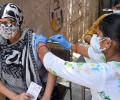
India expects 2.16 billion doses of Covid-19 vaccines between August and December, including the jabs that are currently in clinical trials, reports Sohini Das
'Antibodies remain in the blood for at least seven to nine months.'
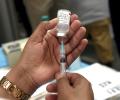
He explained, "Children between the age of 12 and 18 years, particularly those in the age group of 15 to 18 years, are very much like adults. Our research within the country also says that almost two-thirds of the deaths below 18 years which occurred due to COVID in India are within this age group. So, this decision was mainly taken to protect the adolescents."
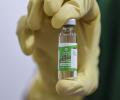
Amid concerns over dangerous side-effects of the Oxford's COVID-19 vaccine, India is evaluating all serious adverse events post-vaccination to determine the causality aspects of Covishield and Covaxin, an expert associated with the process said on Saturday.

India, with its strong research and development base in life sciences, IT and pharma industries, is on the threshold of a revolution in biotechnology, scientists at the BioAsia 2004 Summit said in Hyderabad on Thursday.
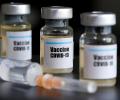
Responding to another question, Choubey said that the phase-I of clinical trials have revealed excellent safety of the two candidate vaccines indigenously developed by Bharat Biotech in collaboration with Indian Council of Medical Research and Cadila Healthcare Ltd, and now their immunogenicity testing is in progress. Their phase II clinical trials are ongoing.
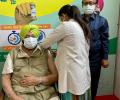
Union ministers Prakash Javadekar and Giriraj Singh, Rajasthan Chief Minister Ashok Gehlot and Maharashtra Governor B S Koshyari were among those who got the first dose of COVID-19 vaccine on the fifth day of the second phase of vaccination on Friday.
Delhi Health Minister Satyendar Jain said on Tuesday 56.13 per cent of those covered under the latest serological survey in the city in January have developed antibodies against coronavirus.

Some states have flagged the shortage of vaccines and expressed their inability to start vaccination of people above 18 years from Saturday
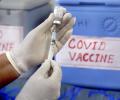
India is committed to supplying COVID-19 vaccines to other nations and such supplies are likely to begin by the end of this year, as the abundant production will not just meet domestic needs but also generate surplus for exports a top government official said on Monday.
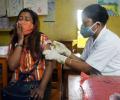
Several private hospitals across the country said they have no clarity on procuring COVID-19 vaccines under the new policy announced by Prime Minister Narendra Modi and that it has led to the vaccination being put on hold at their centres.
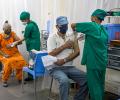
The Bombay high court on Saturday directed the central government to file an affidavit detailing the manner and methods of allocating COVID-19 vaccines to states.

Prime Minister Narendra Modi asked the nurses administering the COVID-19 vaccine to him on Monday whether they were planning to use some special thick needle as politicians are known to be 'very thick-skinned', drawing laughter from the medical staff who immediately felt at ease.
Bureaucratic delays are stifling growth in the sector. India should be far more aggressive in launching 'look alike' biological molecules in a fast track manner.
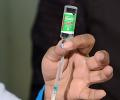
In a recent letter to Union Home Minister Amit Shah, SII said its employees have been working round the clock in spite of various challenges because of the pandemic.

As the Omicron variant of Sars-CoV-2 takes centrestage, vaccine makers in India are of the view that scaling up the existing vaccines to make them more effective is possible.

The aim of the mission is to accelerate the development of at least six vaccine candidates and ensure that they are licenced and introduced in market for emergency use at the earliest.
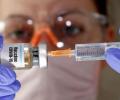
The Indian vaccine industry largely feels there are two ways in which vaccine innovation can be spurred - one, get a high price for the product and two, have the government buy a few hundred million doses of the product at a certain price.
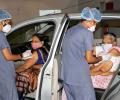
Union Minister Nitin Gadkari on Tuesday said that more pharma companies should be allowed to manufacture the COVID-19 vaccine in the country during the pandemic to scale up production.
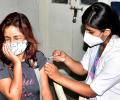
Starting July 1, private hospitals in the country will no longer be allowed to directly procure COVID-19 vaccines from manufacturers and have to place orders on the Centre's CoWIN portal.
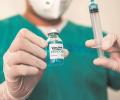
The novel mRNA vaccine candidate, HGCO19, is supported with seed grant under the Ind-CEPI mission of the Department of Biotechnology. The mRNA vaccines do not use the conventional model to produce immune response. Instead, they carry molecular instructions to make the protein in the body through a synthetic RNA of the virus.
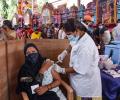
It will be unfair to put a date for any COVID wave as the behaviour of coronavirus is unpredictable and a disciplined and effective pandemic response can help the country get away from any significant outbreak, COVID Task Force chief V K Paul said.
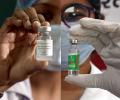
The panel also recommended giving approval to Bharat Biotech for carrying out a study on interchangeability of its Covaxin and the under-trial adenoviral intranasal vaccine candidate BBV154, but asked the Hyderabad-based firm to remove the word "interchangeability" from the study title and submit a revised protocol for approval.
If the DCGI grants regular marketing authorisation, Covishied will be the second vaccine in the world to receive such approval.
'This government did not have any plan for safety stocks of essential medicines.'
Biovel Life Sciences (P) Ltd, a biotechnology firm, has inked a licensing agreement with US-based Dowpharma to produce Human Growth Hormone using Pfenex Expression Technology, for the first time globally.

Only half India's population has received the first shot of Covishield and Covaxin and the government's immediate task is to first vaccinate its adult population before placing its focus on children.
India's export revenue from biotechnology grew by 47 per cent to reach to 1.2 billion dollars in the financial year ended March 2007, a survey said.
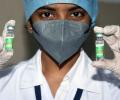
SII's CEO Adar Poonawalla took to Twitter to announce the "philanthropic" gesture.

Behind each Covid vaccine are hundreds of parents, who had the courage and conviction to come forth with their children for the trial of a vaccine which was, until then, untried in that age group, reports Sindhu Bhattacharya.

Addressing a press briefing, Union Health Secretary Rajesh Bhushan said vaccine effectiveness will be seen only after 14 days.
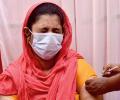
The government on Tuesday set the maximum price private hospitals can charge for the three COVID-19 vaccines currently available in the country -- Covishield Rs 780 per dose, Covaxin Rs 1,410 and Sputnik V Rs 1,145.
The Centre on April 19 had announced a ''liberalised'' policy, making all above 18 years of age eligible to get vaccinated from May 1. It has also allowed state governments and private hospitals to purchase vaccines from manufacturers.
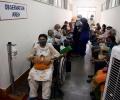
UP Rs 50 billion, followed by Maharashtra, Bihar, and West Bengal which may need close to Rs 25 billion for the massive task.

Lauding the scientists and technicians for the 'Made in India' vaccines, he said the country is proud of them.
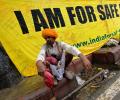
India is capable of developing GM crops, Randy Hautea, global coordinator for International Service for the Acquisition of Agri-Biotech Applications, tells Kanika Datta.
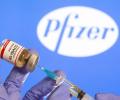
Though there is no official word, the sources said the government is not ready to give in to the indemnity demands of the US drug manufacturers against liabilities in case of adverse effects.
 © 2026 Rediff.com - Advertise with us - Disclaimer - Privacy Policy - Sitemap - Feedback - About us - Terms of use - Grievances