
The Mahars have a historical connection with this victory pillar.
'Was he afraid that his answers during cross-examination would land him in trouble under the new ruling dispensation?'
If an extension is granted, the Commission's next hearing will be a long one: From October 16-28, so as to complete the cross-examination of all remaining witnesses.

The former BJP corporator was named by a villager in a police complaint made three days before the January 1, 2018 violence at Bhima Koregaon. Yet, the police did not include his name in the FIR.

'We were sure our appeal would succeed. We knew we could break down the evidence and show it was hollow.'

Shivaji Pawar made a startling revelation: Though the subject matter of his investigation was the January 1 violence, he had not examined any of the witnesses to that violence.

For four days, the officer avoided giving any straight answers, becoming the first witness in the 48 witnesses that have appeared so far, to have achieved this feat.
'This shows how casually these officials approached a dispute simmering for years which finally erupted into violence.'

ACP Shivaji Pawar has been asked to file his affidavit by August 15.
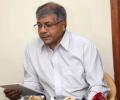
Ambedkar told Rediff.com that he intended making an application that private witnesses not be cross-examined by the Bhima Koregaon Commission of Inquiry.

Government rejects activists' request. Commission requests new witness to attend.
Rashmi Shukla's testimony comes as a revelation because the proceedings of the Elgar Parishad form the basis of the Bhima Koregaon case which has become an international cause celebre.
This senior cop who deposed in such detail about the Elgar Parishad, however, claimed to know nothing about the opposition to it from organisations such as Milind Ekbote's Samastha Hindu Aghadi as well as Pune's then Mayor Mukta Tilak.

Despite Sharad Pawar's categorical stand, the Maharashtra government has done nothing to ease the suffering of the Bhima Koregaon 16, who have been denied their basic rights to health and to communication with their families while in jail.
No report of the violence was sent by Mumbai's police commissioner to the government. Why was the violence then considered serious enough to be included in the Terms of Reference? Was it a balancing act to counter the accusations that were then being made against Hindutva leaders Sambhaji Bhide and Milind Ekbote?

Unlike other top police officers, A A Khan spoke boldly --- be it while defending 'encounters' in many of which he was involved, or in tracing the cause of the ghastly Radhabai Chawl incident, recalls Jyoti Punwani. Encounters were useful, he said, because hardened criminals who were targeted were beyond reform and no good for society.
Sharad Pawar claims he is not in a position to name the organisations behind the violence at Bhima Koregaon, 'though active role of right-wing forces behind the violence cannot be ruled out.'
'There is a contradiction between what the then CM said in the assembly and the legislative council, and the direction taken by the police investigation.'
The police were aware of the bandh since the gram panchayats had informed them about it. Yet, they did nothing to prevent it.
'The circumstances indicate that the government is not serious about the commission...' '...We are not at the mercy of the government.'
'Whenever Dalits have agitated on the streets, the government has blamed Naxalites.'
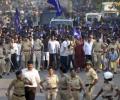
If the Bhima Koregaon commission is terminated before completing its work, the people affected by the violence 'would feel cheated'.
Curiously, on one aspect -- the large turnout of Dalits at Bhima-Koregaon -- both the counsel for the government and police, and the counsel for Milind Ekbote, an accused in the Bhima-Koregaon violence, pursued the same line of questioning. They asked Tukaram Gavare about the planning that must have gone behind this turnout.
 © 2026 Rediff.com - Advertise with us - Disclaimer - Privacy Policy - Sitemap - Feedback - About us - Terms of use - Grievances