
Trump's tariff threats spooks markets; Sensex down 106 points


Investors' sentiments will be guided by a host of domestic and global macroeconomic data announcements this week, along with the trading activity of foreign investors and trends in world stocks, analysts said. Besides, the rupee-dollar trend and movement of global oil benchmark Brent crude will also be crucial in dictating terms in the market, experts added.

England captain Jos Buttler defended his team's training schedule during their white-ball tour of India.
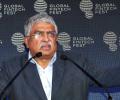
'Binary fission will happen -- startups will lead to more startups.'

RBI's interest rate decision, quarterly earnings and global cues would be the major driving factors for equity markets this week, analysts said adding that the impact of the Union Budget could linger on this week. Trading activity of foreign investors will also be a key driver for the markets, experts noted. "US and India's manufacturing PMI for January to be released on Monday, will be the key macro data to watch out for.

Net NPAs increased to Rs 36,260 crore in the December quarter from Rs 34,843 crore in September and Rs 33,116 crore in December 2023, observes Tamal Bandyopadhyay.

The derivatives trading volume has seen a 37 per cent month-on-month decline in December following a slew of measures undertaken by the market regulator Securities Exchange Board of India (Sebi) to curb the frenzy in the derivatives segment. The average daily turnover (ADTV) for the derivatives segment (notional turnover for options segment) so far this month is at Rs 280 trillion - the lowest since June 2023-compared to Rs 442 trillion in November.

Despite gross domestic product (GDP) growth being lower-than-expected for the July-September quarter, the six-member Monetary Policy Committee (MPC) may not cut the policy repo rate in the review meeting scheduled for next week due to high inflation in October, according to experts. "Consumer Price Index (CPI) inflation breaching the upper limit of the RBI's tolerance band in October (6.2 per cent year-on-year) is not a favourable backdrop for the MPC to commence the easing cycle, even as the growth outcome disappointed the MPC's expectations," said Shreya Sodhani, regional economist at Barclays, who expects the policy repo rate to be kept unchanged in the December meeting.
Passive funds tracking the National Stock Exchange Nifty Next 50 Index have seen their assets under management (AUM) more than double in the past year. The index's growing popularity can be attributed to its robust 50 per cent return over the same period. Currently, the AUM of funds tracking the Nifty Next 50 index stands at nearly Rs 30,000 crore.

Tata Steel, Bajaj Finance, Mahindra & Mahindra, JSW Steel, NTPC, Adani Ports, Bajaj Finserv and Larsen & Toubro were also among the laggards. However, Power Grid, HCL Technologies, Infosys, Tech Mahindra, Tata Consultancy Services and ICICI Bank were among the gainers.

Trading sentiment in the equity market this week will be guided by global trends, foreign fund movement, macroeconomic data announcements and RBI's interest rate decision, analysts said. The monthly auto sales data announcement would also be tracked by investors this week.

The Reserve Bank of India (RBI) has given HDFC Bank six months to migrate HDFC's home loan customers to external benchmark linked lending rate (EBLR), top sources in the bank told Business Standard. Almost half of HDFC's 5.4 million customers are home loan customers. It is mandatory for banks to link retail loans and loans to micro, medium and small enterprises to an external benchmark. Non-banking financial companies do not have such a mandate.

India's largest IT services company TCS on Thursday reported an 11.95 per cent jump in net profit at Rs 12,380 crore in the December quarter while the overall workforce reduced by over 5,000 employees. The Tata Group company had reported a net profit of Rs 11,058 crore in the year-ago period, and Rs 11,909 crore in the preceding September quarter. The company's revenue grew 5.6 per cent to Rs 63,973 crore as against Rs 60,583 crore a year earlier.

Stock markets closed lower for the second straight day on Friday amid relentless foreign fund outflows and losses in blue-chip stocks Reliance Industries, ICICI Bank and State Bank of India. Benchmark BSE Sensex declined by 55.47 points or 0.07 per cent to settle at 79,486.32. During the day, it tanked 424.42 points or 0.53 per cent to 79,117.37.

Stock market investors became richer by a whopping Rs 77.66 lakh crore in 2024, helped by an overall optimistic trend in equities, where the BSE Sensex surged over 8 per cent. Analysts said the year witnessed a tug of war between the bulls and bears marked by volatility but, despite the uncertainties around the world, the Indian markets sustained the pressure and delivered impressive returns.

'The bull market cycle ran for five years. It's the end of that cycle.' 'The next cycle is a down cycle, and in that down cycle, you will see the Sensex falling from their highs of around 68,000 to maybe 40,000-50,000 at the bottom of the cycle.'

State Bank of India (SBI) on Monday raised its benchmark lending rates by up to 50 basis points (or 0.5 per cent), a move that will lead to an increase in EMIs for borrowers. The increase in lending rate comes days after the Reserve Bank of India hiked its benchmark lending rate by 50 basis points to tame inflation. External Benchmark based Lending Rate (EBLR) and Repo-Linked Lending Rate (RLLR) have been raised by 50 basis points while the hike in Marginal Cost of funds-based Lending Rate (MCLR) is 20 basis points across all tenure.

68 per cent of employees have experienced undue pressure from management, often citing AI and technology as benchmarks for performance, leading to workplace tension.

From the 30-share Sensex pack, Hindustan Unilever, NTPC, Nestle, IndusInd Bank, Power Grid, Adani Ports, Tata Motors and Bajaj Finserv were the major laggards. Reliance Industries, Kotak Mahindra Bank, Tech Mahindra, Mahindra & Mahindra and HDFC Bank were among the gainers.

'Does 99 percent guarantee character and capacity for an independent awareness of life or does it make you -- barring exceptions -- a compliant careerist beholden to governments and corporations?' 'What kind of political and social choices would such minds make?' asks Shyam G Menon.
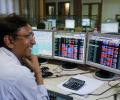
Benchmark Sensex advanced 110 points in a choppy trade on Wednesday, extending its gains to the fourth day in a row helped by buying in HDFC Bank, ICICI Bank and fresh foreign fund inflows. The 30-share barometer rose by 110.58 points or 0.14 per cent to settle at 80,956.33 with 14 of its constituents ending with gains and 16 stocks with losses. During the day, it jumped 399.64 points or 0.49 per cent to 81,245.39 and dipped to a low of 80,630.53.

Sensex drops 138 points on foreign fund outflow

From the 30-share Sensex pack, Tata Motors, Tech Mahindra, UltraTech Cement, JSW Steel, Sun Pharma, Asian Paints, IndusInd Bank and ICICI Bank were the major losers. State Bank of India emerged as the only gainer from the pack.
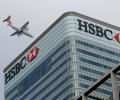
As India faces slowing economic growth, HSBC Global Research has downgraded the Indian stock market outlook from "overweight" to "neutral". In a report, the global financial services firm said profits at India Inc appeared to have softened while valuations are elevated. After annualized growth of 25 per cent in recent years, profits appear to have softened while valuations are elevated at 23x forward earnings.

'He was deeply committed to nurturing young talent and encouraging interdisciplinary collaboration.'

DIIs owned equities worth Rs 73.5 trillion, just 1.9 per cent less than FPIs. This marks a significant change from a decade ago.

Investors will take cues from the December quarter corporate earnings, with blue-chips like Infosys, Reliance Industries scheduled to report their results this week, in addition, inflation data and trading activity of foreign investors will also be crucial in dictating market trends, analysts said.

Cheaper ripoffs was how China powered its way as an economic superpower but hitherto the tech realm had remained out of bounds. With DeepSeek's AI model the West, it seemed, was about to lose its competitive edge in cutting edge generative AI technology. And this is what is causing deep furrows in the forehead of tech titans in Silicon Valley.

The last time these two indexes recorded a negative performance on a calendar year basis was in CY19.

From the 30-share pack, Hindustan Unilever, Tata Motors, Axis Bank, Nestle India, Asian Paints, ITC, Reliance Industries, Mahindra & Mahindra, IndusInd Bank and State Bank of India were among the laggards. Larsen & Toubro, Tata Steel, JSW Steel, HDFC Bank, Adani Ports, Kotak Mahindra Bank, Bharti Airtel and PowerGrid were among the gainers.

Axis Bank, IndusInd Bank, HDFC Bank, State Bank of India, Kotak Mahindra Bank and UltraTech Cement were also among the big gainers. Adani Ports, ITC, Bharti Airtel and Asian Paints were among the laggards.

From the 30-share Sensex pack, Tata Consultancy Services, Infosys, NTPC, HCL Technologies, Axis Bank, Tech Mahindra, Bajaj Finserv, Sun Pharma, IndusInd Bank and Reliance Industries were the major laggards. Tata Steel, Hindustan Unilever, Mahindra & Mahindra, Nestle and State Bank of India were among the gainers.

From the 30 Sensex pack, State Bank of India jumped 5 per cent, followed by ICICI Bank, Bajaj Finserv, NTPC, Adani Ports, Bajaj Finance and Larsen & Toubro. In contrast, Maruti, Tata Motors, Sun Pharma, Bharti Airtel, IndusInd Bank and Mahindra & Mahindra were among the laggards.

From the Sensex pack, Tech Mahindra, HDFC Bank, Larsen & Toubro, ITC, Infosys, IndusInd Bank, Kotak Mahindra Bank, Titan and HCL Technologies were among the gainers. Maruti Suzuki India, Tata Steel, Bajaj Finance, UltraTech Cement, Nestle India, Axis Bank and Tata Consultancy Services (TCS) were among the laggards.

Stock investors have become richer by Rs 10.47 lakh crore in two straight days of gains in markets as benchmark Sensex jumped 2 per cent. At close on Wednesday, the market capitalisation of BSE-listed companies surged by Rs 10,47,565.48 crore to Rs 4,52,58,633.53 crore ($5.37 trillion) in two days of gains. "The feel good factor of Trump's win in the US election had a rub-off effect on world equity markets, including local indices as domestic investors resorted to value buying, especially in IT stocks, which pushed the benchmark Sensex above the 80k mark.

Market reaction to the Union Budget was overall neutral. The income tax "gift" wasn't enough to move the needle. There was some apparent rationalisation of Customs duty structure as well as cuts on import duties of some key components for the telecom and IT industry and duty cuts on vehicle imports. Other proposals related to development of agriculture and rural economy and renewables seem to be generally positive.

Prime Minister Narendra Modi has said he is willing to discard old ideas and embrace new ones as long as they fit into his essential ideology of 'nation first'.

Let reason, not emotion, guide your decisions.

Data from Value Research analysed on five-year, three-year and one-year performances of active equity schemes to pick the best performers in popular scheme categories.
 © 2026 Rediff.com - Investor Information - Advertise with us - Disclaimer - Privacy Policy - Sitemap - Feedback - About us - Terms of use - Grievances