
Swedish defence major Saab has unveiled its next generation fighter aircraft, Gripen E, which the company said is being offered to the country under the 'Make in India' initiative with transfer of technology.

Boeing is likely to vie for the deal to supply 110 fighter jets to the IAF in one of the biggest such procurement in recent years globally which could be worth over USD 15 billion.
While its operating radius remains secret, a back-of-the-envelope calculation indicates it can easily strike targets 1,000 kilometres away and return to base.

The cancellation of the project has far-reaching implications for the IAF, for which this was once its high-tech future fighter.

"We don't take chances with the medical fitness of a pilot," he said at a press conference.

Boeing's plan involves setting up an Indian factory and the aerospace ecosystem to build the Block II Super Hornet.
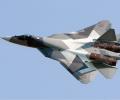
IAF is focused on Rafale; argues the fifth generation fighter aircraft would not meet Indian expectations
The report authored by Ashley Tellis, the top American expert on India and South Asia, states that the IAF's fighter force is weaker than numbers suggest.
Ajai Shukla presents an action plan for Defence Minister Rajnath Singh to fix the systemic weaknesses in defence.
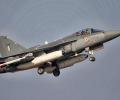
The outgoing Tejas chief said the aircraft will join the IAF fleet by 2021-22.

In contrast to the bare-bones price of $115 million for each Rafale fighter, the F-35A cost $94.6 million, reports Ajai Shukla.
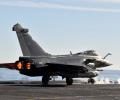
'The greatest loss from replacing the 126 Rafale proposal with the 2016 contract for 36 Rafales might not be the extra money paid, but the opportunity that India's aerospace industry lost of obtaining access to critical aviation technologies and manufacturing skills.'

"What I said was if we had Rafale at the time (of aerial dogfight), then none of our fighter jets would have gone down and none of theirs saved," he added.

'While fighter pilots must not be sent into combat in inferior aircraft, an obsessive quest for outright combat superiority will leave an air force short of numbers,' says Ajai Shukla.

What the new defence minister does with the Rafale fighter jet deal will decide if India wants to build genuine, long-term defence capability through an indigenous product that slashes life-cycle costs, or opt for glitzy signing ceremony with foreign vendors that would please the public, says Ajai Shukla.

Our large military requirements make for an enormous buyer's leverage, which the defence ministry fritters away in piecemeal purchases

'The range of purchases throw a light on India's threat perception as also its perceived role of being a stabilising influence in the region,' says Brigadier S K Chatterji (retd).
 © 2026 Rediff.com - Investor Information - Advertise with us - Disclaimer - Privacy Policy - Sitemap - Feedback - About us - Terms of use - Grievances