
The government on Friday appointed Suman K Bery as the vice chairman of Niti Aayog, following the sudden resignation of Rajiv Kumar.

Donald Trump's Presidency of the United States will open new opportunities for India though certain sectors, especially pharma and IT, may face the heat if the incoming president decides to impose restrictions on imports and H1B visa regulations, experts said on Wednesday. Prime Minister Narendra Modi's friendly relationship with Trump will have a positive bearing on Indo-US relations but India may have to adapt its strategies to maintain cooperation in areas of mutual interest.

BP Plc has won a bid to operate ONGC's giant Mumbai High oil and gas field by offering up to 60 per cent increase in output over baseline, the state-owned firm said on Wednesday. State-owned Oil and Natural Gas Corporation (ONGC) had in June last year floated a tender seeking foreign partners to reverse declining output at its flagship Mumbai High fields, offering a share of revenue from incremental production plus a fixed fee but not any equity stake.

Prime Minister Narendra Modi led-NDA government in its third term must tackle the problem of unemployment in the country, especially in the unorganised sector and in small and medium enterprises, former NITI Aayog Vice Chairman Rajiv Kumar said on Monday. Kumar also emphasised that the government now must finalise the four labour codes as it has been delayed beyond expectations. "We must recognise that post-COVID economic recovery has been a K-shaped recovery.
The Indian economy is coming out of the pandemic-induced degrowth and GDP growth will enter the positive territory in the fourth quarter of this fiscal, Niti Aayog Vice-Chairman Rajiv Kumar said on Wednesday. In an interview to PTI, Kumar also said the Centre's new agriculture reform laws are aimed at increasing the income of farmers and the present agitation was a result of misunderstanding and miscommunication which need to be removed.
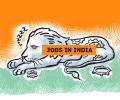
Niti Aayog vice-chairman Rajiv Kumar debunked claims of jobless growth, saying how can a country grow at an average of 7 per cent without employment.

Niti Aayog vice-chairman Rajiv Kumar said that the two major constraints being faced by the investors are less availability of finance and high interest rates.
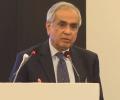
Kumar had accused the Congress of promising the moon to win elections.

A clear message was that the ongoing seven-decade-old model of agriculture, based on extensive reliance on subsidy by the government at every stage, was not going to work, said NITI Aayog vice-chairman Rajiv Kumar.
Indian economy is expected to grow by 10 per cent or more in the current fiscal, and 8 per cent plus in the next fiscal year, Niti Aayog Vice-Chairman Rajiv Kumar said on Tuesday. Addressing a book launch event, Kumar further said that seven years of the Modi government has laid a strong economic foundation for businesses to thrive in India. "There was a hiccup (in economic growth) for two years due to COVID-19 pandemic.

India's economic growth is likely to reach pre-COVID-19 levels by the end of the 2021-22 fiscal as the GDP contraction in this financial year is expected to be less than 8 per cent, Niti Aayog vice chairman Rajiv Kumar said on Sunday. The Reserve Bank of India (RBI) has also revised its forecast of economic growth for the current fiscal year (2020-21) to (-)7.5 per cent as against its earlier forecast of (-)9.5 per cent.

Her research was focused on urban development, macro-economic reforms, industrial development, and social sector development issues in India.
Indian economy is expected to grow 10.5 per cent or more in the current fiscal, Niti Aayog Vice Chairman Rajiv Kumar said on Thursday. Speaking at a virtual conference organised by the Public Affairs Forum of India (PAFI), he also said that modernisation of the retail sector is very much on the cards. "India Purchasing Managers' Index (PMI) for both manufacturing and services has shown a very smart uptick last month. "This (Indian economy) will strengthen even further," he said. "I expect Indian economy to grow 10.5 per cent or higher in FY 22," he noted.

"The Union Budget represents the aspirations of 130 crore Indians and lays out the path towards India's development. I invite you all to share your ideas and suggestions for this year's Budget on MyGov," the PM said according to a statement posted on his official website on Thursday.

At the pre-Budget meeting at Niti Aayog, Modi called for a focussed effort from all stakeholders in order to achieve the target of $5 trillion economy. The participants urged the government to focus on credit expansion, exports growth, governance of PSBs, increasing consumption and job creation.
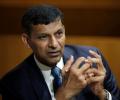
NITI Aayog's Rajiv Kumar accused former prime minister Manmohan Singh and senior Congress leader P Chidambaram of creating a 'false narrative'

As farmers continue their protests demanding repealing of the three new laws, Kumar also emphasised that continued negotiations with protesting farmers is of course the way forward.
Gujarat, for the second consecutive year, has topped the Niti Aayog's Export Preparedness Index 2021 which is aimed at assessing the readiness of the states in terms of their export potential and performance. Gujarat was followed by Maharashtra, Karnataka, Tamil Nadu, Haryana, Uttar Pradesh, Madhya Pradesh, Punjab, Andhra Pradesh and Telengana, according to the government think tank's report. Union territories and states like Lakshadweep, Arunachal Pradesh, Mizoram, Ladakh and Meghalaya were placed at the bottom.

Kerala has retained the top rank in Niti Aayog's SDG India Index 2020-21, while Bihar has been adjudged as the worst performer, according to a report released on Thursday. The Index for Sustainable Development Goals (SDGs) evaluates progress of states and union territories on social, economic and environmental parameters. Kerala retained its rank as the top state with a score of 75. Both Himachal Pradesh and Tamil Nadu took the second spot with a score of 74. Bihar, Jharkhand and Assam were the worst performing states in this year's India index.

Kerala has again emerged as the top ranking state in terms of overall health performance among larger states, while Uttar Pradesh is the worst, according to the fourth Health Index launched by Niti Aayog.

Bihar, Jharkhand and Uttar Pradesh have emerged as the poorest states in India, according to Niti Aayog's first Multidimensional Poverty Index (MPI) report. As per the index, 51.91 per cent population of Bihar is poor, followed 42.16 per cent in Jharkhand, 37.79 per cent in Uttar Pradesh. While Madhya Pradesh (36.65 per cent) has been placed fourth in the index, Meghalaya (32.67 per cent) is at the fifth spot. Kerala (0.71 per cent), Goa (3.76 per cent), Sikkim (3.82 per cent), Tamil Nadu (4.89 per cent) and Punjab (5.59 per cent) have registered the lowest poverty across India and are at the bottom of the index.

The Niti Aayog vice chairman noted that green shoots of recovery are already visible in multiple sectors. In 15-16 sectors, businesses are coming back to pre-COVID levels," he said.

'It is important for states to agree 10-15 per cent duty cut and take home the same amount of tax revenue as budgeted.'

The new numbers show India's economic growth rate averaged 6.7 per cent during the Congress-led United Progressive Alliance regime as compared to 7.3 per cent under the present government. Previous numbers had put the average growth rate during the 10-year UPA rule at 7.75 per cent.

Karnataka, Maharashtra, Tamil Nadu, Telangana and Kerala have been ranked as the top five states in innovation in Niti Aayog's second Innovation Index released on Wednesday. The index, released by Niti Aayog's vice chairman Rajiv Kumar and CEO Amitabh Kant, has been developed on the lines of the Global Innovation Index. Jharkhand, Chhattisgarh and Bihar have been ranked at the bottom of the index. Karnataka topped the index for the second year in a row.

He said no matter how much evolution happens in technology, India could never become a fully cashless economy.

Chief Economic Adviser K V Subramanian on Friday said there is an "upside potential" in the estimates about the economy during the current financial year amid a faster-than-expected recovery. He said the final print could be better than GDP estimates given by various institutions, including the Reserve Bank of India, which projected contraction of 9.5 per cent during 2020-21. During the second quarter, India's economy recovered faster than expected as a pick-up in manufacturing helped GDP clock a lower contraction of 7.5 per cent and held out hopes for further improvement on consumer demand bouncing back.

'Unless the economy is sound in the country how can only three movies collected so much business in a single day?'

Large trade deficit and rupee decline against the US dollar are putting pressure on the CAD, and these steps are likely to have a positive impact on the external sector.
Andhra Pradesh and Maharashtra are at second and third spot, whereas Uttar Pradesh and Bihar remained at the bottom.
The FM said an announcement with regard to the additional steps will be made after consulting Prime Minister Narendra Modi.
Most economists were of the view that the NSSO should release the data, as any move to withhold it will dent the image of country's statistical system.

India's economy recovered faster than expected in the September quarter as a pick-up in manufacturing helped GDP clock a lower contraction of 7.5 per cent and held out hopes for further improvement on better consumer demand. The gross domestic product (GDP) had contracted by a record 23.9 per cent in the first quarter of the 2020-21 fiscal (April 2020 to March 2021) as the coronavirus lockdown pummelled economic activity.

'There is a law that prevents the government from diluting its equity in the PSBs below 50 per cent.' 'That law has to be amended and given the parliamentary arithmetic of the political parties, it is not as simple to do that.'

Concerned by GDP slowdown and unrealistic tax targets, the economists urged Finance Minister Nirmala Sitharaman to implement long-term structural steps like land and labour reforms. Warning against any off-Budget financing the economists said the government should prepare a statement of intent for its social, rural and welfare sector expenditure.

In a communication sent to Kumar, the EC asked him to be cautious in future while making statements.

The government plans to raise resources to finance capital spending beyond the Rs 3.10 lakh crore budgeted for 2017-18 through higher borrowing or divestment receipts.

Recalibrating data of past years using 2011-12 as the base year instead of 2004-05, the Central Statistics Office estimated that India's GDP grew by 8.5% in the financial year 2010-11 and not at 10.3% as previously estimated.

Modi made a strong case for a partnership between the producers and consumers in the oil market as it exists in other markets.

'From the investor's point of view, a real change would happen only when business environment in all our states qualitatively improves,' says NITI Aayog Vice-Chairman Rajiv Kumar.
 © 2026 Rediff.com - Investor Information - Advertise with us - Disclaimer - Privacy Policy - Sitemap - Feedback - About us - Terms of use - Grievances