
Riding on a bull run, equity investors became richer by Rs 128.77 lakh crore in the 2023-24 fiscal, driven by robust fundamentals of the Indian economy, increased investment inflows and promising corporate earnings. After a muted performance in 2022-23, equity markets made a remarkable recovery in FY24, giving handsome returns to investors. The 30-share BSE Sensex climbed 14,659.83 points or 24.85 per cent in 2023-24.

The total number of demat accounts in the country stood at 171.1 million as of August 31.

Domestic quarterly earnings, global trends and foreign fund trading activity would dictate the movement in equity markets, which may face volatility amid the scheduled monthly derivatives expiry this week, analysts said. Equity markets took a breather last week. The BSE Sensex declined 298.22 points or 0.48 per cent and the Nifty dipped 111.4 points or 0.60 per cent.

Equity investors became poorer by Rs 7.48 lakh crore in five consecutive days of market fall, where the BSE Sensex has declined by nearly 3 per cent. In the past five days, the BSE Sensex has tumbled 1,713.71 points or 2.79 per cent. This has led to an erosion of Rs 7,48,887.04 crore from the market capitalisation of BSE-listed firms in five trading sessions.

Benchmark stock indices Sensex and Nifty closed higher for a second straight session on Monday following buying in index majors Reliance Industries, ICICI Bank and recovery in global markets.

The number of active SIP accounts is nearing the 100 million milestone.

Indian equity markets have a limited upside potential in the near-term as they negotiate the ensuing cyclical slowdown, wrote analysts at Nomura in a recent coauthored report led by Saion Mukherjee, their managing director and head of equity research for India. He, however, believes that the foundations are in place for sustainable growth over the medium-to-long term, and hence suggests a 'buy on dips' strategy to equity investors. As an investment strategy, Nomura prefers domestic-oriented sectors and companies over exporters, and prefers stocks that provide valuation comfort. Industrials and banks are their overweight sectors, while IT services and consumer discretionary are their underweight sectors.

Among Sensex shares, Bajaj Finserve, ICICI Bank, Bharti Airtel, Bajaj Finance, Sun Pharma, Maruti Suzuki, ITC, and Nestle were the lead gainers. On the other hand, L&T Wipro, IndusInd Bank and TCS and Tata Motors were the lead losers.

Among the 30 Sensex companies, JSW Steel, Tata Steel, Axis Bank, Reliance Industries, ICICI Bank, Hindustan Unilever, Kotak Mahindra Bank and Asian Paints were among the biggest gainers. In contrast, Mahindra & Mahindra, Sun Pharma, NTPC, Wipro, State Bank of India and Power Grid were among the laggards.

India Inc has reported a muted start to the financial year 2024-25, with a decline in net earnings and a modest single-digit uptick in revenues. An analysis of 488 companies that have released their results for the June 2024 quarter reveals a 1.6 per cent year-on-year (Y-o-Y) drop in combined net profit -- the weakest performance in the past seven quarters. In stark contrast, the combined net profit of these companies experienced a 13.6 per cent Y-o-Y increase in the previous quarter (Q4FY24) and a 65.2 per cent Y-o-Y rise in Q1FY24.

If a 5% to 10% fall in the equity market gives you sleepless nights, you are not cut out for a 75% to 80% allocation to equities and must reduce it.

Government needs to rationalise taxation policies to promote investments through stock markets, says BSE chief.
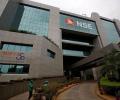
Power Grid was the biggest gainer on the Sensex chart, rising 2.54 per cent, followed by Tech Mahindra, Bajaj Finance, NTPC, UltraTech Cement, Larsen & Toubro, Tata Steel, Bharti Airtel, Bajaj Finserv and HCL Technologies. In contrast, Mahindra & Mahindra, Hindustan Unilever, Infosys and Titan were among the laggards.

From the Sensex pack, State Bank of India, Axis Bank, IndusInd Bank, Tech Mahindra, HCL Technologies, Tata Consultancy Services, Maruti Suzuki, Tata Steel and Tata Motors were the major gainers. Power Grid and HDFC Bank were the laggards from the pack.

BSE listed firms' value slips below Rs 100 trillion mark.

At an aggregate level, the late ace investor's portfolio that was valued at Rs 32,445 crore as on March 31, 2023 is now worth Rs 35,979 crore.

Small stocks of Dalal Street grappled with turbulent times in 2022 as high volatility and higher interest rate regime sapped investors' appetite for these scrips but the horizon ahead seems less cloudy for the New Year. While the 30-share Sensex scaled multiple record peaks with bluechips glittering, small stocks underperformed and the BSE smallcap index declined more than 3 per cent this year. In comparison, the BSE Sensex climbed 2,673.61 points or 4.58 per cent till December 27.
Equity markets rallied after softer-than-expected inflation data in the US and UK rekindled hopes of the end of the rate-hiking cycle by major central banks. The soft inflation reading drove down bond yields and the US dollar, whetting the appetite for risky assets. The 10-year US bond yield fell below 4.5 per cent after topping 5 per cent less than a month ago.

The latest circular from BSE that sought to cap the price movement of select scrips, especially the mid-, small-cap segments, traded on the exchange is not without a reason. A quick calendar year-to-date price check on the stocks from the categories put under 'Add-on Price Band Framework' by the BSE reveals a total of 210 stocks have seen their market price more than double. Among individual stocks, SC Agrotech, Adinath Textiles, Waaree Renewable Technologies, Steel Strips Infrastructure, Unistar Multimedia, Texel Industries, Raja Bahadur International and Hindustan Everest Tools from the BSE's X and XT group have rallied over 500 per cent during this period. Topping the charts is Gita Renewable Energy, which has zoomed 3,964 per cent to Rs 272.35 now from Rs 6.7 as on December 31, 2020.

Industrial production and inflation data, quarterly earnings from IT majors and global trends would drive the equity markets in a holiday-shortened week, analysts said. Moreover, foreign fund trading activity, movement of the rupee and global crude oil prices would also dictate terms in the market, they added. Equity markets would remain closed on Friday for 'Dr Baba Saheb Ambedkar Jayanti'.
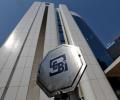
Capital markets regulator Sebi has penalised stock exchanges -- BSE and NSE -- for "laxity" on their part in detecting misuse of clients' securities worth Rs 2,300 crore by Karvy Stock Broking Ltd (KSBL). In two separate orders, the Securities and Exchange Board of India (Sebi) has imposed a fine of Rs 3 crore on BSE and Rs 2 crore on NSE. The matter relates to KSBL misutilising client securities worth Rs 2,300 crore, belonging to more than 95,000 clients, by pledging them from just one demat account. The funds raised against the pledge were used by KSBL for itself and its group entities.

Ambuja Cements' announcement that it would acquire Hyderabad-based Penna Cement Industries could be the Adani Group company's first step for wider inorganic expansion, according to analysts.

Among the Sensex firms, HCL Technologies fell the most by 2.4 per cent. IndusInd Bank (2.35 per cent), Infosys (2.28 per cent), Wipro (1.8 per cent), NTPC (1.71 per cent), Asian Paints (1.7 per cent), Tata Consultancy Services (1.36 per cent),Tech Mahindra (1.03 per cent) and SBI (1 per cent) were among the major laggards.

Domestic stock markets would be driven by inflation numbers, global trends, and the last batch of Q4 earnings this week, analysts said. Markets will also react to industrial production data and consumer inflation numbers that were released after market hours on Friday. "Participants will react to macroeconomic data viz. IIP and CPI first, which were released post-market hours on Friday.

Announcement of macroeconmic data such as industrial production and inflation, the US Federal Reserve's interest rate decision along with trends in global equities would dictate movement in the stock market this week, analysts said. Besides, foreign fund trading activity would also guide the trends in equities. "All eyes are now on the US Fed policy outcome for cues, which is scheduled on June 14. In the following sessions, the European Central Bank (ECB) and Bank of Japan (BoJ) will also announce their policy decisions.

'India has always been a bottom-up stock-picking market, and as growth recovers with higher liquidity, mid and small-caps always tend to outperform.'
British telecom player Vodafone on Wednesday said it has sold an 18 per cent stake in Indus Towers for 1.7 billion euro (about Rs 15,300 crore). Meanwhile, Bharti Airtel has increased its stake by acquiring 2.69 crore shares, representing a 1 per cent stake, in Indus Towers. The shares were acquired by Airtel at an average price of Rs 320 apiece, taking the transaction value to Rs 862.38 crore, as per the bulk deal data.
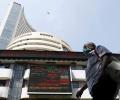
The market capitalisation of BSE-listed companies on Thursday crossed the historic Rs 200 lakh crore mark for the first time, driven by a continuous rally in the broader market. Riding high on the bullish investor sentiment, the market capitalisation of BSE-listed companies reached a record Rs 2,00,47,191.31 crore at close of trade. The 30-share BSE index closed the day with a gain of 358.54 points or 0.71 per cent at its lifetime peak of 50,614.29. This is the fourth consecutive day of gains for the markets.

Equity benchmarks Sensex and Nifty on Friday spurted by nearly 2 per cent, propelled by heavy buying in IT, metal and financial stocks amid a rally in global markets after lower-than-expected US inflation data. A strong rupee against the US dollar and unabated foreign capital inflows further bolstered sentiment, traders said. Easing US inflation triggered speculation that the US Federal Reserve might slow down the pace of interest rate hikes.
Earnings growth, attractive valuations and change in FPI flows from negative to positive over the next 12 months are some of the key triggers for an upside. "A poor monsoon, high inflation and further rate hike are some of the key risks

The government is also working on Euroclearing, the world's biggest bond settlement system, for Indian debt securities.

'Many do not have robust business models, and their prospects of survival and long-term growth are poor.'

Benchmark indices continued to rally for the third day running on Friday with the Sensex climbing 619 points in early trade to reclaim the 57,000 level. The 30-share BSE benchmark jumped 619.27 points to 57,477.06. The broader NSE Nifty advanced 189.15 points to 17,118.75.

Investors' wealth tumbled over Rs 5.78 lakh crore in two days of market fall amid a weak trend in global markets after a host of central banks hiked interest rates and gave hawkish commentary. The 30-share BSE Sensex declined 461.22 points or 0.75 per cent to settle at 61,337.81 on Friday. In the previous trade, the BSE benchmark had tanked 878.88 points or 1.40 per cent to settle at 61,799.03.

Mixed earnings and not so encouraging macroeconomic data dented sentiment, Ajit Mishra, VP - Research, Religare Broking Ltd said. In twin blows to Indian economic revival, higher food prices drove retail inflation to a five-month high of 7.4 per cent, while factory output fell for the first time in 18 months. The second consecutive month of rise in consumer price index (CPI)-based inflation will add to the pressure on the Reserve Bank of India (RBI) to again raise interest rates to tame high prices. In the broader market, BSE Midcap declined 0.73 per cent while smallcap dropped 0.45 per cent.

Among the 30 Sensex companies, Axis Bank, HDFC Bank, ICICI Bank, Kotak Mahindra Bank, IndusInd Bank, State Bank of India, Infosys, Wipro, Tech Mahindra and HCL Technologies were the gainers. On the other hand, Titan, Maruti, Bharti Airtel, Larsen & Toubro, NTPC, Reliance Industries, Bajaj Finance and Power Grid were among the laggards.

Life Insurance Corporation (LIC) may require at least five more years to comply with the minimum public shareholding of 25 per cent beyond the current exempted timeline of 2027. Formal communication in this regard had been shared recently with the finance ministry, underlining LIC's roadmap, plans of further dilution of stake, current norms around public float, and challenges ahead, a government source familiar with the matter said. "Going forward, we will have to take a call, along with Sebi (Securities and Exchange Board of India) and the Department of Economic Affairs on the roadmap for minimum public shareholding (MPS).

Equity benchmarks declined on Thursday after a two-day rally, mirroring a weak trend in the US markets and fresh foreign fund outflows. Weak US consumer data and hawkish comments from the Fed's policymakers dragged markets lower. The 30-share BSE Sensex dropped 187.31 points or 0.31 per cent to settle at 60,858.43.

The S&P BSE Midcap and the S&P BSE Smallcap indices have managed to stay afloat in a volatile January that saw the frontline indices hit their respective 52-week high levels and then slip. While the S&P BSE Sensex has lost over 2 per cent thus far in January, the S&P BSE Midcap and the S&P BSE Smallcap indices have gained nearly 2.5 per cent and 4 per cent, respectively during this period.

State Bank of India was the biggest gainer in the Sensex pack, rising 4.24 per cent, followed by Tata Steel, Axis Bank, Maruti, NTPC, PowerGrid, ITC and Nestle India. Reliance jumped 1.15 per cent to end at Rs 2,962.60 apiece on BSE.
 © 2026 Rediff.com - Investor Information - Advertise with us - Disclaimer - Privacy Policy - Sitemap - Feedback - About us - Terms of use - Grievances