
IT services major Wipro on Friday reported a 7 per cent decline in consolidated net profit to Rs 3,119 crore in the third quarter of FY26, weighed by a one-time provisional impact of Rs 302.8 crore due to the implementation of new Labour Codes.

After several muted quarters, India's IT sector hiring stabilised in the first half of FY 2025-26 as hiring patterns improved, following a reasonable rise in the recruitment of freshers and mid-senior level professionals, HR solutions provider Adecco India said on Tuesday.
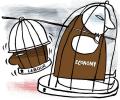
The new labour Codes, notified by the central government in November 2025, have pushed up employee costs for private-sector banks and insurance companies, with these firms reporting higher operating expenses in the October-December quarter (Q3FY26) due to the statutory impact of the new labour Codes.

The Defence Acquisition Council (DAC) has recently approved procurement proposals worth Rs 79,000 crore across three services and it has cleared AoN (Acceptance of Necessity) of Rs 3.3 trillion in financial year 2026 (FY26).

Having missed the target for the current financial year, Finance Minister Nirmala Sitharaman on Saturday proposed to spend Rs 11.21 lakh crore towards capital expenditure (capex) for FY26. However, the capex target is going to be missed by about 93,000 crore for the current financial year.

Foreign direct investment (FDI) in India rose 18 per cent to $35.18 billion during April-September this fiscal year, while the inflow from the US more than doubled to $6.62 billion during the first half of this fiscal, according to government data released on Monday. Foreign Direct Investment (FDI) during April-September FY24 stood at $29.79 billion.

koda Auto Volkswagen India aims to capture a 5 per cent share of India's passenger vehicle market by 2030, driven by new product launches, including alternate fuel vehicles, and a potential entry into the high-volume sub-4 metre SUV segment.

India's largest IT services firm Tata Consultancy Services (TCS) on Thursday reported a 1.39 per cent increase in consolidated net profit to Rs 12,075 crore in the July-September quarter of this financial year.

Two-wheeler (2W) major Bajaj Auto on Friday posted its highest ever quarterly revenue and profit during the third quarter of 2025-26 (Q3FY26). Bajaj Auto's consolidated net profit for the quarter grew by 25 per cent year-on-year (Y-o-Y) to Rs 2,749 crore, with the revenue also growing 23 per cent to Rs 16,204 crore.

As India's biggest Unified Payments Interface (UPI) app PhonePe prepares to list, the updated draft red herring prospectus (DRHP) shows the impact of regulations on the business, and concentration of payments-linked revenue even as UPI lacks MDR (merchant discount rate).

India's industrial production saw a 5.2 per cent increase in February, primarily fuelled by a significant improvement in the manufacturing sector, with 14 out of 23 industry groups recording positive growth.

There is a minimum requirement of Rs 2.5 trillion capital expenditure every year and it is understood at the highest levels of the government.

A new report suggests that prolonged conflict in the Middle East could significantly impact India's GDP growth and inflation.
Shares of information technology (IT) companies were in demand on Friday, with the National Stock Exchange's (NSE's) Nifty IT index rallying 3.3 per cent on . This came after Infosys reported steady sequential growth, driven by health care boost and large deal rampup in a seasonally weak quarter (Q3FY26).

India's peak power demand is projected to hit 270 GW this summer, surpassing last year's record of 250 GW.
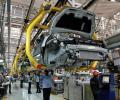
Automobile retail sales in India rose 6 per cent to 2,61,43,943 units in FY25 with rural areas performing better than urban regions across passenger vehicle and two-wheeler segments, dealers' body FADA said on Monday. The last financial year saw growth in sales of passenger vehicles, two-wheelers and three-wheelers.

The quarterly manufacturing index by the industry body Federation of Indian Chambers of Commerce & Industry (Ficci) rose to an all-time high in the third quarter of financial year 2025-26 (Q3FY26), with 91 per cent of respondents reporting either higher or same production levels, against 87 per cent in the previous quarter.

Ola Electric on Wednesday said it has successfully completed a company-wide initiative to reduce cost and improve customer experience.

Private sector lender IDFC First Bank has lowered its savings account rates and introduced new slabs for small and medium balance categories, effective January 9, 2025, as per its website. The interest slabs and rates for higher balance accounts remain unchanged. Despite the revision, the bank continues to offer one of the highest savings account interest rates in the industry among mid-sized banks.

IT services major Infosys on Wednesday reported a 2.2 per cent decline in consolidated net profit to Rs 6,654 crore in the October-December quarter of FY26. The Bengaluru-headquartered firm had registered a net profit (attributable to owners of the company) of Rs 6,806 crore in the year-ago period.

IndiGo operator InterGlobe Aviation had a mildly encouraging third quarter in financial year 2026 (Q3FY26).

Biocon aims to become the world's leading insulin company, capitalising on larger pharmaceutical rivals' strategic shift towards newer, high-margin GLP-1 diabetes therapies. The company plans to expand its insulin presence across 80 markets, focusing on value maximisation and addressing the indispensable need for insulin, particularly for Type-1 and late-stage Type-2 diabetics.

The BSE Sensex and the Nifty 50 declined around 4.5 per cent each since the start of the West Asia conflict.

Foreign investors have remained cautious ahead of the Union Budget amid expectations of limited policy changes.

The amount involved in banking system frauds surged to Rs 21,515 crore in the first half of FY26, up 30 per cent from the same period last year, even as the number of frauds fell 2.8 times to 5,092.
India's power demand rose 4.5 per cent year-on-year (Y-o-Y) to 143 billion units (BUs) in January, marking the highest consumption for the month since 2010, primarily on the back of severe cold wave conditions across northern and eastern regions of the country.

Business confidence in India Inc rose to a five-quarter high in December quarter of FY26, amid further reform expectations and steady domestic demand, a survey by industry body Confederation of Indian Industry (CII) showed. The CII Business Confidence Index (BCI) rose for the third consecutive quarter to 66.5 in the December quarter from 66 in the preceding September quarter.

Under FAME-II, automakers provided subsidies to electric vehicle (EV) customers at the time of purchase, with the understanding that the government would reimburse the firms later.

The Indian government has launched the Urban Challenge Fund (UCF) with a total outlay of Rs 1 lakh crore, aiming to leverage private and market finance for urban infrastructure projects by providing state support in capacity building and credit guarantees.

The stock of the country's largest beer maker, United Breweries (UBBL), is trading at 25-month lows given multiple headwinds related to volumes, regulatory issues, and margin trajectory. After a muted second quarter (July-September) of 2025-26 (Q2FY26), brokerages also expect the company's Q3FY26 performance to be underwhelming.

Jewellery makers are set to post strong revenue growth in the 2025-26 (FY26) October-December quarter (Q3), supported by a robust wedding season and rising value growth, even as volumes decline.

Non-banking financial companies (NBFCs) such as Bajaj Finance, Shriram Finance, Muthoot Finance, and IIFL Finance have regained their growth momentum after losing market share to banks in the post-Covid period. The growth surge is being led by diversified lenders and gold-loan companies while development-finance institutions such as Power Finance Corporation (PFC), REC, and Housing & Urban Development Corporation (Hudco) continue to grow at a slower pace.

'We are staying away from making forward-looking statements on when we will reach 1 trillion, etc. But growth will be rapid; it's only a matter of time.'

To meet liquidity pressure because of advance tax outflows this month, the Reserve Bank of India (RBI) has adopted a measured approach with its latest announcement of open-market operations (OMOs), worth Rs 1 trillion.

Finance Minister Nirmala Sitharaman on Saturday presented Union Budget 2025-26, envisaging an expenditure of Rs 50,65,345 crore, an increase of 7.4 per cent over the current fiscal.

10 stocks from the Nifty 200 index that offer good growth potential and scope to deliver decent returns from current levels, based on brokerage estimates.
Tata Consultancy Services (TCS) announced a 12.22 per cent increase in its net profit for the March quarter, reaching Rs 13,718 crore, alongside a 9.64 per cent rise in revenue from operations.

For engineers across the country, the Oracle job cuts served as a rude reminder of what the AI era has in store for the tech world.

The Indian banking sector could be due for a rise in profitability after several quarters of net interest margin (NIM) compression. The Q2FY26 results suggest NIMs have bottomed out.

