
India Post has launched three premium delivery services, including 24-hour and 48-hour delivery options, to compete with private courier companies and capitalise on the growing e-commerce market.

BMW India has outpaced rival Mercedes-Benz India in luxury car registrations for the first quarter of calendar year 2026, driven by new product launches and a growing electric vehicle segment, even as the overall luxury car market remains largely flat.

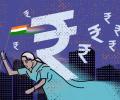
The exchange rate of the rupee against the dollar may delay the economy's rise to become the fourth-largest.

The Indian rupee saw a significant appreciation against the US dollar following President Trump's suspension of military strikes against Iran and the Reserve Bank of India's decision to maintain its key interest rate. Market sentiment was further buoyed by positive comments from the RBI regarding the health of the banking sector.

Indian benchmark equity indices, Sensex and Nifty, experienced a decline in early trade, ending a three-day rally, primarily due to heavy selling in IT stocks and concerns over prolonged instability in West Asia.

Supported by strong buoyancy in public sector capital expenditure (capex), growth in infrastructure investment is expected to accelerate in 2025-26 (FY26) compared to 2024-25 (FY25), according to the First Advance Estimates of gross domestic product (GDP) for FY26 released by the National Statistics Office (NSO) on Wednesday.
Fitch Ratings on Monday said India's steady GDP growth outlook, improved banking sector's financial health and expected interest-rate cuts in 2025 will support credit access for corporates in FY26.

India's outward foreign direct investment (FDI) saw a significant increase of 27.5 per cent, reaching $7.06 billion in March, primarily driven by a sharp rise in guarantees for overseas units, according to the Reserve Bank of India.

Brokerages were divided on Bajaj Finance after its 2025-26 (FY26) third-quarter (October-December/ Q3) results, with a few raising targets on valuation comfort, while others flagged concerns over the credit cost trajectory.

Cigarette-to-soap conglomerate ITC on Thursday reported a consolidated net profit (attributable to owners) of Rs 4,931.19 crore for the third quarter (October-December/Q3) of 2025-26 (FY26), affected by a one-time provision related to the new labour codes and a base effect from an exceptional item in Q3 of 2024-25. In the year-ago period, net profit had stood at Rs 4,934.8 crore.

'Many policyholders do not understand that non-medical expenses, cosmetic treatments, and certain other procedures are not covered by health insurance policies.'

Suzuki Motorcycle India Ltd (SMIPL) has revised its domestic two-wheeler sales growth estimate for FY27 downwards from 7-8 per cent, citing rising commodity costs due to the ongoing West Asia conflict and its impact on consumer affordability.
The government's indirect tax collection is expected to increase by 8.3 pc in the financial year 2025-26 (FY26), according to a report by ICICI Bank. The report also noted that this growth is higher than the 7.1 per cent increase seen in FY25 and is mainly driven by rise in GST revenue from strong urban consumption. It said "The increase is driven by higher goods and services tax collections which in-turn is explained by boost to urban consumption".

India's economy is projected to grow between 6.3 per cent and 6.8 per cent in FY26, according to the Economic Survey 2024-25, tabled in Parliament on Friday. The survey highlights that the country's economic fundamentals remain strong, supported by a stable external account, fiscal consolidation, and private consumption. It noted that the government plans to strengthen long-term industrial growth by focusing on research and development (R&D), micro, small, and medium enterprises (MSMEs), and capital goods.

The country's primary capital markets delivered a robust performance in FY26, emerging as a global leader in initial public offerings (IPOs) despite an uncertain environment, the Economic Survey said on Thursday.

A strong third-quarter (October-December/Q3) performance for 2025-26 (FY26) has helped the stock of India's largest listed pharmaceutical (pharma) company, Sun Pharmaceutical Industries, gain about 7 per cent since the start of February.

Fitch Ratings on Friday said persistently higher oil prices could cause India's retail inflation to rise faster than the expected gradual pace, and lead to a slowdown in economic growth in the first half of financial year 2026-27 (FY27).

Strong performance in the beauty and personal care (BPC) segment, margin gains, and expectations of a breakeven in the fashion business lifted sentiment for FSN E-Commerce Ventures (Nykaa). The consumer technology platform's stock rose 7.5 per cent on Friday, extending gains over the past week to more than 17 per cent. Most brokerages have upgraded the stock following its third-quarter (October-December/Q3) performance and higher profit expectations ahead.

Small- and midcap stocks have delivered their biggest monthly rally in 12 years, but rising oil prices and global tensions could make the road ahead volatile.

Of the Rs 31,820.80 crore allocated to central sector schemes and projects, only Rs 11,868.05 crore was utilised, according to the revised estimates.

India's aviation sector is facing fresh turbulence, with rising fuel costs, the Ministry of Civil Aviation's free-seat directive, and geopolitical disruptions in West Asia clouding near-term earnings visibility.

The loss of input tax credit (ITC) following the rationalisation of the goods and services tax (GST) on individual life and health insurance from 18 per cent to nil is may weigh on the profits of life insurers in the third quarter (Q3) of 2025-26 (FY26).

Reliance Industries Limited (RIL) faced a challenging fourth quarter, with its energy business experiencing significant headwinds, leading to overall muted results and prompting analysts to adjust their outlook, even as consumer segments like Jio and retail demonstrated robust growth.

Shares of apparel retail major Trent fell over 8.6 per cent to ~4,048 apiece at the close of trade on Tuesday. Trading near its 52-week low, the stock has shed about 43 per cent over the past year. Sentiment around the Tata group company weakened after it reported lower than expected revenue for the third quarter (October-December/Q3) of 2025-26 (FY26). Brokerages expect the stock to remain under pressure in the near term.

After two years of strong gains, smallcap stocks fell sharply in 2025, but the correction may be setting up opportunities for long-term investors.

'Even last year, when India bought gold, the physical quantity was much less than the previous years.'

Bharat Coking Coal Ltd (BCCL) has suspended coal mining and dispatch operations at its ABOCP mine in Dhanbad since April 2, following a protest by local workers demanding full-time wages and benefits.

The Reserve Bank on Wednesday revised upward its growth estimates for the current fiscal year to 6.8 per cent and lowered its inflation projection to 2.6 per cent based on an above-normal monsoon and the rationalisation of GST rates.

Pharma major Dr Reddy's Laboratories (DRL) reported a 14 per cent year-on-year (Y-o-Y) drop in consolidated net profit to Rs 1,210 crore in the December quarter of FY 2025-26 (Q3FY26) on low sales of cancer drug Lenalidomide in the North American market. The firm's revenue from operations grew to Rs 8,727 crore in Q3FY26, a 4.4 per cent Y-o-Y increase from Rs 8,357 crore recorded for the same quarter last year.

The fiscal tilt towards capex benefits companies in investment-related sectors like capital goods, defence equipment, engineering & construction and metal & mining. The planned cut in revenue expenditure will weigh on companies in consumption sectors like FMCG, consumer durables and retail.

This would imply a 29 per cent year-on-year rise, significantly lower than growth rates seen in recent years.

Finance Minister Nirmala Sitharaman tabled the first batch of Supplementary Demands for Grants for 2025-26 in the Lok Sabha, which seeks approval for a gross additional expenditure of Rs 1.32 lakh crore.

India Ratings on Thursday said that any broad-based or strong recovery in corporate capital expenditure was unlikely in the upcoming financial year 2026 (FY26) due to uncertainty of domestic and external demand. The uncertainty is adversely affecting the overall corporate sector capex. Interest rates on credit are not the primary deterrent to decisions about capital expenditure, said Soumyajit Niyogi, director, core analytical group, Ind-Ra, in a webinar on the credit market outlook.

Hindustan Unilever Limited's (HUL's) standalone revenue grew 4.4 per cent year-on-year (Y-o-Y), while volume rose 3.5 per cent during the third quarter of financial year 2026 (FY26).

UltraTech Cement, an Aditya Birla group company, has become the world's largest cement producer outside China, surpassing 200 million tonnes per annum (mtpa) of installed capacity in India. The company plans to invest Rs 16,000 crore to reach a target capacity of 240 mtpa by the financial year 2027-28.

'... with the rest split between mid and smallcaps, as valuations are becoming more attractive across segments.'

A BofA Global Research report indicates that Paytm is leading in monetisation compared to its competitors due to its diversified mix of merchant lending and financial services, which enhances profitability and strengthens its position in the Indian fintech market.

Foreign investors pulled out Rs 21,000 crore (around $2.3 billion) from Indian equities over the last four trading sessions amid deteriorating global risk sentiment triggered by the West Asia crisis.

Here are the key numbers to watch out for in the Union Budget for 2025-26:

IT services major Wipro on Friday reported a 7 per cent decline in consolidated net profit to Rs 3,119 crore in the third quarter of FY26, weighed by a one-time provisional impact of Rs 302.8 crore due to the implementation of new Labour Codes.
