
Industry bodies representing alcoholic beverage manufacturers have welcomed the India-UK Free Trade Agreement (FTA), which will see tariffs on UK whisky and gin reduced, boosting bilateral trade and supporting premiumisation. However, domestic manufacturers are calling for state governments to withdraw concessions currently enjoyed by imported liquor brands.

Foreign investors pulled out Rs 17,955 crore (Rs 2 billion) from Indian equities in the first two weeks of this month, taking the total outflow to Rs 1.6 lakh crore (Rs 18.4 billion) in 2025.' This sharp withdrawal follows a net outflow of Rs 3,765 crore in November, extending the pressure on domestic equity markets.

With more granular reporting and enhanced data matching, mismatches are likely to be identified more quickly.

Accenture's revised annual revenue growth forecast and weaker-than-expected fourth-quarter guidance have sent shockwaves through the Indian IT sector, causing major IT stocks and the Nifty IT index to tumble significantly.

Indian benchmark indices Sensex and Nifty experienced a significant slump in early trade, mirroring weak global trends, as escalating tensions in West Asia, particularly a drone attack on the UAE's Barakah nuclear facility, pushed crude oil prices higher. Track Sensex, Nifty50 movement and key market drivers for May 18, 2026.

With momentum building around the IPO, the NSE saw a surge in retail investors in the last two years, making it one of the widely traded stocks in the unlisted market.

Indian mutual funds have significantly reduced their exposure to the information technology (IT) sector, with holdings now at an eight-year low of 6.7% in April 2026, driven by weak earnings growth, global demand slowdown, and concerns over AI-led disruption.

Indian benchmark equity indices, Sensex and Nifty, closed lower due to investor caution over rising bond yields, a weaker rupee, and fresh fuel price hikes, which have revived inflation concerns.

Equity mutual funds attracted Rs 29,911 crore in November, marking a 21 per cent increase from the preceding month, according to data released by industry body Amfi on Thursday. This rise in inflows comes after three consecutive months of decline, signalling an improvement in investor sentiment.

They accounted for 39.1 per cent of the premium paid to trade equity options in September 2025.

Indian benchmark stock indices, Sensex and Nifty, experienced a significant decline for the third consecutive day, with the Sensex tumbling 1,092 points and Nifty closing below 24,550. This downturn was primarily driven by the India Meteorological Department's forecast of a below-normal southwest monsoon and ongoing geopolitical uncertainties surrounding the US-Iran ceasefire arrangement.

Foreign portfolio investors have started 2026 on a cautious note, extending their selling streak from last year by withdrawing Rs 7,608 crore ($846 million) from Indian equities in the first two trading sessions of January. The withdrawal of funds followed the largest outflow of Rs 1.66 lakh crore ($18.9 billion) recorded in 2025, triggered by volatile currency movements, global trade tensions and concerns over potential US tariffs, and stretched market valuations.

Yield-generating instruments like Infrastructure Investment Trusts (Invits), Real Estate Investment Trusts (Reits), and Non-Convertible Debentures (NCDs) are witnessing a surge in investor interest, contrasting with a notable slowdown in the equity primary market, which saw only one IPO in April.

The Nifty 50 firms' contribution to the overall earnings of India Inc has steadily declined, reaching its lowest share in at least 21 quarters at 47.1 per cent in Q4FY26, down from 51.8 per cent a year earlier.

A record amount of pension money may be finding its way into the stock market, if buying figures in the National Stock Exchange (NSE) data are any indication. Category inflows touched Rs 37,409 crore for the three months ending September 2025, shows an analysis of NSE data.

'India has initiated a bear market and we will still go lower. It has nothing to do with the economy.'

Investors should do thorough due diligence when selecting a platform.

Indian stock markets are expected to remain highly sensitive to geopolitical developments, particularly the US-Iran situation, and crude oil prices this week, with analysts also highlighting the influence of the rupee-dollar trend, foreign investor activity, and upcoming inflation data.

In reality, no single philosophy can dominate every market cycle. That's why we've explained how these approaches work to help investors make informed and realistic decisions.

'Of our population of 1.4 billion, 80 per cent are into doomscrolling.'

Indian stock markets concluded Tuesday's trading session lower, reversing intraday gains due to late-session selling in blue-chip stocks like HDFC Bank and Reliance Industries. The decline was primarily driven by the Indian rupee hitting a new record low against the US dollar and elevated global crude oil prices, compounded by geopolitical uncertainties.

TVS Venu Group has agreed to acquire a minority stake of up to 9.9 per cent in Jana Small Finance Bank, including a 4.9 per cent ownership by TVS Motor Company, through a combination of primary issuance of warrants and a secondary purchase.

Indian stock markets are set to be influenced by developments in US-Iran negotiations, crude oil prices, and foreign investor activity in the upcoming holiday-shortened week, according to market analysts.

Markets face risk of a prolonged bear phase as oil shocks and geopolitical tensions test inflation, growth and investor confidence globally, points out Debashis Basu.

Indian stock markets saw a significant rebound, with the Sensex jumping nearly 790 points, primarily fuelled by strong buying interest in telecom, pharma, and private banking shares, despite a volatile trading session and a weakening rupee.

Leading stock exchange BSE Ltd announced a 61 per cent increase in consolidated net profit to Rs 795.47 crore for the March quarter, driven by higher income, and reported its highest-ever performance in its 150-year history for the full financial year 2025-26.

Indian benchmark indices, Sensex and Nifty, opened lower on Tuesday, driven by a surge in global crude oil prices and continued outflows by Foreign Institutional Investors (FIIs), reflecting fragile market sentiment influenced by external factors.
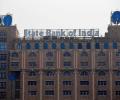
State Bank of India (SBI) reported a 6 per cent increase in standalone net profit to Rs 19,684 crore for the fourth quarter ended March 2026, driven by a significant decline in bad loans.

Tulsi Gabbard has resigned from her position as Director of National Intelligence to support her husband, Abraham Williams, who has been diagnosed with a rare form of bone cancer. Her resignation will take effect on June 30, with Aaron Lukas set to take over as acting intelligence chief.

Two South African scientists of Indian origin, Professor Salim Abdool Karim and Professor Keertan Dheda, have been awarded the Order of Mapungubwe for their contributions to public health, particularly in HIV/AIDS, tuberculosis research, and pulmonology.

The combined market valuation of four of India's top-10 most valued firms, including State Bank of India, Bharti Airtel, Tata Consultancy Services, and Larsen & Toubro, eroded by Rs 1 lakh crore last week amidst a volatile and range-bound equity market.

India's mergers and acquisitions (M&A) market is projected to maintain an annual run-rate of approximately $200 billion, evenly split between domestic, inbound, and outbound transactions, despite global geopolitical turbulence, according to Rajesh Singhi, global co-head, M&A Advisory, Standard Chartered Bank.

Indian equity benchmark indices Sensex and Nifty tumbled over 1 per cent for the third consecutive day, driven by a sharp rally in crude oil prices, massive selling in IT stocks, and unabated foreign fund outflows amid ongoing geopolitical tensions in the Middle East.
Indian benchmark indices Sensex and Nifty experienced volatile trade, declining in early deals before fluctuating, as investors reacted to unabated foreign fund outflows and rising geopolitical uncertainties, particularly in West Asia.

'Once the market decides it wants to go up, it goes up -- no amount of bad news can really hold it back.'

Prime Minister Narendra Modi has urged states to balance the opportunities presented by artificial intelligence with the need to safeguard against social challenges like cyber fraud and drug abuse. He also warned of the risks posed by El Nino conditions, calling for stronger water conservation measures and emphasising the collective resolve towards a 'Viksit Bharat'.

Donald Trump agreed with Xi Jinping's assessment of the US as a 'declining nation,' but attributed the decline to the policies of the Biden administration.

Ask rediffGURU and PF, MF and insurance expert Purshotam Lal your mutual fund, insurance and personal finance-related questions.

Indian equities on Dalal Street saw volatility as global market trends and oil price hike impacted investor sentiment. Track Sensex, Nifty50 movement and key market drivers for Apr 23, 2026.

OpenAI and Anthropic are not simply enabling new software capabilities, they are moving directly into enterprise execution, workflow ownership, and decision orchestration.
