
Indian benchmark indices, Sensex and Nifty, bounced back significantly after two days of losses, with the Sensex climbing 443.97 points to settle at 76,922.64, driven by positive global market trends and a drop in crude oil prices.

Smallcap funds give investors access to businesses that can grow much faster than the broader economy.

Indian benchmark indices Sensex and Nifty extended their winning streak to a fourth consecutive day, driven by strong buying in blue-chip bank stocks and a decline in global crude oil prices. Fresh foreign fund inflows also contributed to the optimistic sentiment in the domestic equity market.

The International Cycling Union (UCI) has praised India's "outstanding success" in its nationwide World Bicycle Day celebrations, which involved approximately 200 cities and towns across 28 States and Union Territories. UCI President David Lappartient commended the Cycling Federation of India (CFI) for its remarkable organisational efforts and also lauded the launch of the Asmita Women's League, a grassroots programme aimed at promoting gender equity in cycling.

'Buy on dips, buy on dips and sell on rise.'

Trent reported a 20 per cent revenue rebound in Q4FY26, driven by a recovery in like-for-like growth and significant store additions. The company's board has approved raising up to 2,500 crore in equity to fund investments in store network upgrades, new brands, supply chain automation, and Star Bazaar expansion, alongside a 1:2 bonus issue and a 6 dividend.
'Midcaps and smallcaps are the 'go-to segments' for retail investors.'

Indian stock exchanges are actively preparing to implement a new closing auction mechanism (CAS) from August 3, aimed at enhancing transparency in determining closing prices for securities with derivative contracts.

The highlight in January, with no surprise, has been flows into gold and silver ETFs.

Indian benchmark indices Sensex and Nifty advanced in early trade, driven by renewed foreign fund inflows and a significant drop in crude oil prices to pre-war levels, signalling an uptrend in the market. Track Sensex, Nifty on July 7, 2026.

SBI Funds Management, India's largest asset management company, has set its IPO price band between 545 and Rs 574 per share, valuing the company at 1.2 trillion. The management explained the 'moderate' valuation aims to instil investor confidence amidst market uncertainty, while also highlighting plans for AI integration, expansion into GIFT City, and new alternative investment funds.

Life cycle funds may suit people who are starting their investing journey. They may suit those who do not want to monitor their investments frequently. Busy professionals, beginners and delegators, who lack the time, information or interest to manage asset allocation actively, may find these funds useful.

Indian benchmark indices, Sensex and Nifty, experienced a decline in early trade due to uncertainty surrounding the upcoming US-Iran negotiations in Doha. Foreign fund outflows and a dip in major IT stocks further contributed to the market's cautious sentiment, despite mixed performance in global markets.

The National Stock Exchange (NSE) is reportedly planning to launch its much-anticipated initial public offering (IPO), estimated at around Rs 30,000 crore, in September, potentially valuing the exchange at over Rs 5 lakh crore.

The change comes at a time when online MF distributors are increasingly moving investors from the SoA mode to demat holdings.

Indian equities trading activity saw a moderation in FY26, with cash market turnover declining and derivatives growth remaining subdued due to regulatory tightening and weak market performance. Further impacts are expected from new RBI norms and a hike in Securities Transaction Tax (STT).

Indian benchmark indices Sensex and Nifty rallied in early trade, driven by a significant decline in Brent crude oil prices, which fell below the USD 73 per barrel level, and positive trends observed across most Asian equities.

Taxpayers must provide more details to support deduction and exemption claims.

Investor interest in precious metal exchange-traded funds (ETFs) rebounded sharply in June, with silver ETFs attracting an estimated 4,900 crore and gold ETFs around 2,900 crore in net inflows, following a significant correction in gold and silver prices.

IT major Wipro reported a nearly flat consolidated net profit of Rs 3,352 crore in the April-June quarter of FY27, a marginal increase from Rs 3,330.4 crore in the year-ago period, while revenue from operations grew 10.6 per cent to Rs 24,478.6 crore.
Indian benchmark equity indices, Sensex and Nifty, rebounded nearly 1 per cent, with the Sensex jumping 790.54 points to 76,991.22, driven by softening crude oil prices and strong buying in banking, financial, and IT shares.

IT stocks had their worst first half fall in decades, with the Nifty IT index declining 31% in the January-June 2026 period, its biggest decline in the first six months of a calendar year since 2003.
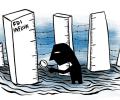
India's net foreign direct investment (FDI) surged more than fourfold to $6.58 billion in April 2026, driven by a significant increase in equity inflows and reduced repatriation by foreign investors, according to the Reserve Bank of India (RBI).

The report notes that equities had faced pressure from elevated valuation premiums, subdued nominal gross domestic product (GDP) and earnings growth, sustained foreign portfolio investor (FPI) selling, artificial intelligence (AI) infrastructure euphoria, and external shocks including US tariffs and a spike in crude oil prices due to geopolitical tensions in West Asia. However, several of these factors are now reversing.
Danish brewing giant Carlsberg has confidentially filed draft papers with India's markets regulator Sebi for an initial public offering (IPO) of its Indian business, joining a growing list of multinational companies looking to tap India's equity markets.

In essence, Tata Sons will continue to be a CIC, whether registered or unregistered. It will have to follow the 90:60 principle.
If it qualifies as belonging to the upper layer, public listing will be one of the regulatory requirements. However, if it qualifies as 'unregistered CIC', it will escape from prudential regulation, explains Tamal Bandyopadhyay.

State-owned Bank of Baroda (BoB) reported a 72 per cent year-on-year (Y-o-Y) drop in net profit to 1,278 crore for Q1FY27 due to a $600 million out-of-court settlement related to NMC Health Plc. In contrast, Bank of India (BoI) saw its net profit rise by 36.23 per cent Y-o-Y to 3,068 crore for the same quarter, driven by healthy loan growth and improved asset quality.

Understanding a product and assessing its suitability improve the chances of staying invested. Use life insurance mainly to cover risk, not to seek returns.
Indian benchmark indices, Sensex and Nifty, rebounded in early trade after two days of decline, driven by positive global market trends and strong buying in auto stocks. This recovery follows a robust performance in US markets and a rally in Asian markets, particularly Japan's Nikkei, fueled by AI-driven technology optimism. Track Sensex, Nifty on July 1.

Indian benchmark equity indices, Sensex and Nifty, extended their rally for a fifth consecutive session, driven by optimism surrounding a potential US-Iran peace deal and a significant drop in crude oil prices. Despite hawkish remarks from the US Fed, investors remain hopeful that easing energy prices could temper inflationary pressures.

Benchmark equity indices Sensex and Nifty ended lower on Monday as renewed hostilities between the US and Iran and rising oil prices unnerved investors. The 30-share BSE Sensex declined 372.10 points, or 0.48 per cent, to settle at 76,728.37.

Indian benchmark equity indices, Sensex and Nifty, ended lower after a five-day rally, with the Sensex dropping 607 points and the Nifty falling to 24,013.10. The decline was primarily driven by heavy selling in IT firms following Accenture's trimmed revenue guidance and renewed geopolitical uncertainty, specifically the postponement of US-Iran negotiations.

Indian benchmark indices, Sensex and Nifty, experienced subdued trading and turned flat on Tuesday as investors engaged in profit-booking following a recent rally, compounded by weak Asian market trends and fresh foreign fund outflows.

Indian benchmark indices, Sensex and Nifty, experienced a significant drop of over 1 per cent, driven by a bearish trend in global markets, weakness in HDFC Bank and IT firms, and fresh foreign fund outflows.
Indian benchmark indices Sensex and Nifty experienced a significant downturn in early trade, ending a five-day rally, primarily due to heavy selling in IT firms following a revenue growth guidance cut by global consulting giant Accenture.

Jio Platforms Ltd, the digital services arm of Reliance Industries, has filed draft papers for an initial public offering (IPO) aiming to raise approximately USD 4 billion (about Rs 37,700 crore), which is expected to be India's largest ever IPO.

The good news is that you don't need to spend hours manually comparing every scheme. In this article, we have explained how you can shortlist a winning fund in a few minutes by evaluating some crucial parameters.

Market benchmark indices Sensex and Nifty drifted lower in early trade on Monday amid renewed hostilities between the US and Iran. The 30-share BSE Sensex declined 63.65 points to 77,047.63 during initial trading. The 50-share NSE Nifty went marginally up by 16.55 points to 24,070.20. Later, the BSE benchmark dropped 246.54 points to 76,853.93, and the Nifty dipped 50.55 points to 24,005.45. Track Sensex, Nifty on June 29.

Indian benchmark indices Sensex and Nifty continued their upward trend for a second consecutive day, with the Sensex gaining over 800 points, driven by strong performances from heavyweights like Reliance Industries, ICICI Bank, and HDFC Bank, alongside positive cues from easing crude oil prices and robust IT sector earnings.
Indian benchmark indices Sensex and Nifty experienced a significant decline in early trade, driven by renewed tensions between the US and Iran and a subsequent spike in global crude oil prices, creating uncertainty in the market. Track Sensex, Nifty on July 8.
