

IIT Kharagpur's director challenges Calcutta University to become a central hub in a global knowledge network, urging students to prioritise innovation and problem-solving over traditional rankings.
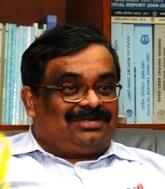
Key Points
- IIT Kharagpur Director Suman Chakraborty urged Calcutta University to integrate into a global knowledge ecosystem for enhanced knowledge sharing and collaboration.
- Students should prioritise expanding frontiers and solving problems using science and technology over focusing solely on rankings.
- Universities must evolve their knowledge systems and pedagogical approaches to adapt to the rapidly changing global landscape.
- Artificial intelligence can contribute to India's scientific advancement by enabling new ways of thinking and ushering in a new era of innovation.
- Calcutta University should strengthen industry-academia ties, expand international collaborations, and build infrastructure for interdisciplinary research.
The over 160-year-old University of Calcutta must emerge as a key stakeholder in a globally networked knowledge ecosystem, IIT Kharagpur Director Suman Chakraborty said at the varsity's convocation on Monday.
He asked students to measure success not by ranking but by expanding frontiers.
"Universities should not function as isolated islands but become part of a global ecosystem to evolve in a truly functional network of knowledge sharing," Chakraborty said in his keynote address.
He told the students to use science and technology to define and solve problems.
"From the classroom, join the network of global campuses. Turn Labs into a college ecosystem. Open knowledge platform with data tools," Chakraborty said.
Urging students and researchers to remain curious, he added, "Don't seek permission, but do it. History does not permit permission."
"Measure success not by ranking, but ask: have we expanded frontiers? We will nurture risk-taking research," he said.
Referring to Bengal's intellectual legacy, Chakraborty said the liberal ideas of Raja Rammohan Roy and Rabindranath Tagore inspired generations beyond textbooks.
The Role of Artificial Intelligence
On artificial intelligence, he observed that AI can generate answers with surprising precision but cannot generate the deepest of questions.
"AI raises the possibility of new ways of thinking and can usher in the era of another renaissance which can contribute to India's advancement in scientific research," Chakraborty said.
Recalling the legacy of IIT Kharagpur, he noted it began at Hijli jail and said both institutions in Bengal must be part of the envisioned global network.
He also cited pioneering contributions of scientists Jagadish Chandra Bose, Satyendra Nath Bose and Prafulla Chandra Ray.
"Revolution in knowledge rarely begins from answers but from questions," Chakraborty said.
Evolving Knowledge Systems
Vice Chancellor Asutosh Ghosh said the fast-changing world demands evolving knowledge systems. "Knowledge systems and pedagogical requirements are shifting at a breathtaking pace. The CU, like other educational institutions, must evolve accordingly and keep the momentum," he said.
Ghosh stressed strengthening the academic and administrative capacity of affiliated colleges, deepening industry-academia ties, expanding international collaborations and building infrastructure for interdisciplinary research.







 © 2026