

As a protege of Shinzo Abe, Sanae Takaichi is expected to scale bilateral ties much higher.
Trade and investment shall grow. People-to-people contacts shall be scaled up, points out Dr Rajaram Panda.
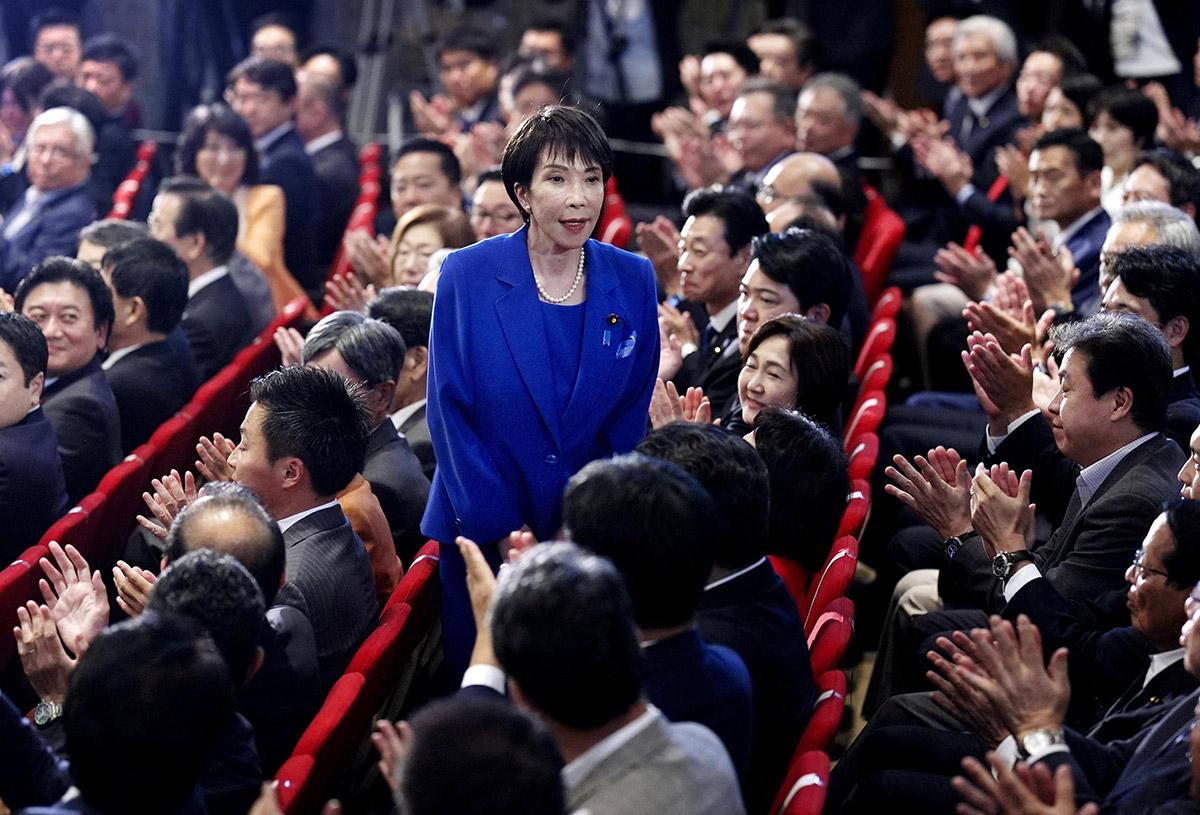
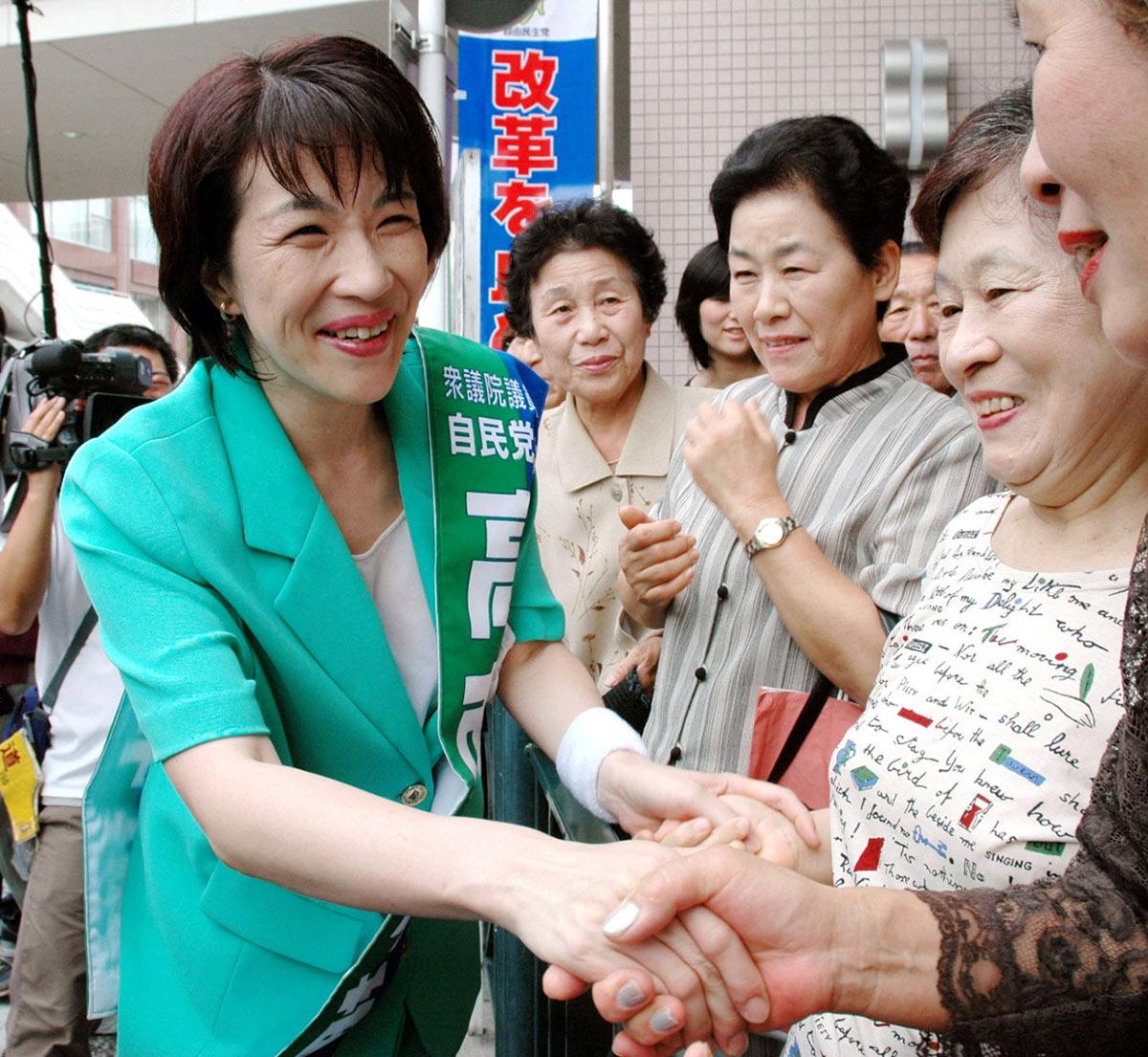
On October 4, 2025, Japan's Liberal Democratic Party (LDP) made history by voting Lower House member and former economic security minister Sanae Takaichi, a hard-line ultra-conservative and China hawk, as the party's president.
This also witnessed policy strength and rank-and-file support among party members, making Takaichi to be the first woman ever elected to hold that position for the LDP.
By being elected top leader by Japan's embattled governing party, Takaichi succeeds Prime Minister Shigeru Ishiba as the party's president and will become Japan's first female prime minister of the coalition government.
This is a milestone in a country where women are vastly under-represented in politics.
Takaichi had always strong backing from Shinzo Abe, the former prime minister, and ran first in the LDP presidential election in 2021, when Fumio Kishida won. This was her third attempt.
Takaichi's victory could herald a rightward shift in Japan, where anti-establishment politicians have recently made gains with voters concerned about stagnant wages, rising prices and an influx of foreign workers and tourists.
In a short speech after her victory, she promised to 'work, work and work' and exhorted her colleagues to 'work as hard as a carriage horse'.
She is expected to be named prime minister during an extraordinary Diet session to be convened on October 15.
Takaichi's challenge to resurrect the LDP's fortunes is huge as the party suffered bruising defeats in elections over the past year, which left the party in the unusual position of being a minority in both Houses of the Diet, the Japanese parliament.
With the denouement of the LDP's popularity under Ishiba, the party's troubles had created an opening for populist parties, which gained strength with a 'Japanese First' message.
With Takaichi's election, Japan is likely to witness a growing popularity of right-wing ideology in Japan.
Political analysts in Japan saw that Trumpism has suddenly arrived in Asia.
Under Takaichi, Japan is likely to see major reorientation in Japan's foreign policy outlook.
Her prescription for domestic economic issues could also see a different approach.
While she backs economic stimulus, she also backs a stronger military, and stricter immigration controls.
Takaichi was an ally of Shinzo Abe, the former prime minister who was assassinated in 2022.
The rise of Japan's 'Iron Lady' could herald Japan's hard-line shift to countering North Korea.
She has pushed militarisation and downplayed World War II atrocities, setting up potential clashes with both Koreas.
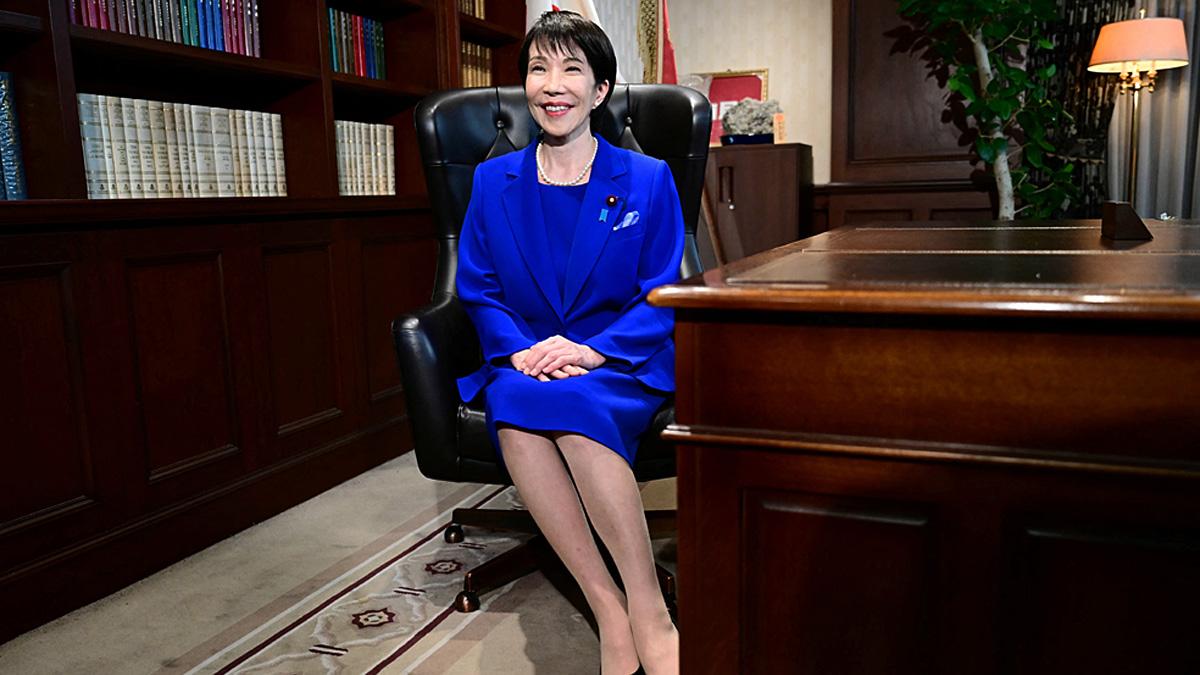
A firebrand security hawk who has pushed Japan to renounce its pacifist military stance, her approach potentially endangers cooperation with Seoul as well as heightens tensions with China.
Stemming from her hawkish and nationalist stance, including her regular visits to the controversial Yasukuni shrine, where 14 Class-A war criminals from World War II are memorialised, she has now put China and Koreas on notice.
The shrine is viewed by China and South Korea as a symbol of wartime militarism and therefore has long been a source of diplomatic strain with Beijing and Seoul.
Japan's ties with China and South Korea might worsen during Takaichi's tenure.
Relations with the United States also could nosedive if the trade issue is not resolved amicably.
Takaichi is likely to be tough in dealing with the Trump administration, which has imposed crippling tariffs on Japan and other Asian allies.
She made her position amply clear during the campaign that she would consider negotiating a recent trade deal with the United States.
In July 2025, a trade deal was finalised with the Trump administration, after which Japan received a lower-than-threatened 15 per cent across-the-board tariff on its exports in exchange for a commitment to inject $550 billion into the US economy.
However, there are some ambiguities on how Japan will deploy that committed $550 billion in investment, loans and loan guarantees remain.
However, being a staunch follower of Abe, Takaichi who spent two years in the US in the 1980s, is likely to seek a warm relationship with President Trump.
Trump is set to visit Asia in late October and might stop over in Japan, during which Abe's shared affection could help Takaichi to reset relations with Trump.
There is another side of Takaichi's personality. Though her victory is a landmark for Japan, being the first woman to lead the LDP in its 70-year history, she is not seen as a champion of women's rights.
For example, she has opposed legal changes that could allow women to reign as emperor.
She has also spoken against the idea of changing the century-old law requiring married couples to share a surname for legal purposes, saying that revising the law could lead to divorce or extramarital affairs.
She also opposes same-sex marriage. These stances align her with the conservative wing of Japan's traditionalist ruling party.
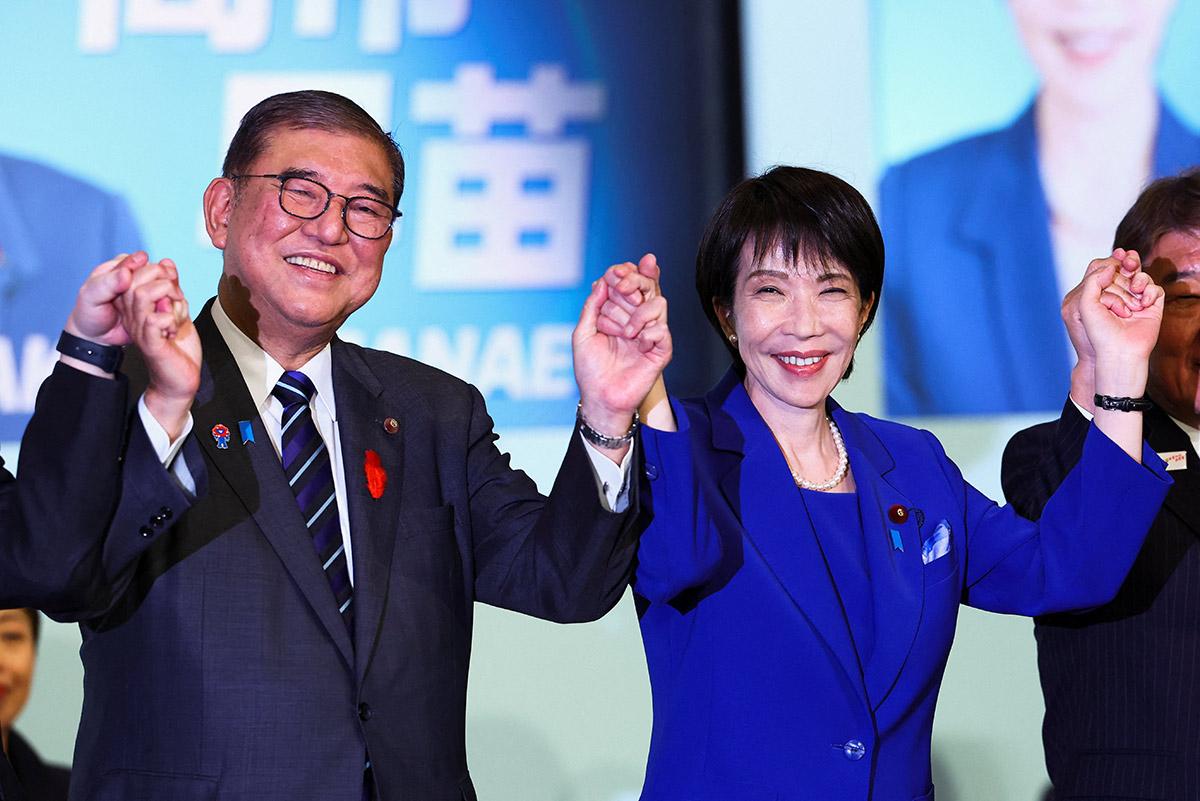
As regards women representation in previous cabinets, the situation has been dismal.
For example, there were only two women in Ishiba's 20-person cabinet.
Women make up only about a fifth of the Diet. Takaichi vows to strike a gender balance in her cabinet, thereby emulating Nordic countries, which can typically be closer to 50 per cent.
This being so, the fact is that Takaichi had often acted, or seen to have acted, as a 'roadblock' to feminist causes.
She is perceived to be lacking deep convictions on women's issues and women's rights do not seem to be on her agenda.
At present, women hold just 15 per cent of Lower House seats and only two of 47 prefectural governorships.
Japan lags globally, ranking 118th in the World Economic Forum's 2025 Gender Gap Report.
Still, Takaichi has spoken on menopausal struggles, emphasising the need to educate men on women's health in schools and workplaces.
Takaichi's election could herald a move towards women's participation in politics.
Regrettably she has shown little inclination to fight against patriarchal norms.
She needs to remember that within the LDP, women advocating for diversity or gender equality have often been sidelined.
The onus is high on Takaichi who has largely mirrored the views of influential male leaders, which have aided her political ascent.
Since it will be a coalition government, Takaichi needs to factor the concerns and views of the coalition partner.
The junior coalition partner, Komeito, is a centrist party backed by the Buddhist organisation Sokkai Gakkai and known for prioritising social welfare and pacifist principles.
Here, Takaichi needs to choose a policy of adjustment and compromise to maintain political stability, else Komeito that has already indicated would consider dissolving the alliance could pull the plug on Takaichi's government.
On the economy, Takaichi was an outlier among the candidates in her plans for the Japanese economy.
While her rivals broadly backed the Bank of Japan's efforts to gradually increase interest rates to combat inflation, she instead espoused a return to 'Abenomics', a platform of low interest rates, aggressive monetary easing, coupled with broad fiscal spending.
Analysts feel, if reintroduced, that could unsettle markets. Her immediate priority would be to revive the LDP's political fortune, which is on the downhill at the moment.
As measures to deal with surging consumer prices, she is likely to cut the gasoline tax and expand tax subsidies to local governments.
She also is likely to pursue a combination of cash payouts and tax exemption increases.
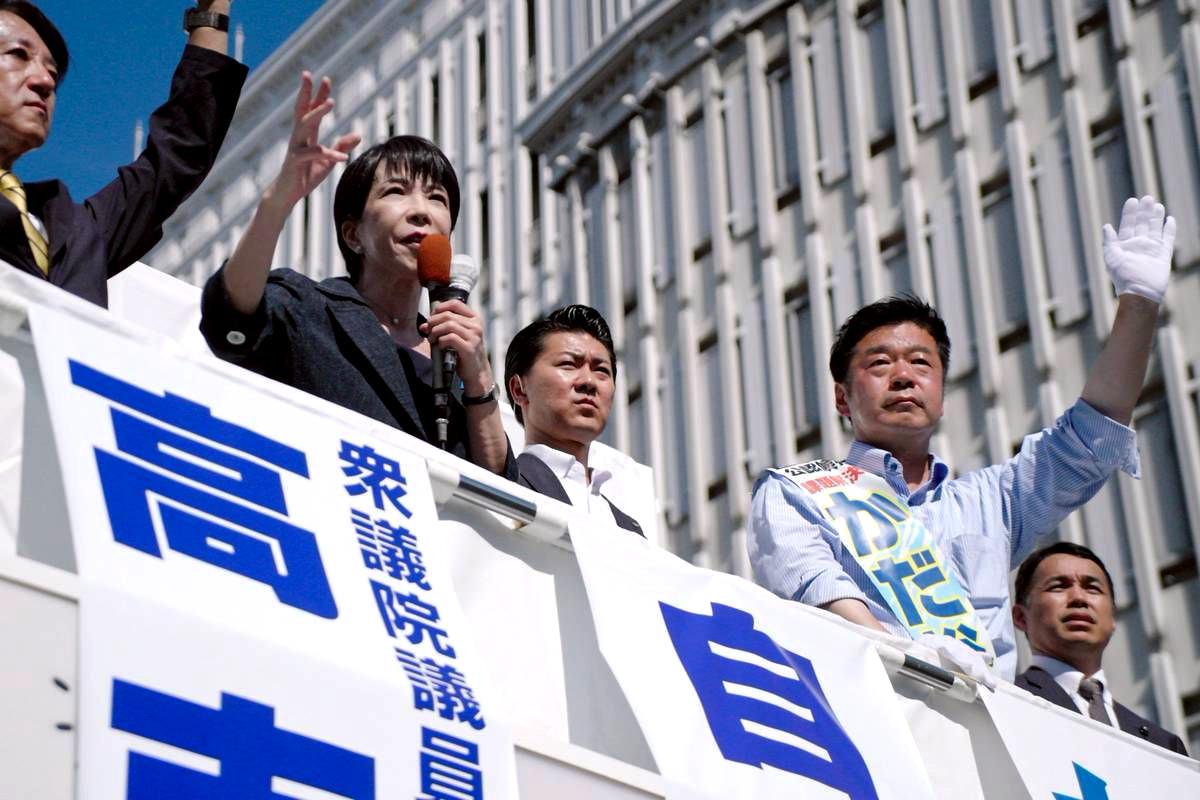
On Foreign Policy
On the foreign policy front, Takaichi is likely to focus more on security and is likely to seek an assertive global role.
She is well known for her hawkish position on China and has long advocated revising Japan's pacifist post-war constitution.
Some time ago, she suggested a 'quasi-security alliance' with Taiwan, a proposal likely to provoke Beijing.
Taiwan's President Lai Ching-te welcomed her victory, calling her a 'steadfast friend of Taiwan'. He expressed hope that under Takaichi's leadership Taiwan and Japan can deepen their partnership in areas like economic trade, security, and technological cooperation. Such a stance would worry Beijing.
There are mixed reactions to Takaichi's domestic and foreign policy views.
While her political stance signals a deliberate rightward shift aimed at consolidating backing among conservative voters and within the LDP, which have faced internal divisions and setbacks in recent years, her policies could also polarise Japanese society when economic frustrations and nationalist sentiments are brought into mainstream politics.
Her hawkish policies by advocating a stronger military, increased fiscal spending, promotion of nuclear fusion, cyber-security and stricter immigration could be problematic.
Unless Takaichi navigates her policies carefully, her revisionist views could complicate relations with Beijing and Seoul and also affect the coalition with Komeito.
Takaichi's capabilities as a leader will be severely tested when she seeks to avoid social fragmentation by thinking about the interests of all the people, rather than those conservative elements that strongly support her.
She has expressed willingness to offer cabinet berths to Opposition candidates if they go along with the government's defined policy lines.
The door for a coalition partnership with the Opposition Democratic Party for the People (DPP) is open.
Nippon Ishin (Japan Innovation Party) had been seen as a potential partner, but its LDP ally Shinjiro Koizumi lost to Takaichi.
DPP leader Yuichiro Tamaki has hinted at the possibility of his party teaming up with the LDP-Komeito coalition.
Takaichi is open to the idea of expanding the coalition framework.
Takaichi plans to appoint LDP election rival Toshimitsu Motegi as foreign minister after she officially becomes prime minister.
Motegi, 69, a former LDP secretary-general, served as foreign minister for about two years from September 2019 and concluded Japan-US trade negotiations with the first Trump administration.
Takaichi thinks Motegi is cut out for the post given the ongoing trade talks with the US.
She also plans to name Minoru Kihara, a former defence minister with similar political views, as chief cabinet secretary.

China's reaction to Takaichi's election was guarded. China's ministry of foreign affairs noted the election result as Japan's internal affair and hoped Japan will adhere to the principles and consensus of the four China-Japan political documents, honour its political commitments on major issues such as history and Taiwan, pursue a positive and rational policy toward China and fully implement its position to comprehensively promote a strategic and mutually beneficial relationship.
Impact on India-Japan relations
India-Japan ties deepened during Shinzo Abe's tenure as Japan's prime minister. As a protege of Abe, Takaichi is expected to scale bilateral ties much higher.
Trade and investment shall grow. People-to-people contacts shall be scaled up.
There are multiple bilateral frameworks which shall hone the ties further. In the larger Indo-Pacific, both India and Japan as Quad members shall continue to work together for global good.
India would see Takaichi's elevation as prime minister as symbolic of women empowerment in a country long perceived to be male-dominated.
Dr Rajaram Panda is former Senior Fellow at the Pradhanmantri Memorial Museum and Library, New Delhi.
Photographs curated by Manisha Kotian/Rediff
Feature Presentation: Aslam Hunani/Rediff




 © 2026