

'Many of them are mutilated beyond recognition. Every day an encounter takes place.'
'Bastar has been burnt to ash.'.

Since Independence, India has faced various insurgencies and secessionist movements, notably in the north east, Jammu and Kashmir and in the Punjab.
These insurgencies have taken a bloody toll on the lives of several thousand militants and civilians but none of them have seen women in the forefront of the armed struggle as has been the case with the ongoing Maoist struggle stretching across large swathes of central India.
This two decade-long insurgency is spread over some of the most thickly forested regions of Bastar in Chhattisgarh, West Singhbhum in Jharkhand, and Gadchiroli in Maharashtra and has seen the death of over 1,000 women cadres as also the death of over 4,500 men cadres during this period.
The last six months have witnessed one of the bloodiest phases of this insurgency.
Operation Kagaar, launched by the security forces in 2024, has resulted in the death of over 400 people, with over 125 having died in the last three months alone.
As many as 193 Naxalites died in Bastar alone, of which 68 were women -- over 35 per cent of the casualties.
The last two operations by security forces left 18 Maoists dead, 11 of them women.
These women are placed in outer patrolling duty and external quadrants of the Maoists but they, according to police officials, have also been found to be fighting from the front.
One of the main reasons for this large participation of female fighters is that there is no gender discrimination among tribal communities, and this practice continues within the Maoist organisation as well.
But though a large number of women are present in the lower and middle orders, it must be emphasised that women do not hold top positions in the central committee of the CPI-Maoist.
Most of these women fighters have been found to be between the ages of 18 and 30 years.
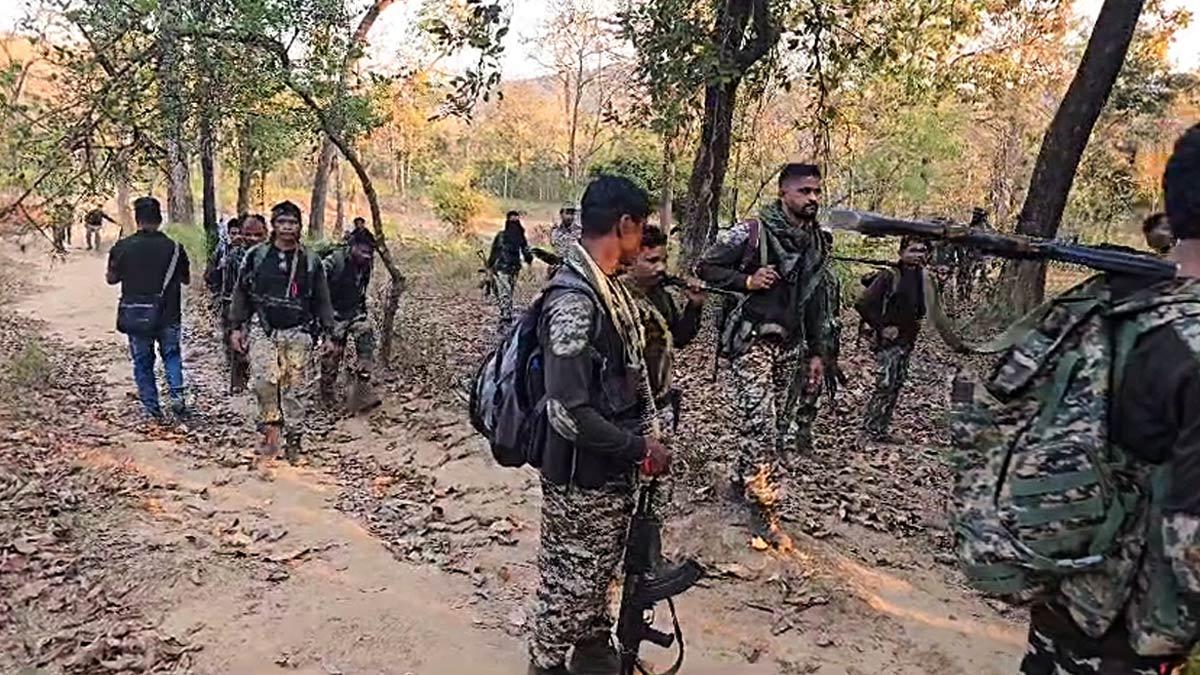
Chhattisgarh has witnessed the maximum casualties amongst Maoist women cadres.
This is also the state where the CPI-Maoist is believed to be the most active, having waged a war on security forces for nearly four decades.
But some of these women Maoists who security forces claim have died in encounters have been found to have died under suspicious circumstances.
Take 54-year-old Gumudavelli Renuka, who was shot dead in police firing on March 31.
She had spent over three decades in the Naxal movement and carried a prize money of Rs 45 lakh.
She was an accomplished writer and a trained lawyer who had fought the cases for several hundred tribals before she decided to go underground.
Her brother, a journalist, travelled to Dantewada to collect her body and was surprised to find her sister wearing pieces of jewellery and a bindi on her person, something she had never done when she was underground.
This, he claimed, made him suspicious and was an indicator that she had been living in a village with other villagers.
Her hands had been mutilated, suggesting either torture or an intentional tactic to erase any forensic evidence after killing her.
His only comment was that if she had been living among the villagers, they should have simply arrested her.
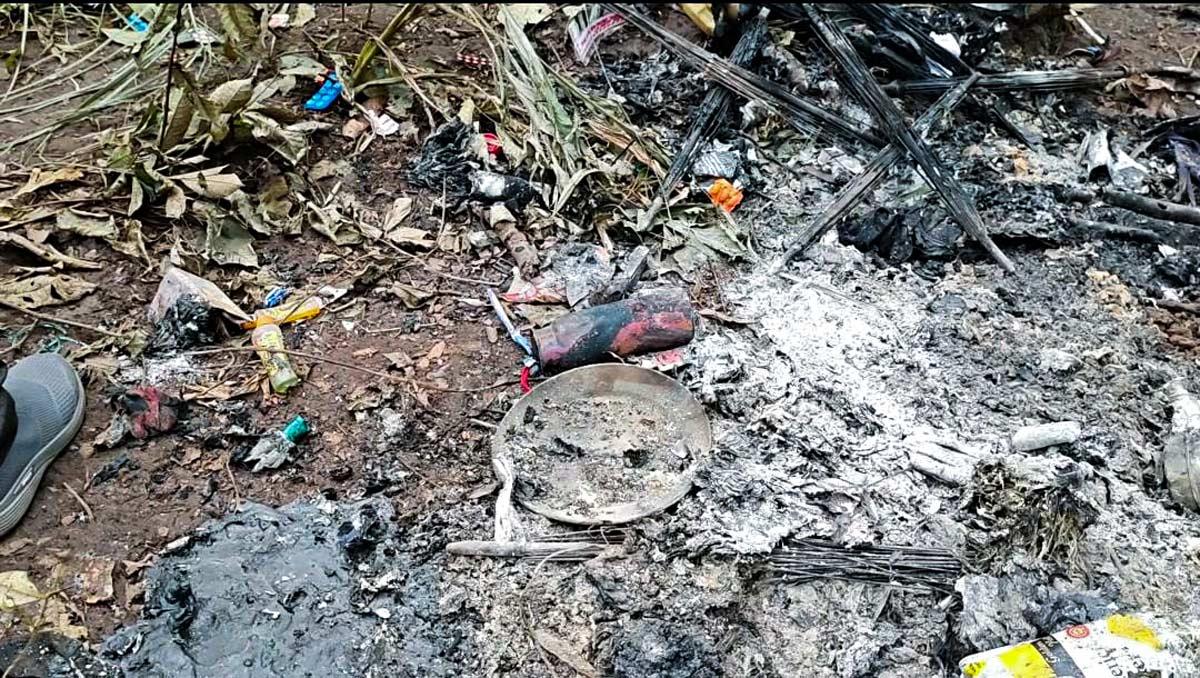
On April 2, 2025, two women Maoists were shot dead by the anti-Maoist Hawks Force in the Kanha National Park, MP. Both of them carried a reward of Rs 14 lakh each.
Director General of Police Kailash Makwana pointed out that the cops found two self-loading rifles in their possession and a wireless set.
With such outdated weaponry, many activists believe these women could have been easily arrested.
The bloodiest encounter took place in the first week of February which left 31 Maoists dead in the forests of Bijapur.
Inspector General of Police Bastar Sundarraj Pattilingam pointed out that the police had recovered 31 dead bodies while two security personnel were killed in the battle.
Villagers in Bastar question why the due process in law is not being followed. Activist Soni Sori, who continues to fight for the rights of the people of Bastar despite having had acid thrown on her face and suffering a jail tenure, said, "The government must conduct a post-mortem and inform the gram panchayat and family members about the death. No post-mortem is conducted. They do not print the information in newspapers."
"After a person is killed, or prior to his death, a reward money is announced and this is the main reason why there has been such a spurt in killings. They have destroyed Bastar, it has become a wasteland. In every operation, many innocent Adivasis are killed. Who will take responsibility for these killings?" Sori asked.
She also questioned the practice of giving huge sums of reward money to security forces.
Already the government has allegedly given out around Rs 50 crore and in some cases, local Adivasis believe, the compensation is as high as Rs 1 crore for the killing of a senior Maoist leader.
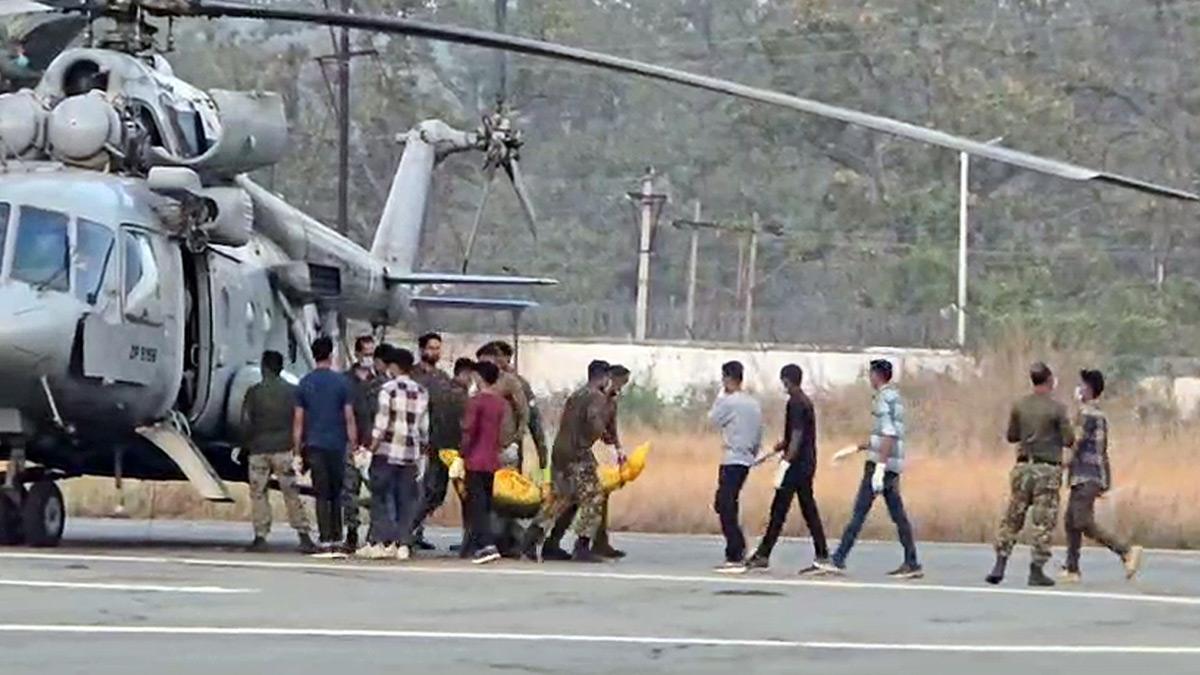
Local villagers question why more than 160 security camps have come up in Bastar alone, having been built on common lands and in some cases private lands of villagers, and causing severe distress to the Adivasi inhabitants.
There is approximately one security personnel per 9 civilians and while there has been a spurt of road-building, no welfare schemes have been provided for the public.
In addition, a new airport is being built at Ulnar in Bastar, a new railway line is under construction linking Dalli Rajhar and Jagdalpur and a large influx of outsiders buying land, making short shrift of the Fifth Schedule of the Constitution.
Villagers are scared at this increasing militarisation with camps having been built for an additional 2,500 personnel and new weaponry like Under Barrel Grenade Launchers, Unmanned Aerial Vehicles and drones being used for aerial surveillance.
Bela Bhatia, author of India's Forgotten Country: A View from the Margins and an activist lawyer who has been living in Bastar for the last four decades, does not want to comment on this increased violence.
"As a defence lawyer, I take up cases of tribals but I do not get into an emotional relationship with them," Bhatia said. "Ours is a strictly professional relationship and that is the way I want to maintain it."
Two hundred civil society organisations issued a statement highlighting that the government claims that Maoists will be finished by March 2026, and there are only 400 armed cadres left now.
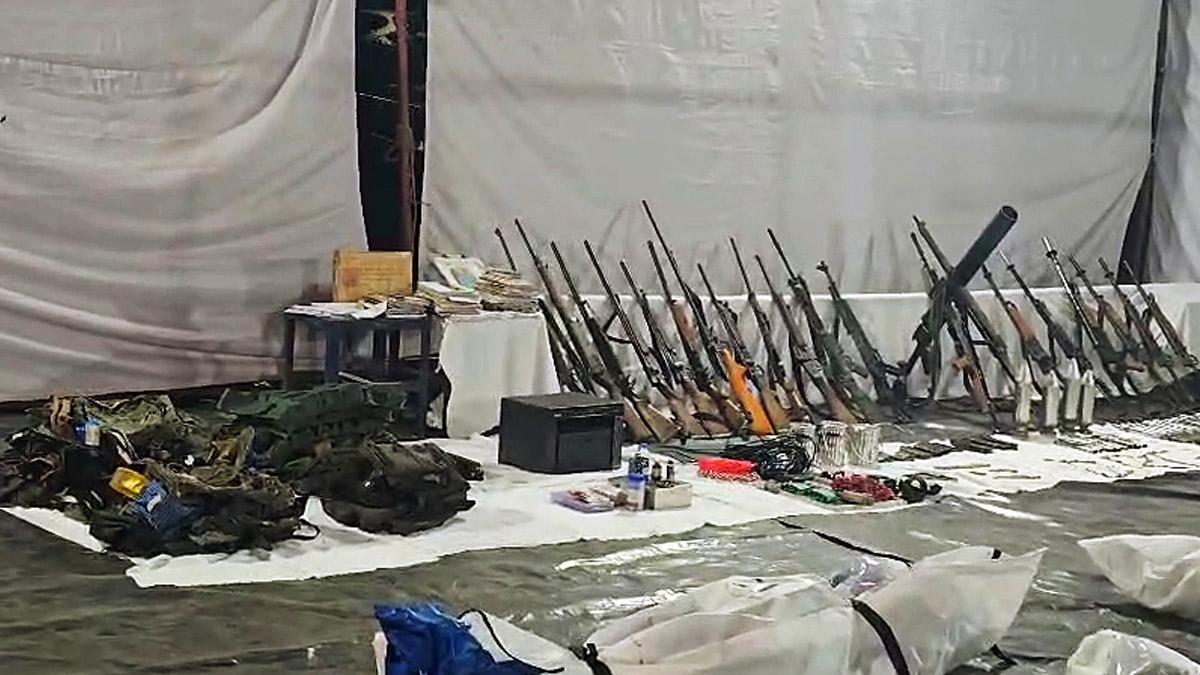
The bulk of the weaponry recovered (a mere 263 weapons) is country-made pistols, crude 12-bore guns or muzzle loaders.
Government estimates also indicate that the number of 'severely affected' districts has come down to four.
Under these circumstances, the Maoists are hardly such a security threat as to warrant the kind of offensive that we are seeing in terms of militarisation.
The government's decision to use ex-Salwa Judum recruits is another reason for the stepping up of killings; nor have civilians been compensated for their losses since Salwa Judum, and no prosecutions have taken place despite Supreme Court directions.
Not that the people living in this insurgent zone do not clamour for peace. Activists point out how a community-led initiative called Moolvasi Bachao Manch had approached the government last year in an attempt to initiate talks to end the violence.
Their young leaders were arrested under UAPA and are still in jail. The Moolvasi Bachao Manch has also been banned.
Home Minister Amit Shah had claimed that insurgency would end by 2024. On his most recent visit to Bastar, he claimed insurgency in this region would end by 2026.
Another activist Himanshu Kumar, a Gandhian, who ran an ashram in Dantewada for 22 years, has shut down the ashram and claims to be extremely disillusioned at the present turn of events.
"For the elderly and the very young, this is like living in a war zone. They are scared and get no respite from these killings and counter killings."
The statement by civil society organisations has asked Maoists to end the use of IEDs as also their practice of death sentences meted out at 'jan adalats'.
Inspector General of Police Sundarraj Pattilingam perceives this as being a law and order problem and believes that eliminating Naxals is the only way this menace will be halted.
The Martyrs Memorial in Jagdalpur honours 1,399 security personnel who have died due to Naxal violence.
Already, under the PM Awas Yojana scheme for families affected by violence, 15,000 homes, over 9,000 of them in Bastar, have been constructed but it has to be seen who will be given permission to live in them.
Sori Soni sums up the mood of the people living in this highly militarised zone.
"I am tired of seeing dead bodies. Many of them are mutilated beyond recognition. Every day an encounter takes place. We are not allowed to step out of our homes to get water or collect firewood. Every day, drones are flying over our heads. Bastar has been burnt to ash."
"We know why this is being done. They want to get rid of us so that our lands can be handed over to corporates for mining purposes. I do not condone violence but we tribals have no one to protect us. Obviously, the people here are frightened. Look at the number of mines that have already started operating here. A large number of iron ore and coal mines have been operating here but many, many more having been operationalised.
"Villagers here state that they have no issue with the government taking on the Maoists but they should do this without killing innocent Adivasis and destroying our forests and rivers.
"They claim that they are eliminating Maoists," Sori added, "but this is annihilation of Adivasis, not of Maoists."
Photographs curated by Manisha Kotian, Anant Salvi/Rediff
Feature Presentation: Rajesh Alva/Rediff







 © 2026