

'Traders and exporters will have to explore alternative markets.'
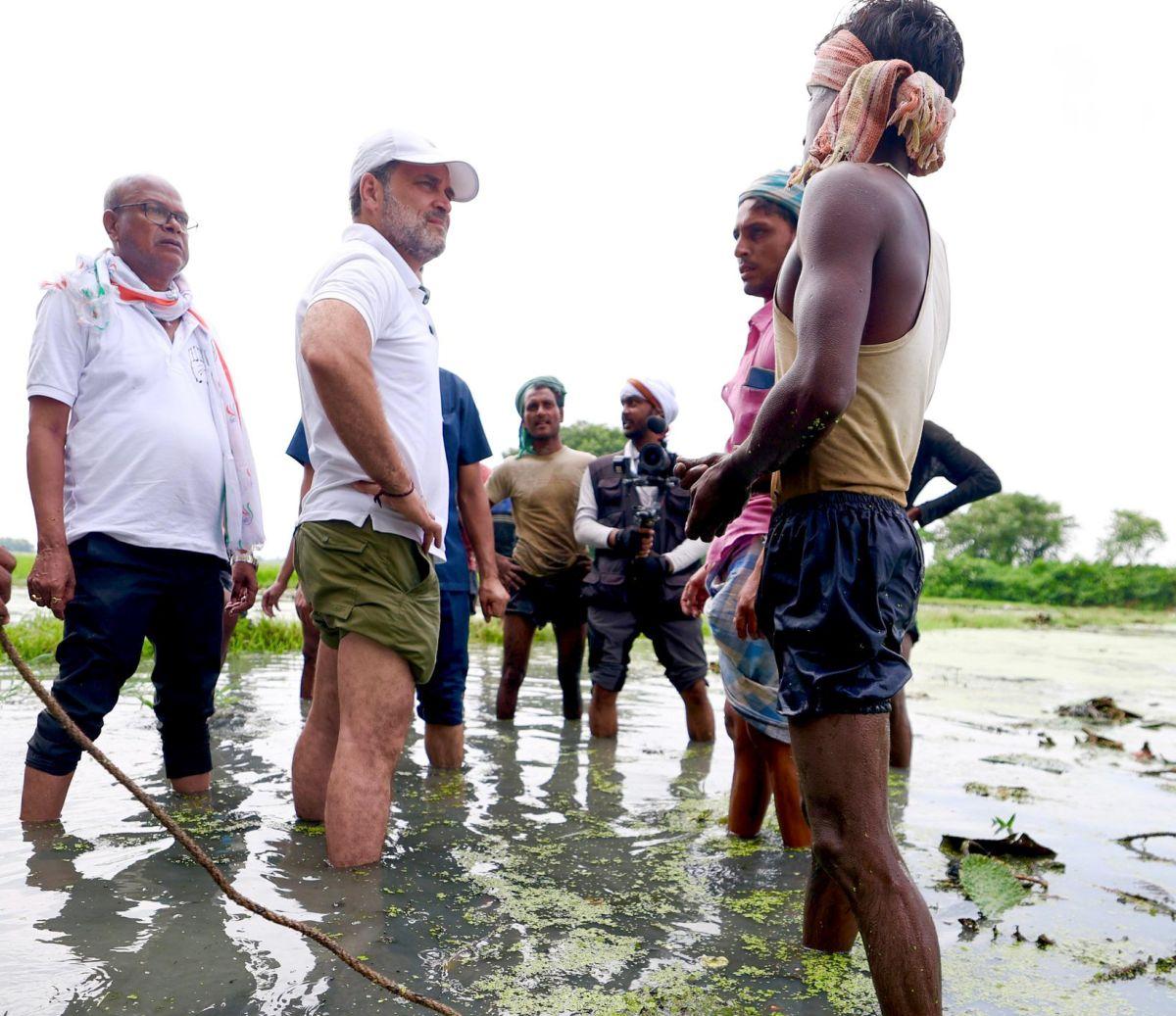
Bihar's famous makhana (known as gorgon nut in English), may be badly affected by the 50% tariff imposed by US President Donald Trump.
This has caused concern among the state's traders, exporters and agents.
Those involved in the trade have highlighted the need to explore new international markets for the highly sought-after makhana, which has recently been gaining popularity as a global superfood.
"This unprecedented rise in tariffs on Indian goods, mainly agricultural products, is bound to affect the makhana, which is produced in Bihar and exported to the US," an official from the state's agricultural department said.
"Bihar's makhana exports will be the worst hit by the Trump tariffs."
P K Agarwal, former president, Bihar Chamber of Commerce and Industries, believes that export orders will decrease after the increase in US tariffs.
"Traders and exporters will have to explore alternative markets," he said.
However, K P S Kesri, president, Bihar Industries Association, noted that makhana exports from Bihar had been growing in recent years and there was scope for further increase.
"As of now makhana export from the state to US is limited, tariff will not affect much business," he said.
Satyajit Singh, a makhana exporter based in Bihar, explained that production of the nut was lower than the demand for it.
"We are not fulfilling the demand for makhana in the market due to low production," he said.
The demand for makhana also comes from other countries besides the US, and Singh stressed the need to find new markets for exporting makhana in light of the new tariffs.
The tariffs have come at a time when the potential for makhana exports was high, thanks to growing demand in the US and European countries following the Geographical Indication (GI) tag for Mithila Makhana, a special brand from Bihar.
Thousands of farmers and farm labourers depend on makhana production for their livelihood.
Interestingly, the farmers and labourers engaged in the labour-intensive cultivation, harvesting, and final processing in the flood-prone Mithilanchal, Kosi, and Seemanchal regions of Bihar are unlikely to be badly hit by the tariffs. This is because the demand for makhana far exceeds its production in the state.
"The growing demand for makhana in the national and international markets is not being met by production in Bihar. There is a need to increase the area under cultivation," said a makhana businessman from Patna.
According to official data from the state's agricultural department, Bihar accounts for 85% of India's total makhana production -- the highest share of any state.
Makhana is cultivated on about 15,000 hectares, yielding 120,000 metric tonnes of seeds annually. After processing, the final output is 40,000 metric tonnes of popped makhana.
Last year, 600 tonnes of makhana produced in Bihar were exported to the US.
Makhana is once again in the news following the Trump tariffs. This comes days after Congress leader Rahul Gandhi met labourers involved in its cultivation during his Voter Adhikar Yatra in Bihar, bringing to light the harsh reality of their difficult lives and struggle for survival.
Makhana seeds are mainly cultivated by almost 25,000 farmers in the Madhubani, Darbhanga, and Sitamarhi districts of the Mithilanchal region; Saharsa and Supaul in the Kosi region; and Katihar, Purnea, Kishanganj, and Araria in the Seemanchal region.
Early this year, the central government announced the setting up of a Makhana Board in Bihar in the Union Budget.
This is widely seen as a long-awaited step to give a significant boost to makhana production, processing, and marketing in the state.
The state government plans to involve 50,000 farmers in makhana cultivation and increase the cultivated area from 50,000 to 60,000 hectares over the next two to three years.
Feature Presentation: Aslam Hunani/Rediff




 © 2026