
Vaikhari Sonawane tells us how she went from writing blogs about her therapy sessions to creating a nationwide student-led mental health network.
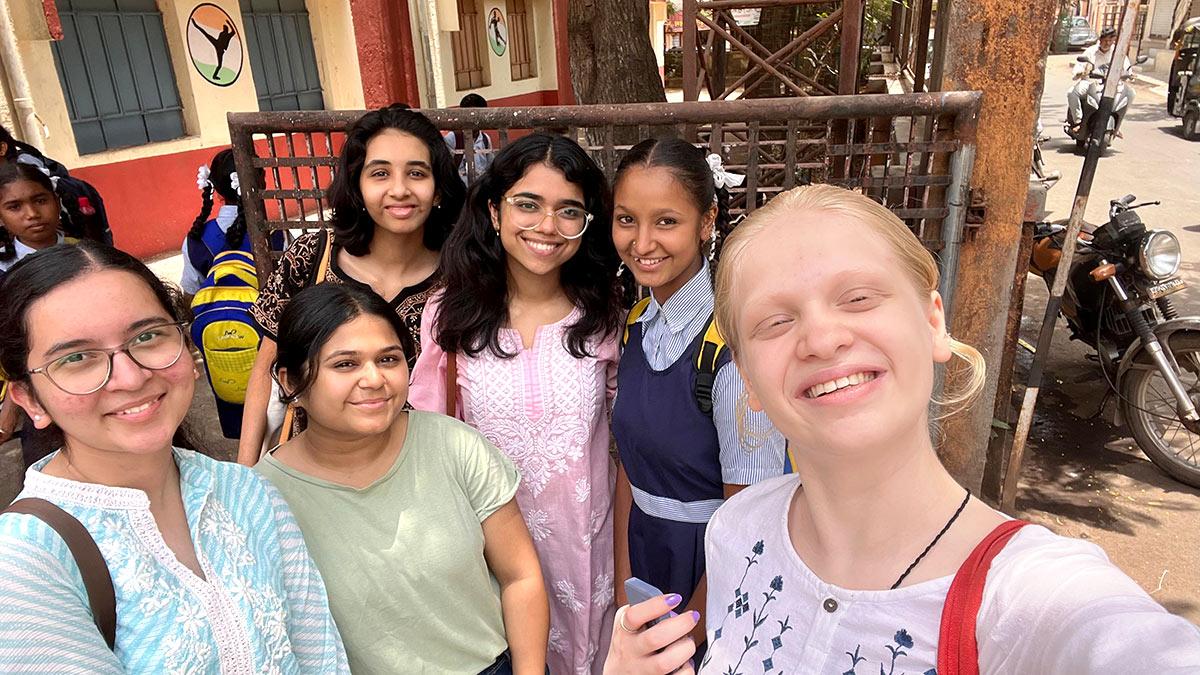
Two days before leaving home for college, most teenagers are busy packing their bags and saying their goodbyes.
It's exactly what 18-year-old Vaikhari Sonawane from Nashik, who will be pursuing a major in economics and a minor in computer science at Ashoka University, is doing as well.
But that's not stopping her from running Aatman, an organisation she started as a schoolgirl to make mental health awareness accessible for children across India.
Battling anxiety as a teen
Vaikhari, whose parents are doctors -- her mother is a physician and father, a paediatrician -- explains how they introduced her to therapy at the right age.
"I was an academically bright kid. From class 5 onwards, I was always competing with the older kids. By ninth grade, I was completely burned out. I had severe panic attacks. I still suffer from anxiety. Thankfully, my parents got me help."
When she started therapy during the COVID-19 lockdown, Vaikhari wrote blogs sharing what she was learning.
"My friends told me they wished they had these resources so I kept writing."
In 2022, however, the situation became more urgent.
"Within a month of each other, my cousin and my best friend attempted suicide. I was on the call with my best friend when she tried (attempted self-harm). I reacted with calmness and empathy because therapy had taught me how to do so. That's when I realised: Peers should be educated because they are the first point of contact."
While interning with a psychiatrist, Vaikhari discovered dialectical behavioural therapy (DBT).
"It focuses on emotions. It is simple to understand and very worksheet-heavy. I thought: Maybe I can simplify this for students from classes six to nine. So we created a curriculum," she explains.
Vaikhari started with an NGO and the first few sessions were held in a government tribal school in Nashik that had recently reported five student deaths by suicide.
"It happened because of caste differences," she highlights.
"From our very first session, we realised emotional dependency was a big issue. Later, in another school, we worked on substance abuse -- students were using whiteners and cycle thinners to get high. We had to teach them the difference between 'normal' and 'common'."
Mental health: Private vs government schools
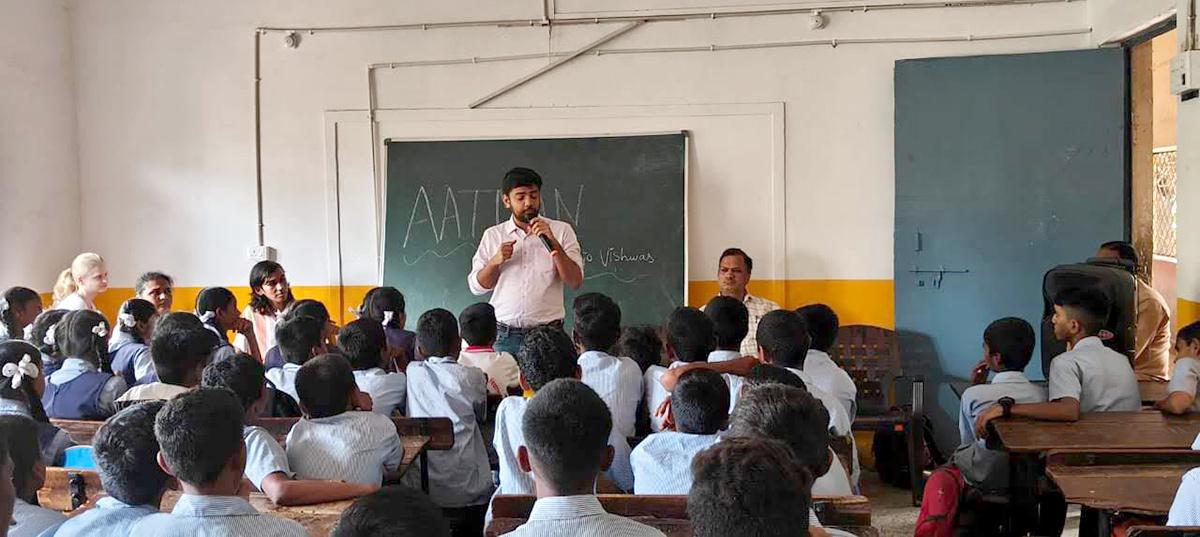
The responses in schools were starkly different.
"Students in private schools are shy and resistant to change. They associate mental health with shame and fear of being judged. Government school students are much more open to help. They don't face the same kind of peer bullying about anxiety or depression," she says.
"In private schools, the issues were more about parental stress, academic pressure and social media slang -- toxic, gaslighting, bipolar. Government school students, on the other hand, tended to ignore problems until pushed but once engaged, they were very receptive," she says.
The bigger picture
Through workshops, therapy-inspired booklets and even a radio show, Aatman has reached thousands of students across India in three years.
"Our radio show alone reached over a lakh people. Offline, we've reached about 40,000 students in Nashik. Online, we've had more than half a million views. Today, we have six to seven chapters across India, 350 volunteers and psychiatrists and psychologists on board," says Vaikhari.
Aatman runs on a zero-investment model.
"All our volunteers are unpaid. Schools usually cover costs like transport. Now we're getting funding to print booklets full-time," says Vaikhari.
What Vaikhari wants to do next
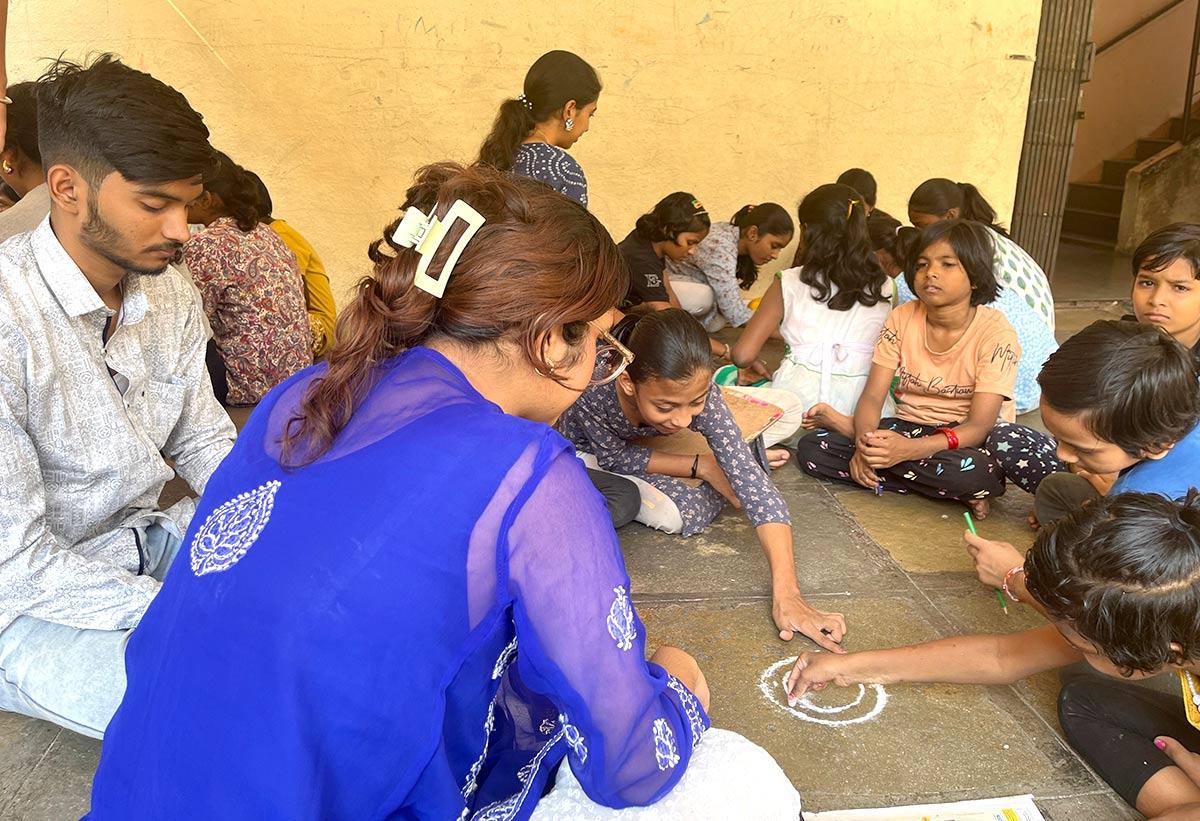
For the next five years, Vaikhari's purpose is clear.
"We want to focus on our booklets because they're easy to distribute and give students a starting point. Right now, our eight-page booklet on substance abuse explains what addiction is, helps you identify triggers and gives worksheets to work on. If you can't manage on your own, it guides you on how you can to seek professional help."
Vaikhari emphasises how youngsters can work on their mental health themselves -- using resources like meditation, yoga or even online support -- without feeling shame or stigma.
"Anxiety and depression are not something you should ignore. If you're sad for more than six months, please seek professional help. But before that, try working on yourself.
"You have to keep in mind that finding the right professional who can evaluate and guide you is a long process. Even after you go to an expert, the results will take time. When my psychiatrist told me I could do it myself, I still had to continue working on myself. There's meditation, yoga, art therapy, so many resources online."
As Vaikhari heads to college, she is also leading a movement that is the need of the hour.
With one in seven adolescents in India battling at least one type of mental health condition, Vaikhari's journey shows how young people can turn their personal struggles into collective action, break the stigma around mental health and make these conversations more accessible to all.










 © 2025