

Rajbaris are a link to Bengal's rich past, of grand mansions, classical fine dining, and allow guests to be pretend zamindars for those few hours or days that they stay.
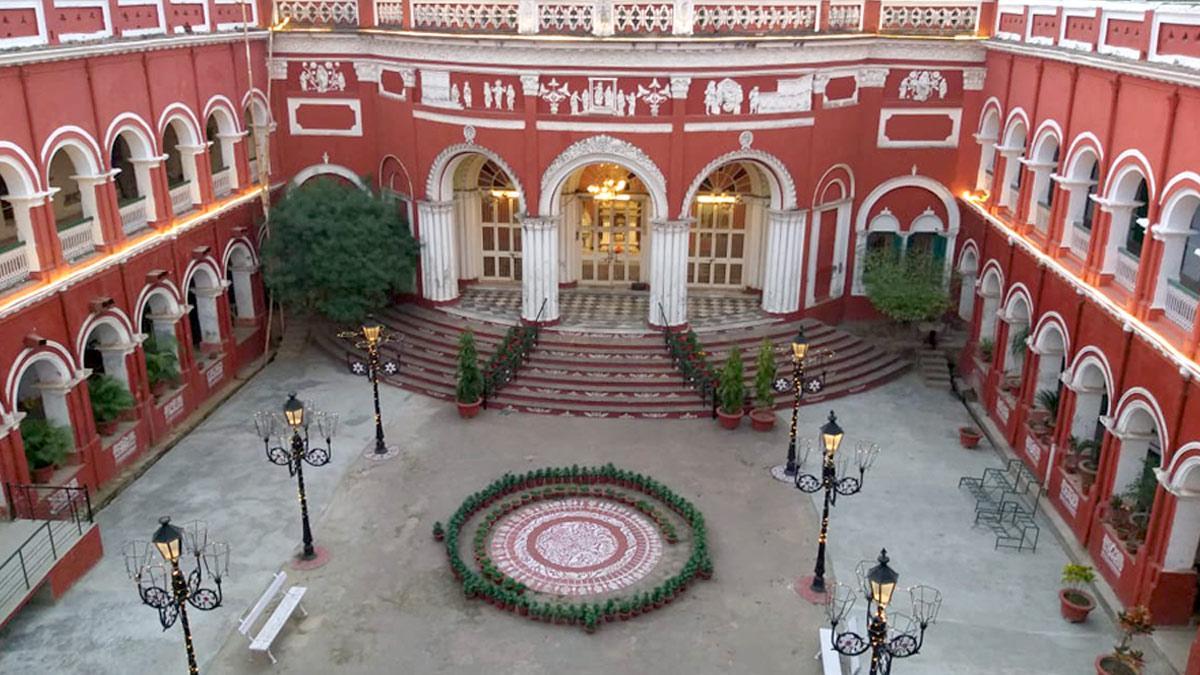
A thakurdalan is part of traditional Bengali architecture and is essentially a covered semi-open space in which the thakur or idols are placed during festivals or even daily worship.
The lights in the picture is where the family's idols are worshipped every evening.
The rajbari, a 250-year-old zamindar's home, has been converted into a heritage hotel and is known for its old-world ambience and architectural details. All photographs: Swarupa Dutt/Rediff
My aunt lies asleep next to me completely swathed in a thick razai, snoring softly.
I check the phone by my pillow; it's 4.10 am. I need to use the loo.
The curtains are drawn, the glass windows shut to keep out the winter chill. The silence is absolute.
The massive four-poster bed creaks as I get up.
And then I hear it. There is someone in the bathroom; I can hear the flush go.
My aunt and I are alone in the room, the door to the verandah is locked and the grill padlocked. All the windows are bolted from inside. There is no other entrance to the cottage.
My feet are leaden, I can't walk. There is nothing on the bedside table that can be used as a weapon.
The bathroom door opens.
My aunt steps out.
I look at the bed.
There is someone lying next to me...
Sigh. Nothing of this sort happened.
I got up, went to the loo, and went back to sleep next to my aunt. But in those few minutes, enveloped in the inky black darkness, as I peeped at the verandah outside, and tried listening to the stillness of the night, I wondered if the story that the guide had told us was true...
A delicious what if...
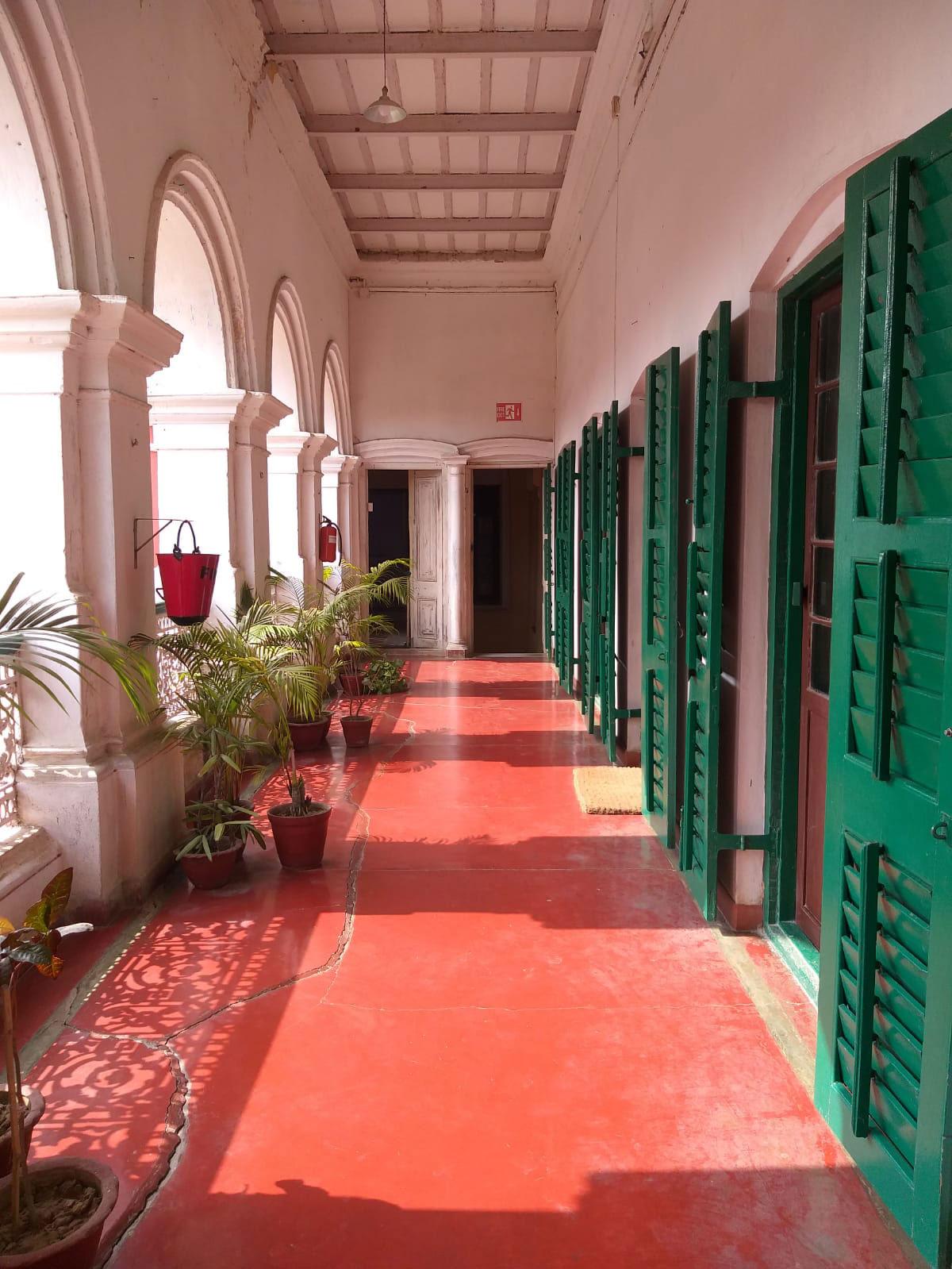
Just hours before, the guide, while taking us around the Itachuna Rajbari, where we were staying a night, had told us that a technician on the set of the Hindi film Lootera had died while shooting at the rajbari and that his ghost haunted the place.
And, of course, that other ghost -- the blood-thirsty Maharashtrian one.
Ram Das Kundan was his name and being a bargi was his game. Bargis were Maratha mercenaries and Kundan rode into Bengal in the 17th century. In fact, Itachuna was called Bargee Danga (danga in this case can mean both attack and land, and the double 'e' is the British spelling).
Between the 18th and 19th century, the British, and the zamindars, built so many palatial buildings in Calcutta (as the city was then called) and rural Bengal, that Calcutta came to be known as 'the city of palaces'.
The British-built mansions in the city, grand buildings like the Mint, the Governor House (for the governor-generals of the East India Company), Writer's Building, Metcalfe Hall and, of course, Victoria Memorial, among several others.
Indians like Nazim Humayun Jah, the nawab of Bengal, Bihar and Odisha, built the magnificent and opulent palace, Hazar Duari (the house with a 1,000 doors) in Murshidabad in 1837.
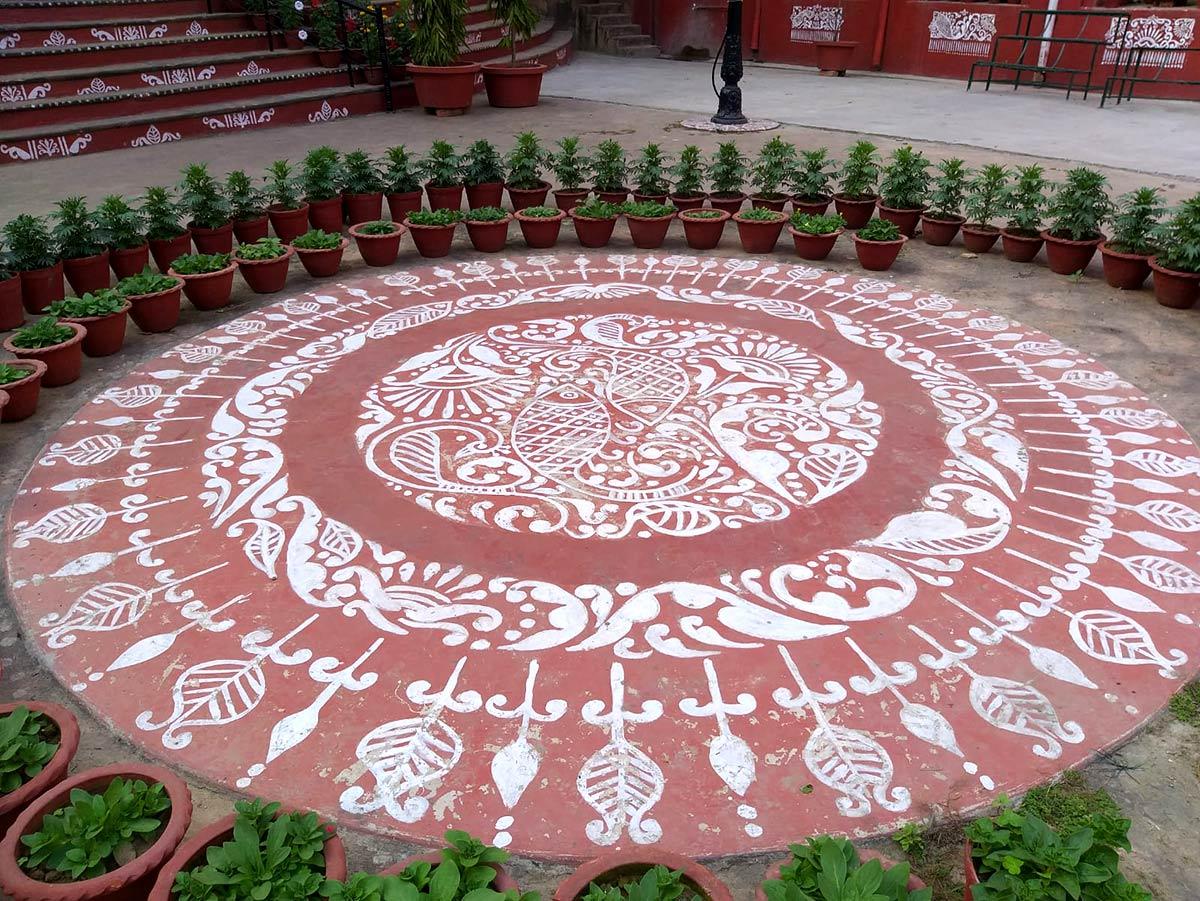
Zamindars in Bengal, like elsewhere in the pre-Independence era, collected taxes, but there were also a large number of Bengali businessmen, who amassed handsome fortunes by trading with European powers, like the British, Dutch, French, as well as within Asia and Africa in the 18th and 19th centuries.
Both the zamindars and the business families built stately palaces or rajbaris, a reflection of their wealth. These mansions, once over a hundred in number, are now a handful; some lonely, piteous ruins, others resplendent having been converted into boutique hotels, like this one at Itachuna, or at Mahishadal, or the Bawali Rajbari, the Jhargram Palace, the Cossimbazar Rajbari and the Natore Rajbari.
Rajbaris, like the one at Sova Bazar in Kolkata, built in the 17th century by Raja Nabakrishna Deb, who was an aristocrat and ardent supporter of the Brahmo Samaj movement, is now open to the public during Durga Puja.

These merchant families were so incredibly wealthy and powerful that the head of the family was given the titular title of 'Raja'. Hence the name rajbari or royal house. Several of them financed the Bengal Renaissance, spearheaded by Raja Ram Mohan Roy, Rabindranath Tagore, Bankim Chandra Chattopadhyay, Keshub Chandra Sen and Ishwar Chandra Vidyasagar, among many others.
The early opulent decadence and the later wretched ruin of their lives were essayed in Satyajit Ray's ethereal 1958 film, Jalsaghar (The Music Room). Shot at the Nimtala Rajbari, in Murshidabad district, it captured the crumbling way of life of a fallen aristocrat in the twilight years of the zamindari system in India. Read the review here: Jalsaghar is a viewing treat you owe yourself.
The destitution-led desperation of financing the upkeep of these large ancestral houses is also essayed in Rituparno Ghosh's masterful 2000 film, Bariwali (The Landlady), starring Kirron Kher, Roopa Ganguly and Chiranjeet.
Itachuna Rajbari was built on blood, murder, pillage and mayhem, words that personified the bargis.
Bargis came from the Maratha Empire. When Alivardi Khan became nawab of Bengal, in 1740, a challenger came to the throne. He was called Rustam Jung and he enlisted the backing of Raghoji I Bhonsle, the Maratha ruler of Nagpur. Jung beseeched Bhonsle to pillage the nawab's armies. Bhonsle, unable to refuse to help, but probably too sluggish to do it himself, outsourced it to the bargis.
For 10 years, these Maratha bargis invaded Bengal, almost like an annual event at the time of the harvest, when people and treasuries were cash rich. The bargis perpetrated horrific atrocities against the local population -- killing, burning, looting -- if the khajna or tax was not paid up.
In fact, there is a centuries-old lullaby that talks about the bargis (in the same manner as a mother telling her child to go to sleep with a 'warna Gabbar aa jayega' threat).
It goes something like this:
Khoka ghumalo...
Para juralo...
Borgi elo deshe..
Bulbuli-te dhan kheyeche
Khajna debo kishe..
This roughly translates to:
The child is asleep,
The neighbourhood is quiet,
The Maratha raiders have come to the village,
The birds have eaten the rice
How will taxes we pay?
This lullaby reflects the impact of the Maratha invasions on the Bengal countryside, from 1741 to 1751, when an estimated 400,000 people were killed by the bargis.
But it was in 1645, a century before that, the guide at Itachuna says, that Ram Das Kundan arrived in Bengal, after undertaking a long and arduous journey from Maharashtra. He came to do business in a region, that after Delhi, was at the time one of the most prosperous in India, and worked in the eet and chuna (bricks and limestone) trade.
It is assumed that Ram Das Kundan's progeny continued this business for a century, but suddenly in 1741, when the bargi attacks began in Bengal, the Kundans joined the Maratha, Bhaskar Ram Kolhatkar (infamous as the dreaded bargi Bhaskar Pandit in Bengal), and enlisted in his army of mercenaries.
What kind of a surname is Kundan, not Maharashtrian, I tell the guide, pointedly. He rolls his eyes, shakes his head and tells me that it's a 'name' and that there are no records of their surname from back then.
The Kundans, like other bargis, discovered that Bengal was propitiously richer and more fertile than what awaited back home and Kundan decided to settle down in this bargi-'infested' area, which was then called Bargee Danga.
Kundan converted to Vaishnavism, changed his surname to Kundu (a Bengali surname, all the better for assimilation with the local populace) and asked the maharaja of Burdwan to grant him land so that he could legally collect taxes on his behalf (presumably without the sword).
The king agreed and the Kundus were granted zameen and became zamindars by a decree.
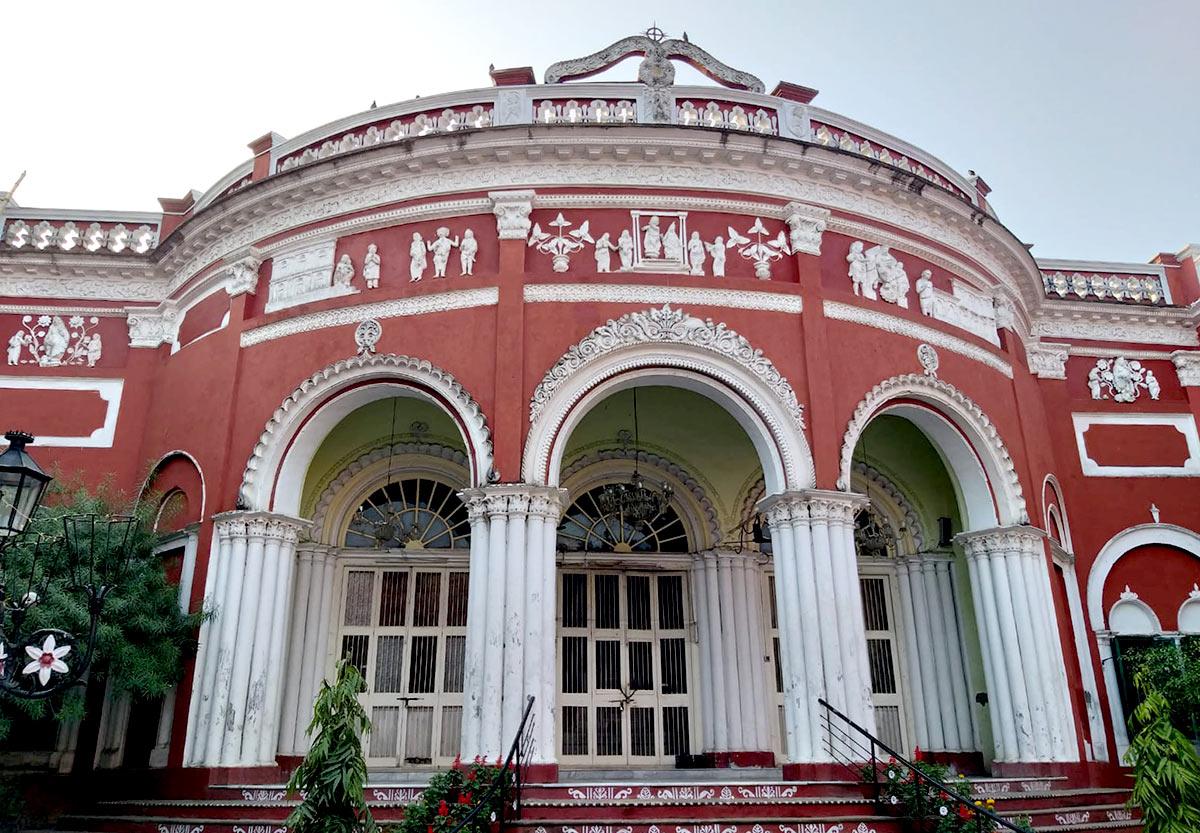
The Itachuna Rajbari was built in 1766 by Safallya Narayan Kundu, who had become gentrified and Bengali (not necessarily in that order). The Kundus collected tax for the maharaja of Burdwan and continued with their brick and limestone business. In fact, their limestone business still thrives, the guide says, and is used for the repair of other heritage mansions.
The 14th generation of the Kundus call this rajbari home, though they live mostly in Kolkata, the US, and are scattered around other parts of the world.
The rajbari was renovated and converted into a hotel in 2012, even as the family retains 10 rooms of the 60 rooms for personal use, with around 22 rooms let out for guests.
Like other rajbari-turned-hotel, Itachuna Rajbari also played host to movies like the aforementioned Vikramaditya Motwane's 2013 period drama, Lootera, and a couple of Bengali films including the super hit, Goynar Baksho (Jewellery Box) directed by Aparna Sen.
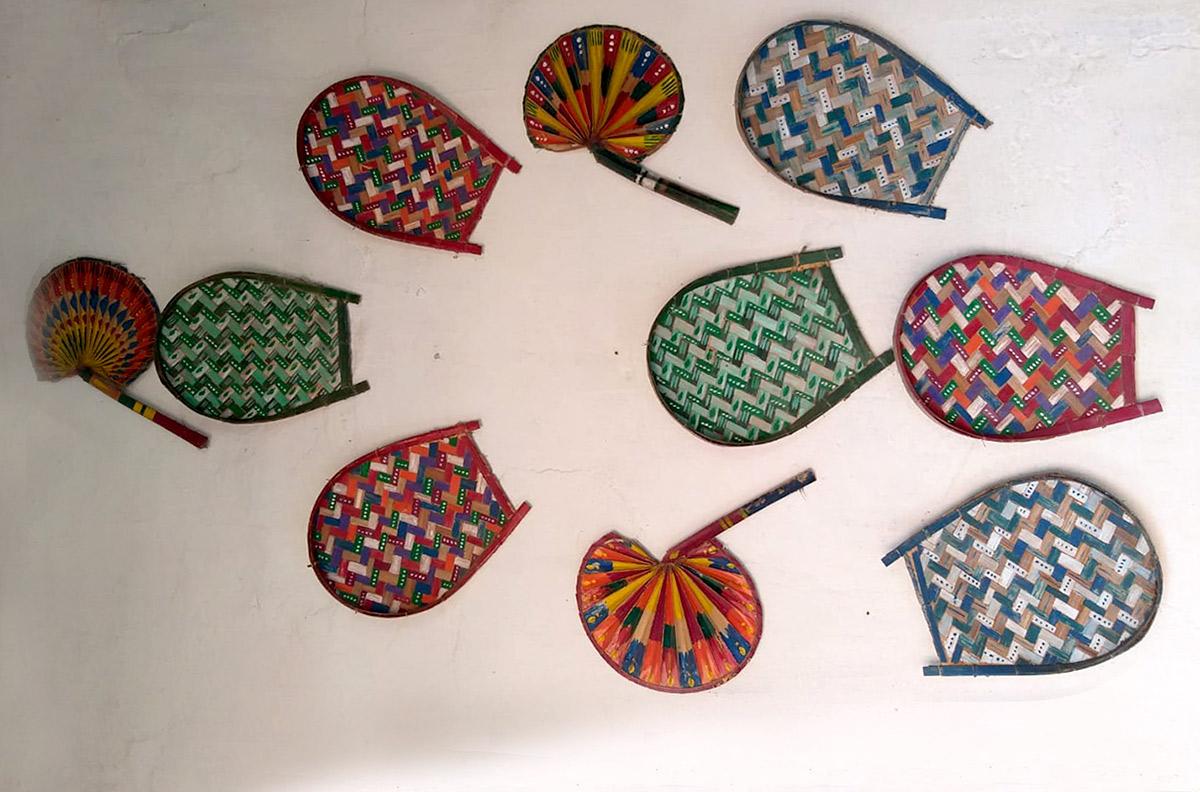
Till the 1970s, every single Bengali home in Calcutta had these palm-leaf fans, since load-shedding was an everyday affair.
Rajbari tourism has gained immense popularity in Kolkata and most of these rajbaris have full occupancy during the winters and at vacation time.
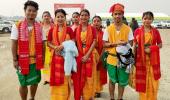
A middle-aged gent and his wife were dressed in their Bengali finery -- him in kocha dhuti-panjabi and her in a red and white Garad sari. The quintessential kocha dhuti, favoured for occasions is hand pleated, using a seed so that you get the cascade of accordion pleats typical of the Bengali dhuti. It's a dying art and it is extremely expensive to get it done. "We dressed up," Mr Sarkar grins, "it makes us feel more royal while staying in this rajbari."
Rajbaris are a link to Bengal's rich past, of grand mansions, classical fine dining, and allow guests to be pretend zamindars for those few hours or days that they stay.
Most rajbaris have a similar architectural style -- a blend of indigenous Bengali design with European influences (angels on awnings), a Thakur dalan (where the centuries-old tradition of family Durga pujas would be held and in some rajbaris and are still held, like the one at Shova Bazar in north Kolkata), an andar mahal (the women's quarters), kacheri (office), nach ghar (dance/music room) kitchens, courtyards and ponds.
Most rajbaris are painted in that distinct red and white of the British era (Writer's Building, for instance), with colonnades and courtyards, verandahs and arches.
Spread over 20 bighas (roughly 12 acres), Itachuna Rajbari is divided into three sections: The Dev Mahal, or the temple area, the Andar Mahal, or the inner palace, where the womenfolk lived, and which was off-limits to outsiders, and finally the Bahir Mahal, or the outside part where the men of the house ran their business.
There is a grand Singha Duar or Lion Door at the main entrance with the family crest and straddling the entrance is the Bahir Mahal.
Each of Itachuna Rajbari's rooms are named after that member of the family who once stayed in that room. So you have a room called Pishima (bua or paternal aunt), Kakababu (chacha or father's younger brother), Jethamoshai (chacha, but father's older brother), Boro Pishi (elder aunt or bua), Thakuma (paternal grandma) and so and so forth.
The room we had booked was called Jethamoshai and clearly the gent wasn't a family favourite -- his room was cold, dank, with a lousy view and we had to change our room for another, which was double the price, but it was a banger of a room. Large and gorgeous, vintage 4-poster bed, almirah, dressing table and lovely balcony overlooking a rose garden.
And bird song.
And none of the loud Bong tourist 'aiiiy shunchho' (hey, listen up) or painfully polite fraternising that comes with rooms next to each other.
We freshened up and headed to the dining room, for there awaited one of the primary reasons tourists visit rajbaris -- the food.
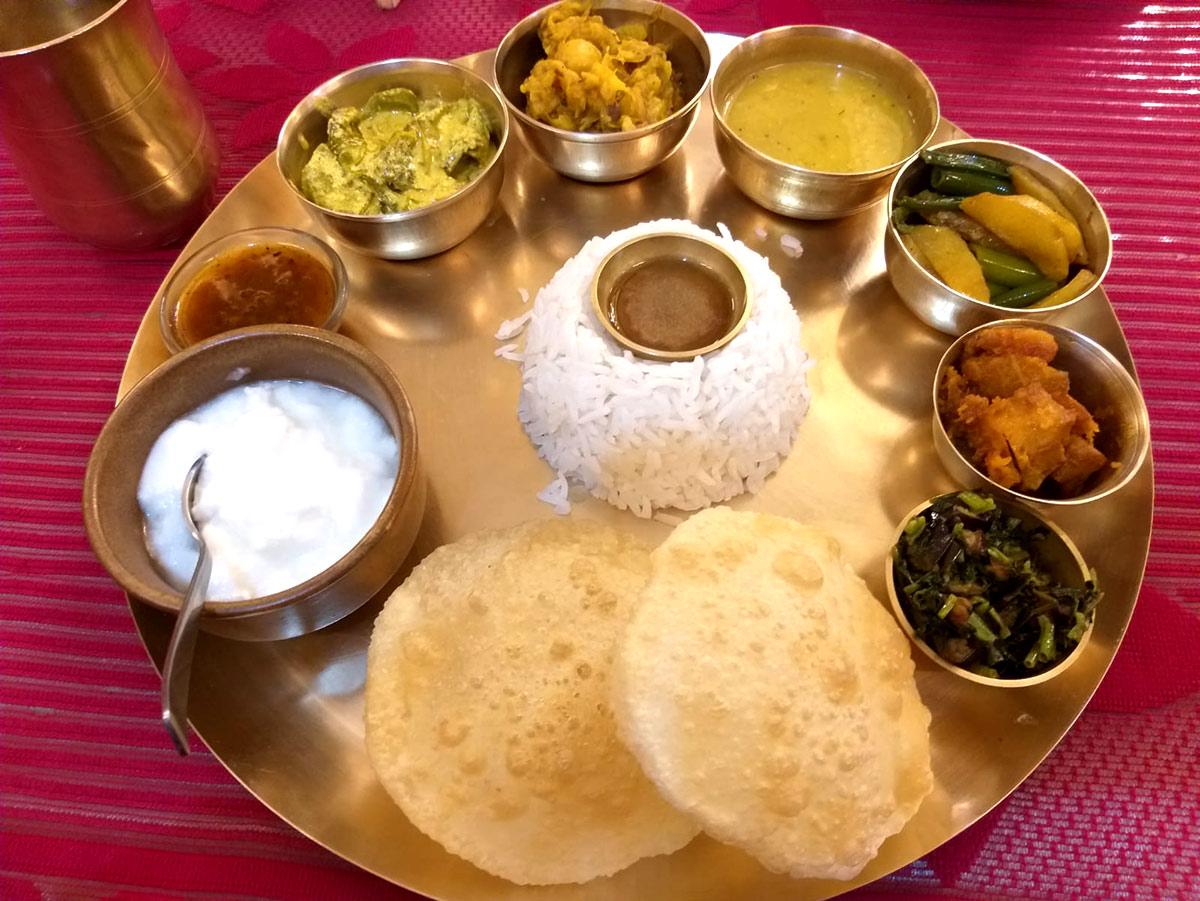
The repast at a rajbari is old-style Bengali cuisine, served in what used to be the norm 50 years ago in all Kolkata homes -- kaansha (bell metal) crockery. When we were little, every summer holiday visit to Calcutta meant eating out of those golden plates, bowls and glasses. But when stainless steel happened upon India, kaansha crockery was either sold to the kabadiwalla or stored in a loft (like I do).
The lunch at Itachuna is vegetarian (Rs 600 for a thali) and you can add non-veg items from the a la carte menu.
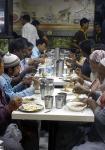
We ate phulko luchis (phulko is always a prefix for luchi or puri and means 'puffed up'. The ones that didn't, don't get to your plate), rice, Begun Bhaja, palak, Kumro Chhoka (pumpkin with Bengal gram and coconut), beans and potato curry, bhaja (roasted) mung dal with peas, Jhinge Posto (poppy seeds with ridge gourd), cabbage with fish head, Mishti Doi, sweet tomato chutney and Chandrapuli for dessert. We had ordered katla kaalia on the side.
The table next to us ordered Kosha Mangsho and Topshe Fry (possibly the tastiest fried fish this side of the continent) on the side and it looked delish and was devoured with obvious relish by the kid whose birthday the parents were celebrating.
It includes Machher Polao (fish pilaf), Ilish Machh Bhaja (fried Hilsa fish), Chingrir Malai Curry (prawn malai curry) and a variety of traditional Bengali sweets like Roshogolla, Roshmalai, Mihidana, and Sitabhog.
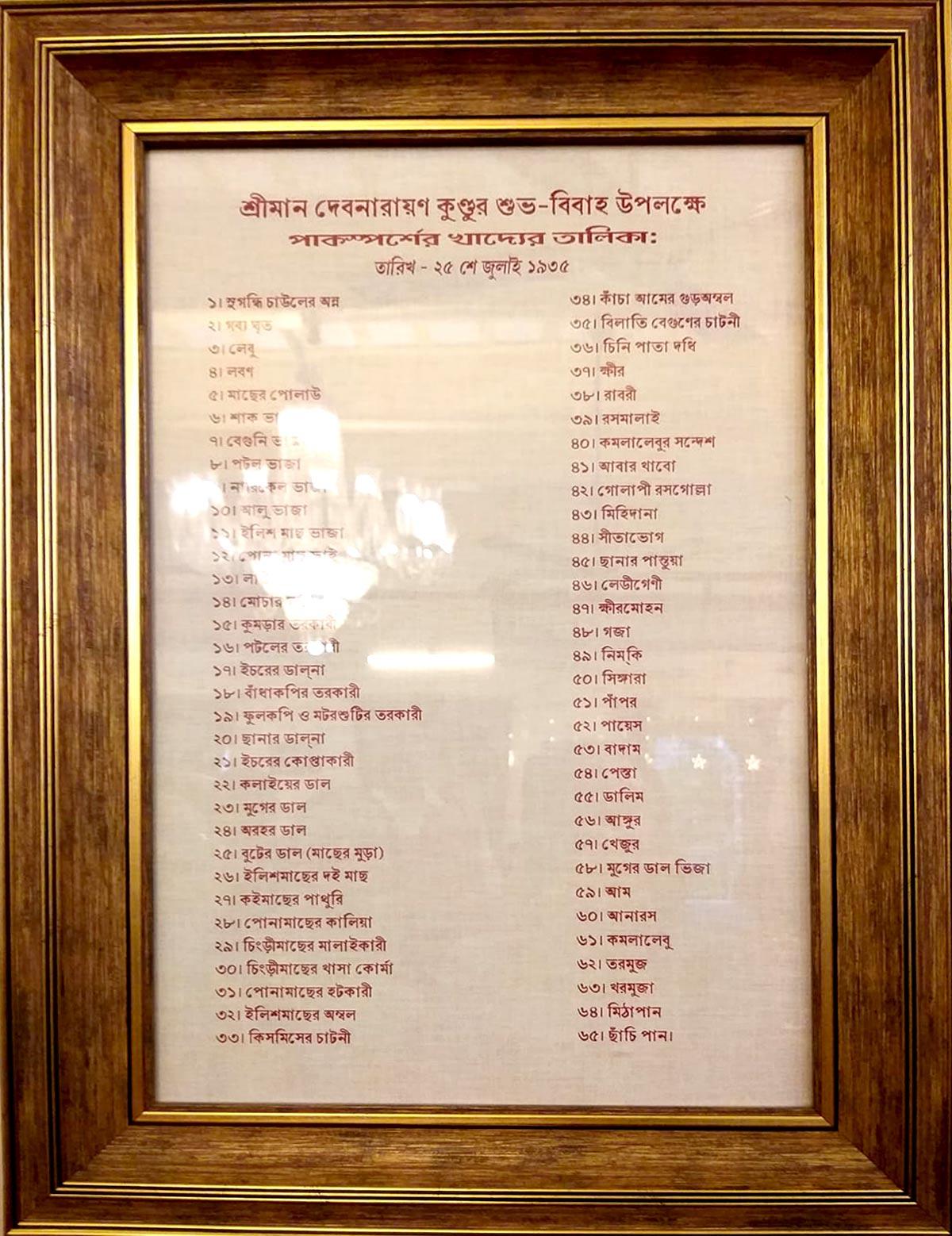
On the walls of the dining room is a framed picture: The menu card of Devnarayan Kundu's wedding from 1935 which has 65 items. Eight kinds of fish cooked eight ways, 13 kinds of dessert, seven-eight kinds of vegetable dishes, fish fries, Beguni (similar to Begun Bhaja but cut longitudinally so you get long and not round sections of the brinjal/eggplant), apart from pulaos, different kinds of dals etc. Conspicuous by its absence were both mutton and chicken from the menu.
The Kundus had adopted Vaishnavism, which encourages vegetarianism (which explains the several veg dishes) and shuns meat. Fish was the exception, because in Bengali weddings fish is considered auspicious, which is why there can be no Bong wedding without fish.
And chicken? Till the late 1950s, chicken was considered déclassé in middle class homes, never mind zamindars like the Kundus.
The quality of the cooking in everything we ate was good, very different from the Bengali food that you get at restaurants; more home-style -- so less masala, but heaps of flavour. Loved the Thumbelina's tiny ghee katori on the rice as well.
While lunch is 'unlimited', the longish intervals for the servers to reappear for refills was rather annoying, because 'unlimited' for me means you eat till your stomach rips.
There is a term called bhaat ghum (literally, 'rice sleep') or the food coma induced by a heavy-carb, soul-satisfying meal, normally lunch. But ghum couldn't happen as the guided tour was in an hour or so.
The guests are taken on a tour of the rajbari with its multitude of rooms (5 mahals), terraces with a paddy-field views, the treasury room, the goomghar (the 'disappearance room', where enemies were shoved and left to die) and the music room where the guide ends his tour with some pageantry -- he enacts bargi Ram Narayan Kundan's terror-filled years in Bengal managing to find a sword as he mock slashes his way through us.
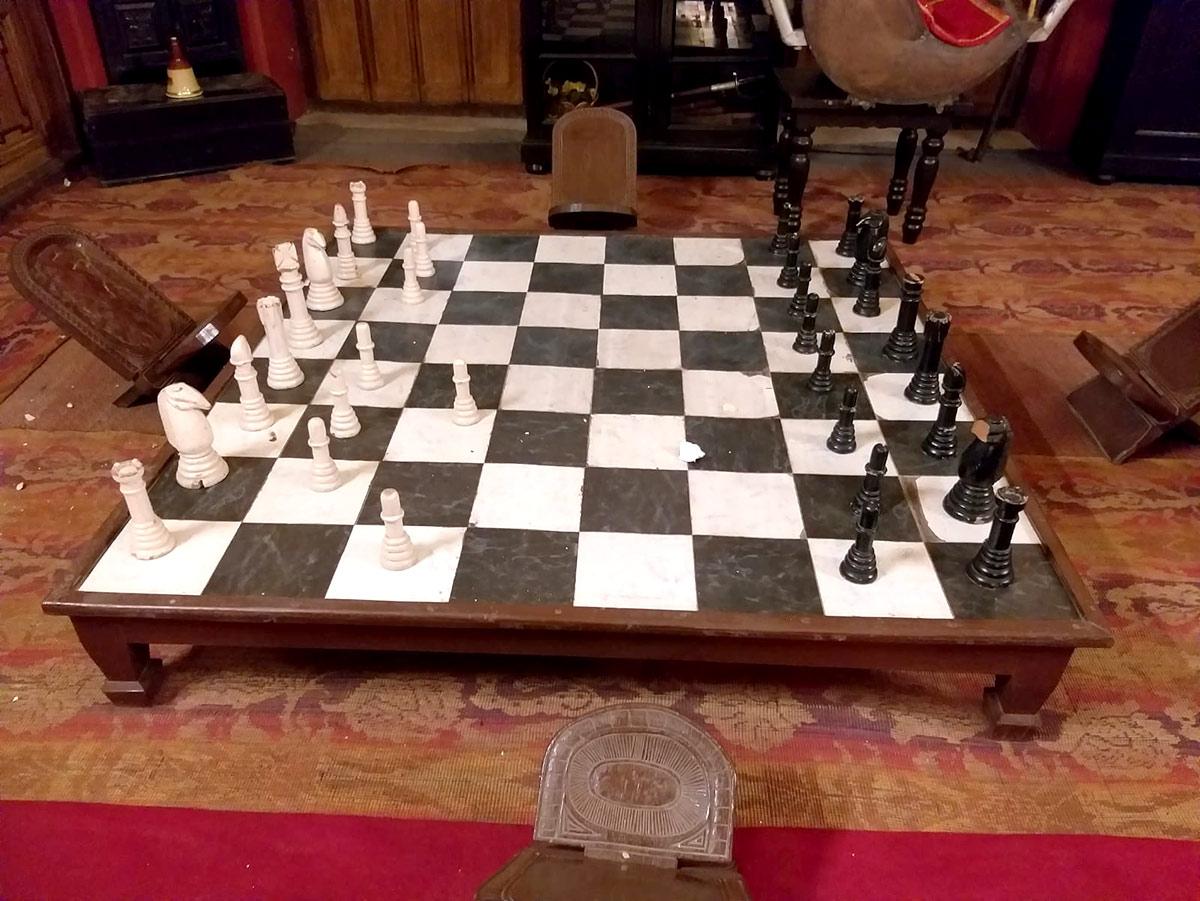
The music room is where the jalsas were held, with nautch girls singing and dancing as the men relaxed on the gaddas, drawing on their hookahs and throwing money at a particularly artful turn by the dancer.
In that room is a chess set with four chairs on its four sides. "The zamindars were too lazy to stretch their hand and move the chess pieces so they had their lackeys sit at the board to move the pieces," the guide explains.
He then points to a door at the corner of the room, "That is from where the dancers entered the room. There is a wrought iron spiral staircase which leads to this room and it is said that even today the tinkling of anklets can be heard if you enter this room in the dead of night."
The guests giggled and dared each other to do it but it can be safely said that everyone wanted the past to remain there.
Bengalis certainly can eat. After that sumptuous lunch, as the guide ends his tour of the rajbari, guests congregate at the little rustic eatery in the premises. Massive paper cones of jhal muri, platters of fish fingers and French fries with lebu cha (lemon tea) are consumed.
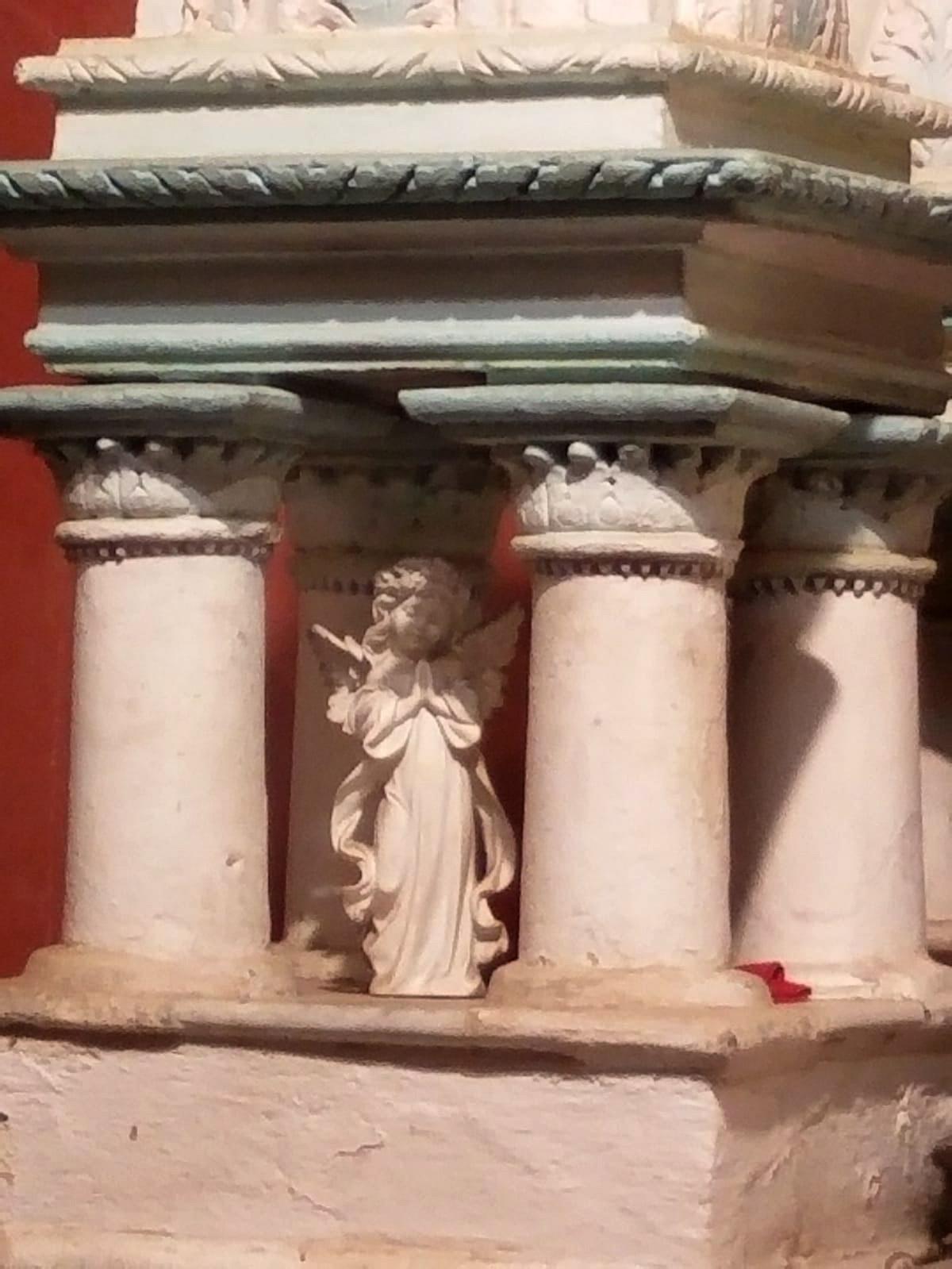
Next on the menu was the evening aarti. Most rajbaris have an aarti at the Thakur Dalan (the courtyard where the family deity is consecrated). Their deity is a beautiful idol of Lord Vishnu, but most intriguingly, in the hollow of a column inside the temple, next to Vishnu, is a pretty marble angel.
The syncretism of those times embraced not just architecture, but also religious Christian symbols in Hindu temples, which interestingly you will also spot in the Marwari 19th century homes of Shekhawati, in Rajasthan, where Lord Krishna and Radha are painted like Botticelli angels.
Evenings are quiet. The gates of Itachuna Rajbari open bang onto the narrow but busy road that leads to Khanyan station. And expectedly, it's noisy. You close the gates and the discordance and the 21st century is shut out.
As we head for dinner on a full stomach (we've ordered luchi, Alu Dom, Kosha Mangsho), I ask the waitress if the stories of ghosts are true. "I've yet to see one though I've been working here for the last two years. But at night I don't stay here, I go back home to Khanyan," she says, drops her gaze and smiles.
I've always loved the word shinjini (the 'tinkling of anklets') and I even refer to my colleague's daughter as such. As night settles and owls hoot, I wait and hope to hear those dancers, stilled for over a 100 years.
Getting there:
By road: A 2 to 2.5 hour's drive from Kolkata via the Delhi Road gets you to the rajbari. The Kalyani Expressway is longer, but the road surface is better.
By train: The nearest railway station is Khanyan. Take a Burdwan-bound mainline train or Pandua/Memari local train from Howrah station to reach Khanyan in 1.5 hours.
Feature Presentation: Ashish Narsale/Rediff




 © 2026