

As the digital age turns children into informed, opinionated little adults, what guardrails should parents employ?
Eight-year-old Raihaan* and his twin sister Ira*, wake up in the morning and gravitate towards their grandparents Vinita* and Rajesh Ahuja*, who are celebrating their 42nd wedding anniversary. The kids ask them to kiss. An embarrassed Vinita pecks her husband on the cheek but the twins echo, "Lip to lip!"
Children have been precocious since time immemorial but the contemporary liberal upbringing fused with information overload on various screens has brought about a sea change in the latest generation who can often sound like mini adults.
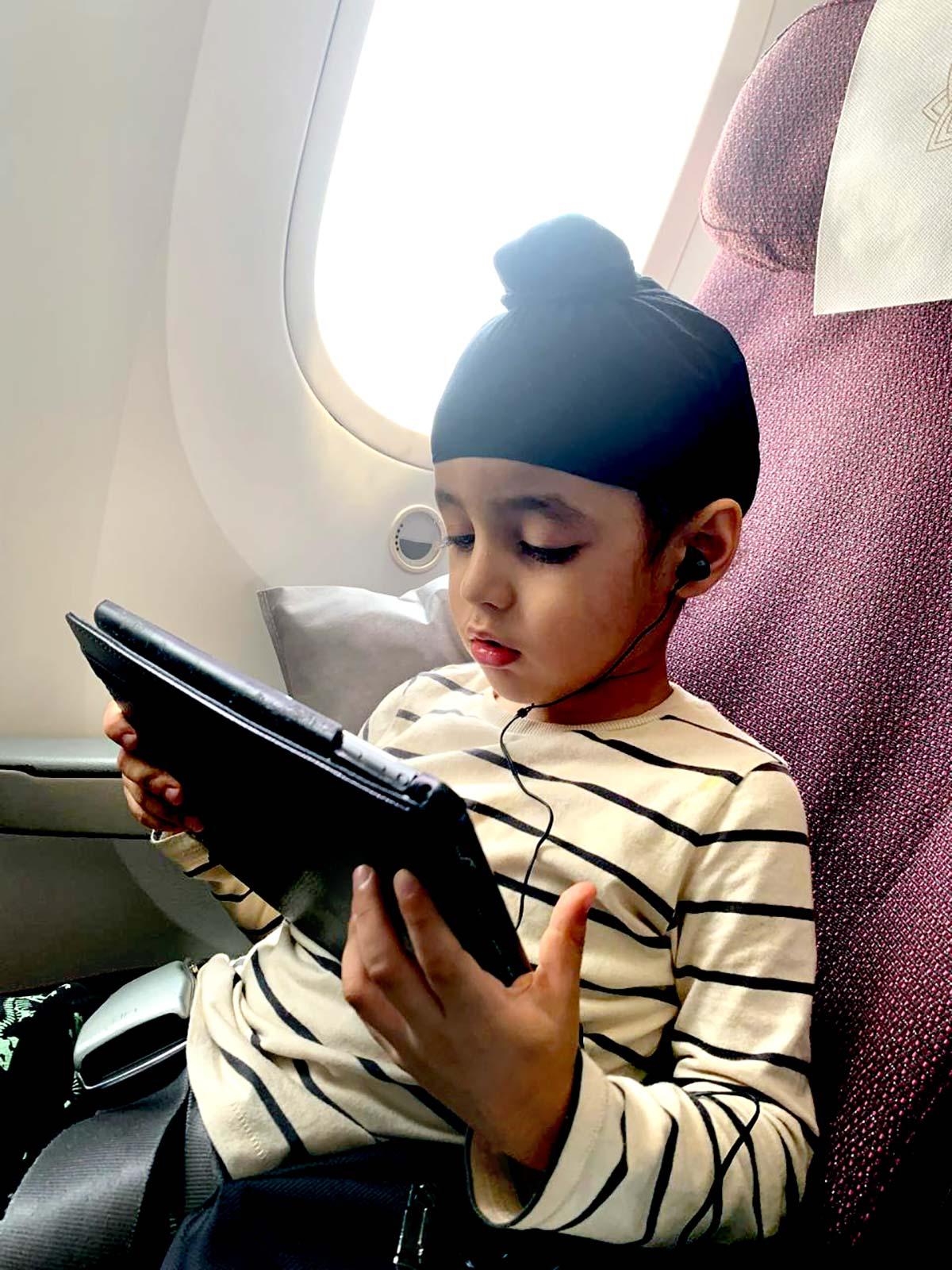
For five-year-old Hridansh (lovingly called Hridu) Narang, his screen time -- for the uninitiated, it is the time a child is allowed to use the mobile phone/TV/laptop -- is not to be trifled with.
When his mother Priyanka, who is an event manager, tries to snip it short, Hridu testily asks them to account for the hours she and his father spend chatting and scrolling on their cellphones.
The awkward parents resolve to lead by example but are silenced for the moment.
The world seems to have turned topsy-turvy.
Hridansh's father Aman, who is an entrepreneur, grins as he tells Dinesh Raheja, "First we obeyed our 'parents, now we obey our children."
While all parents actively discourage device dependency, they concede some ground because the flood of information that technology facilitates poses both problems and possibilities.
Add changing societal expectations towards authority figures and you increasingly get children who emphasise individuality and self-expression.
Ira adamantly refuses to wear a frilly dress for a friend's birthday because "It's scratchy, Mama." When her mother *Neha, a costume designer, tries to convince her, Ira opens her closet and ask, "Show me one frilly dress you have."
When nine-year-old *Shanaina Sharma was upset because she was not invited to her classmate *Naina's birthday, she resolved it with a judicious mix of drama and candour. "I told Naina, 'Do you realise the embarrassment you have put me through!'"

While it may not be a win for two year olds to possess the skill to skip from one YouTube video to another, many children today do possess an impressive vocabulary and show creativity. Ira, who is just eight years old, has already penned several short stories.
Pooja Jain, a fashion designer and co-founder of Renee Label, reveals, "My three daughters (Anaaya, 11; Suhaani, seven; and Aaradhya, five) took Taylor Swift's song, Love Story, and made it their own by adding my husband Rajiv's and my names to it, turning it into a playful version of how 'daddy proposed to mama'. It was the sweetest thing.
"Kids today have so much more exposure than what we had and it's amazing, and sometimes hilarious, to see how they process relationships through everything they see and hear around them.

When asked what parents can do to support healthy childhood development, Rhea Shahani, senior psychologist, Flute and Dice Clinic, Mumbai, starts off by recognising the dramatically changed milieu.
She observes, "Childhood isn't what it used to be; screens have taken over swings.
"While tech sharpens some skills, it comes at the cost of physical activity and real-world social interaction.
"Kids now know far more -- and far earlier -- than we ever did. The Internet has removed filters, making it harder for parents to control when and how sensitive topics like sex, violence or mental health are introduced.
"Parenting has also moved from 'because I said so' to negotiation and emotional coaching. While this fosters independence in children, it also blurs boundaries if not balanced well.
"From hair colour to pronouns to extracurricular passions, kids are encouraged to define themselves early. Uniformity is out, self-expression is in. The upside? Confidence. The risk? Anxiety over constantly needing to 'stand out'."
"So what's the bottom line? These changes aren't good or bad -- they're complex. Children today are more aware, expressive and tech-savvy but also more anxious, overstimulated and disconnected from nature and family.
"Parents can prioritise presence over perfection -- offline, undistracted time matters most. Schools can balance freedom with structure -- kids still need boundaries. And policymakers can push for safe digital spaces, inclusive education and access to mental health support."
Rhea says, "Childhood is evolving. The goal is to guide our children through this new world without letting them grow up too fast."
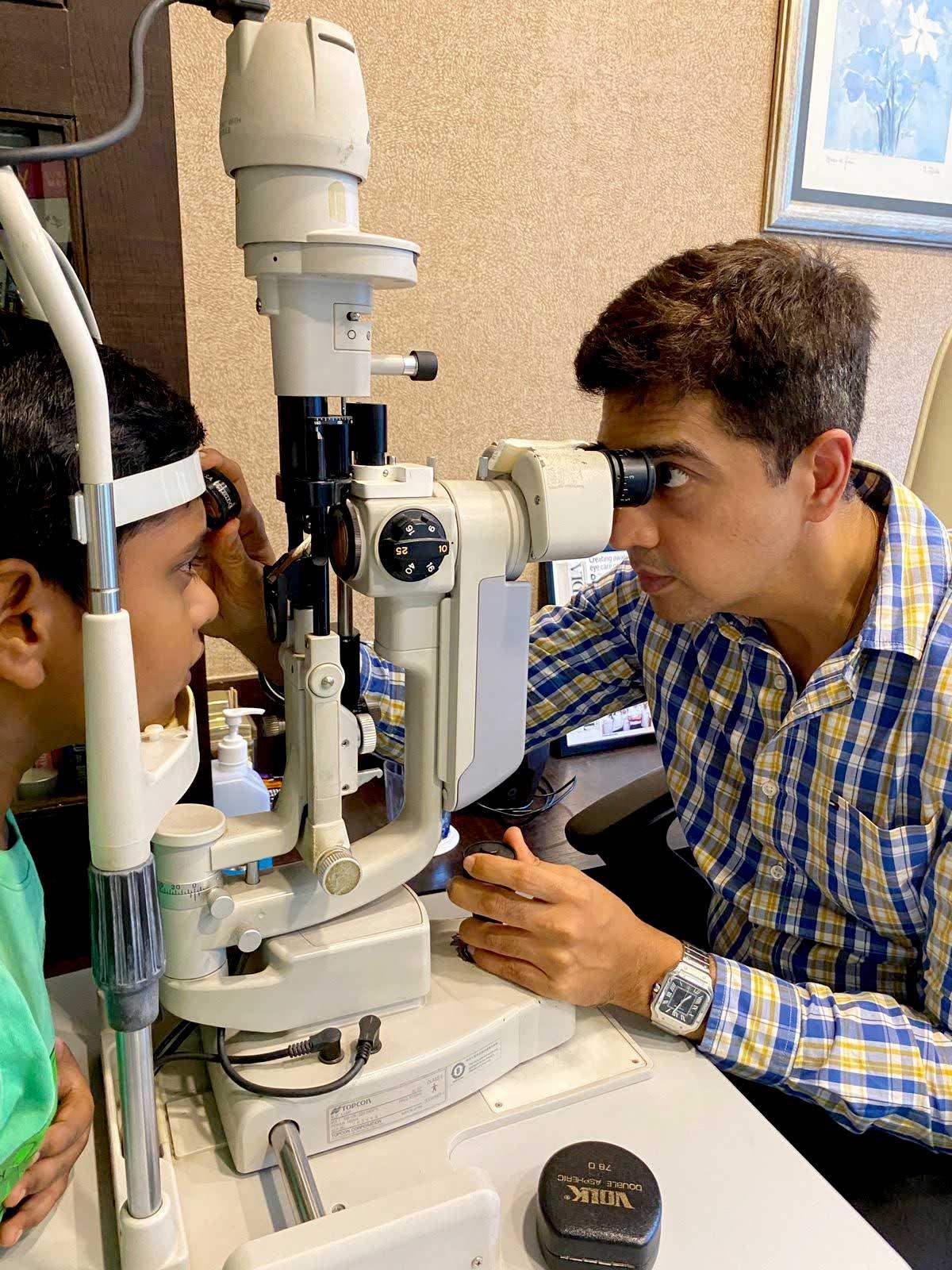
The undeniable fact that children are watching screens from an early age makes it imperative to seek an ophthalmologist's overview.
Dr Nikhil Nasta, ophthalmologist and eye surgeon at I Sight Eye Care, Mumbai, and a father of two, states emphatically, "Children under the age of five should not be allowed screen time. Not only are the rays from the screen harmful to the eyes, the visuals overstimulate the child and put her/him into a hyperactive zone. It is better to encourage them to play a sport, go outdoors, adopt a healthy sleep routine and have a hobby."
While the eye doctor has a way with kids, he is also strict with his young patients. If a child is caught watching a gadget in the waiting room at his clinic, the staff takes it away and puts it in a Digital Detox box. "On their way out, we return the gadget but only after I have lectured the child," laughs Dr Nasta.
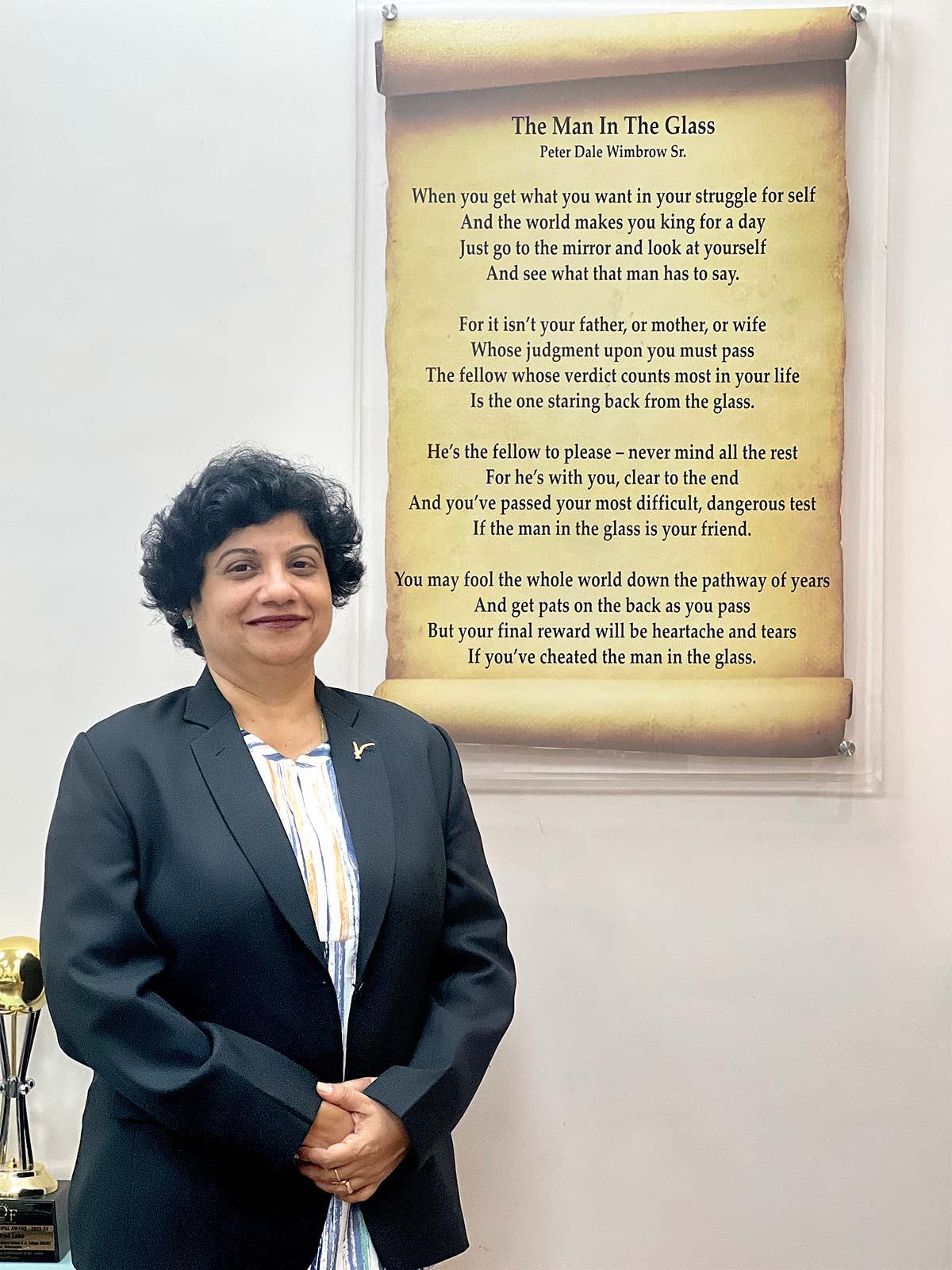
For the last 20 years, Dr Mildred Lobo, principal of the S M Shetty International School, Mumbai, has shaped the futures of numerous children as an educator. She acknowledges, "It's a difficult time to be a parent; it's a difficult time to be a teacher."
"At the same time, I tell the children, 'I don't think I could have at your age spoken as well as you do.' Their communication and articulation skills are amazing thanks to the exposure.
"But look at some of the content that children are exposed to today. Television came to my home when I was in Class 8. Today, I see children in Class 6 owning a mobile. Even if children don't own a cellphone, strict parental control is difficult to exercise because, if it's not your mobile, they will watch it through some other person's mobile."
Principal Lobo has worked out a system for enforcing rules and regulations based on psychology and empathy. When faced with a defiant child, she advises, "Don't scold the child in front of everyone. I've always told my teachers that though you may get upset when a child is challenging you, just tell the student to continue the conversation after class.
"When you're dealing with the child on a one-on-one basis, you can better understand what is going on in the child's mind. Also, you have calmed down. As a school, we look at every situation through the child's lens.
"We have a full-fledged counselling department with regular sessions for all students on topics like digital devices, healthy eating, goal setting, etc. We refer children who we feel need additional support to the counsellors for individual sessions with parental consent. And we have seen these children improve."

To parents faced with children throwing a furious tantrum at not getting their way, she suggests, "They are just expressing their anger in the most extreme way. Calm down.
"You have to tell yourself: If they are saying something hurtful, it's just for that moment.
"Later, when the child is not angry, have a conversation about it. Yes, they may do it again. But remember, even we adults do things we know we are not supposed to. How many times parents use their phones even on the dinner table? If they get a call, they just get up and go."
Leading by example is what the educator advocates. "Children are watching you," she points out. "They do what they see, not what they are told to do. So if you're constantly on the phone or if you're using a bad word, they will do it too.
"Spell out the rules and insist that certain things are not acceptable. You need to give a little bit of rationale. There are certain ways that we as parents can set rules which will have long-term implications."
Principal Lobo believes that parents and teachers can get together to create a healthier environment for child development in these turbulent times. "Both have a common objective -- the welfare, happiness, security of the children," she says.
"The world is changing and we have to train our children to be ready for this world."
*Name has been changed on the interviewee's request.







 © 2026