

'Listen to the voice in your head and keep your inner sanctum safe.'

Multitasking is not only about juggling but, critically, about donning your many hats passionately.
Actor-turned-author Advait Kottary revels in this well-orchestrated dance in his pursuit of multiple creative expressions.
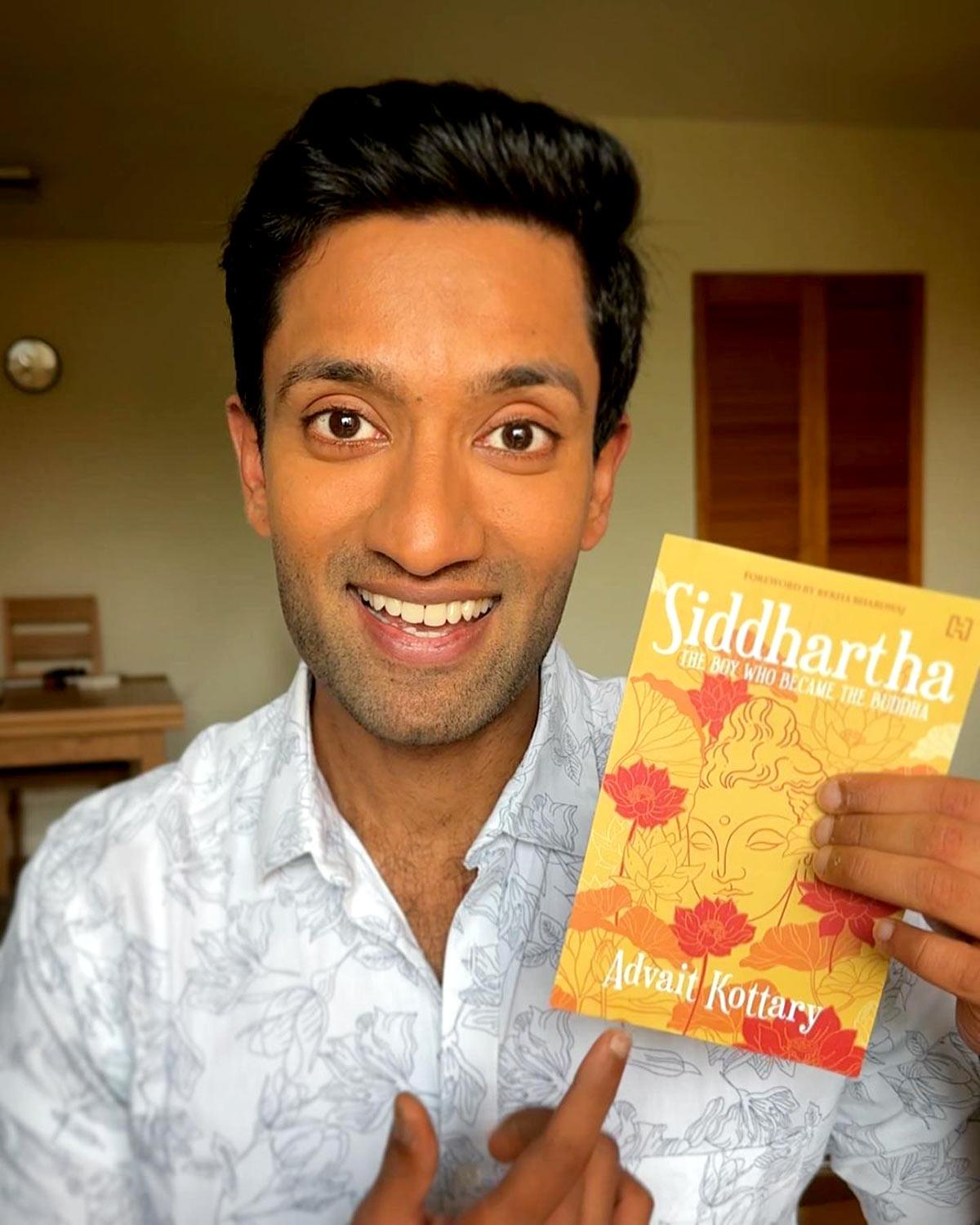
His debut novel Siddhartha: The Boy Who Became The Buddha, carefully, and in an impressionistic manner, captures the little details of Gautam Buddha's formative years. Advait says he was drawn to Buddha's story because he could empathise with the conundrums Prince Sidhhartha faced about life.
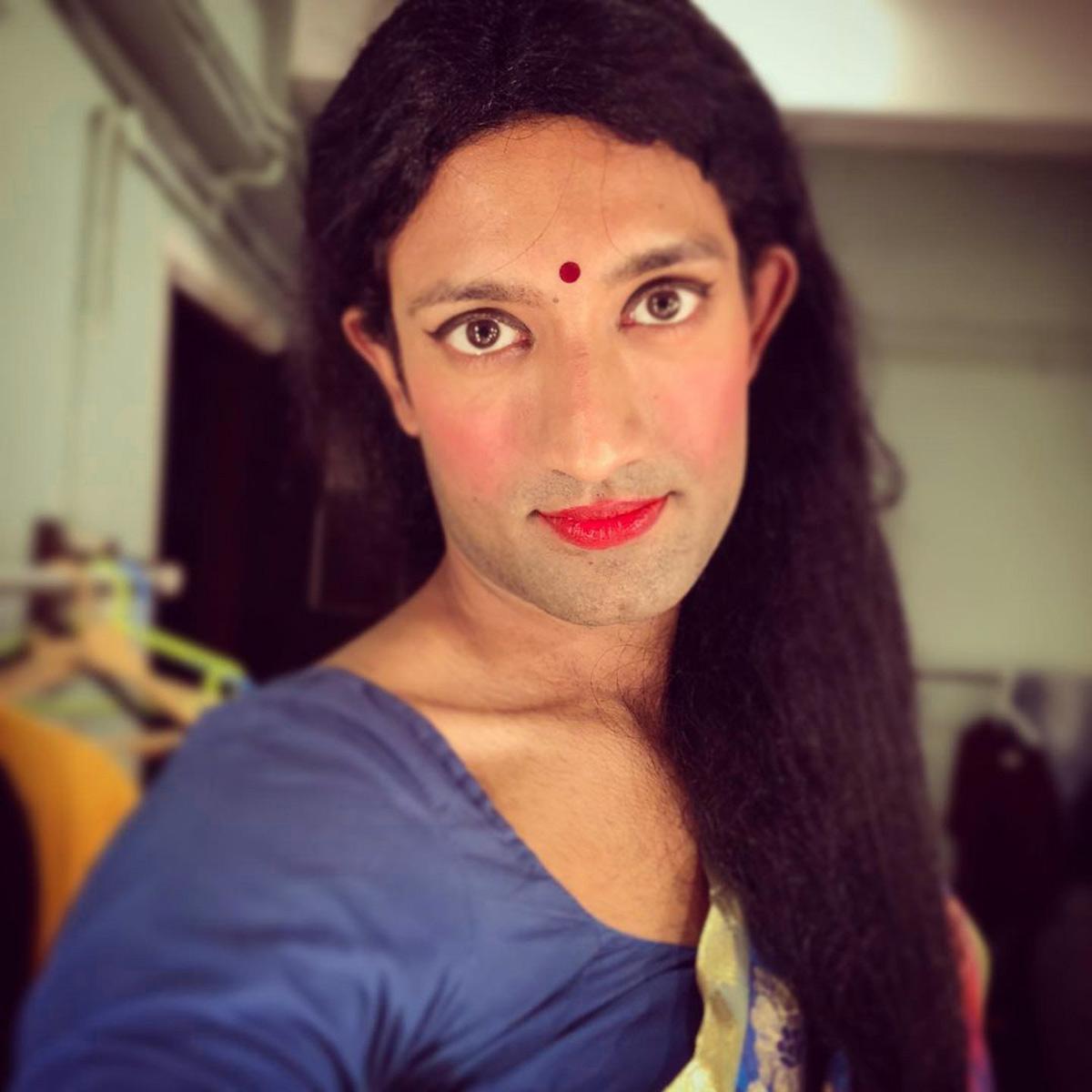
Before turning to writing, Mumbai-born Advait worked as a professional actor in the theatre and films. A mechanical engineer by education, he studied at the Manipal Institute of Technology but Advait says he was always fascinated by acting and has been doing theatre since he was a teenager.
The actor in him helped unravel Siddhartha's complex psyche and the reasons that lead to his devoting his life to a spiritual quest.
"These are the same kind of questions that we as human beings are constantly asking ourselves on a day-to-day basis. At some level, it also made me think about the fact that these questions are relevant now and does it mean that we haven't progressed in any way?" Advait -- whose Siddhartha: The Boy Who Became The Buddha has just won the Sahitya Akademi Yuva Puraskar 2025 in the English category -- tells Mayur Sanap/Rediff in a Zoom interview.
What intrigued you so much about Siddhartha's story that you decided it would be the subject of your first book?
I was questioning a few things about my own life. Like what I'm doing, what I would like to do, how I would like to, what my place in the world is.
At some level, everybody has these questions when they are growing up and finding their feet as an adult. That's what it was like for me.
My family is very heavily into reading and books. And it's always been instilled in us that books are very important and treasures to have. There was this book lying around at home, Old Path White Clouds by Thich Nhat Hanh. I started reading it. It was the story of Siddhartha, the Buddha, but there were so many other elements to it.
There were things about his life, which I didn't know. And being an Indian, being educated in India, we all roughly know Buddha's story, but I didn't know that there were so many different nuances to his story.
I got very curious about it. I realised that the questions that Siddharth had about his own life are very similar to the questions that a lot of us have growing up.
I found that there was a very beautiful human tale there, which a lot of people today don't know about, simply because it's been reduced to what we study in the textbooks or historically, like very dry facts.
I wanted to tell the same story in a different way.
Did your mother (Gajra Kottary is an award-winning scriptwriter and author) inspire you to write?
She was very supportive. She has always been. I also had her support when I decided to leave my job as an engineer to pursue something that wasn't predictable or consistent in terms of work.
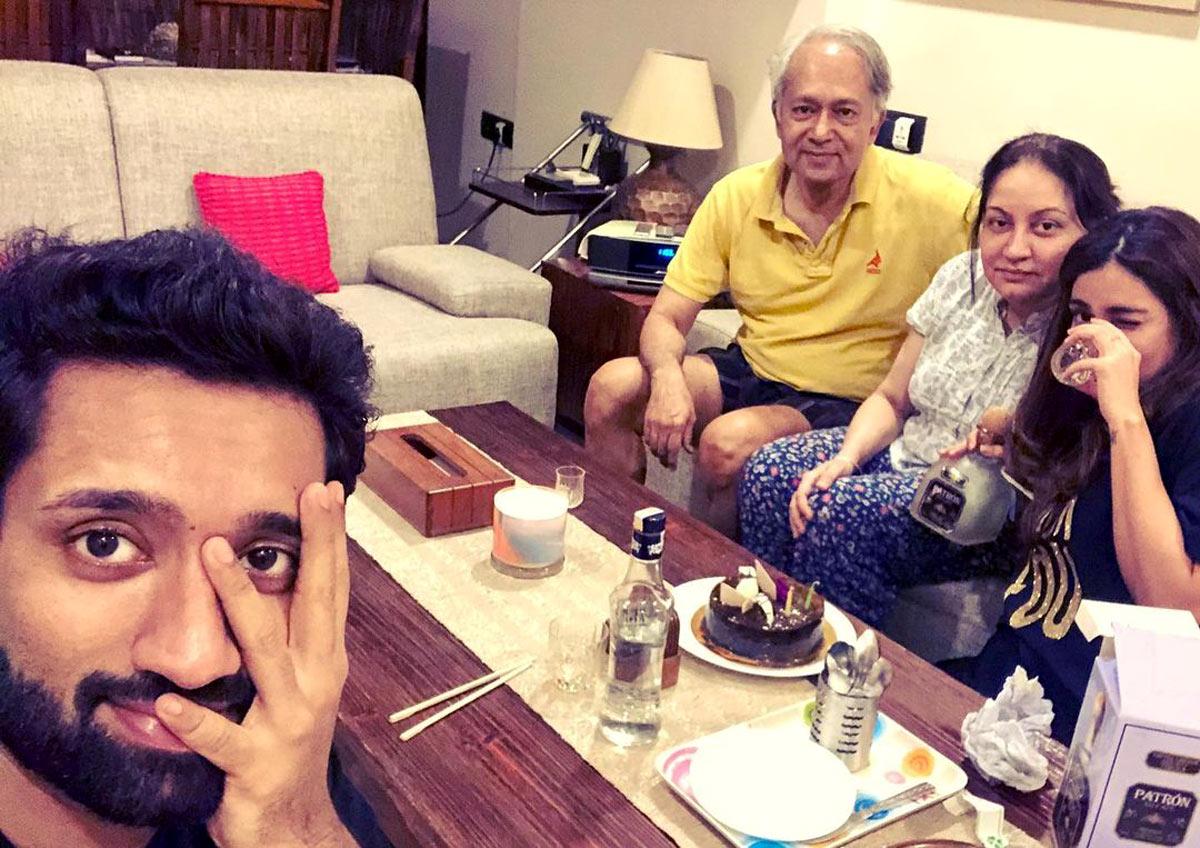
Both my parents (his father Sailesh Kottary is a senior journalist) were very helpful. (While writing the book) I would give them parts of it to read, and they would give me their feedback, and tell me what they thought.
I had this wealth of experience at home to fall back on and ask for advice every time I was stuck.
What were the challenges of writing this book as a novice writer?
The biggest part was just sitting down and channelising my thoughts. I would start off saying one thing and kind of get lost. The book went through about four or five rewrites before it came to the version that people are holding in their hands today.
Understanding the importance of the structure and establishing that was a huge takeaway for me.
This is something that I learned from my parents. You never start on a blank piece of paper, you always kind of know where you're ending up or where you should end up. That may change, of course, as you continue writing it, but you should at least have an idea of where you want to go before you start.
Are you drawn to Buddhism? How relevant are Buddha's teachings in today's world?
I'm very drawn to Buddhism because of the simplicity of its outlook and beliefs.
I think it's especially relevant today. It's been 2,500 years now since Siddhartha lived his life. But the same things that he asked of his life -- like why do we do what we do? Why is this custom happening in the universe? Why has my family been doing this for generations? Why is our society like this? -- these are the same kind of questions that we as human beings are constantly asking ourselves on a day-to-day basis.
At some level, it also made me think that if these questions are relevant now, does it mean that we haven't progressed in any way? Shouldn't we have moved on to other questions, perhaps other pursuits, in terms of spirituality and growth?
But to tell you the truth, every human being has a journey, from start to finish, from life to death -- whatever way you want to look at it -- and these questions are fundamentally very essential to the growth of a human being.
I feel like even 10,000 years in the future, human beings will still be asking these questions because they are eternally relevant questions to live our lives meaningfully.
We may not find answers, but for me, I can say that it's been important to think about these questions in my life on a very regular basis.
From engineer to actor to now an author. Your career has taken many detours. What motivates you to cultivate so many passions?
I've always been fascinated with the process of creation.
I come from a family of artists. I'm literally the only engineer in my family. It's not like a stereotype, where there was any kind of family pressure to study, either engineering or medicine.
The way I think is that I look around and see how things work. Engineering suited my thinking style, but I did realise that I do need to create, but only in a different field.
I have been doing theatre ever since I was 15. So that was my first love. I've also been doing a lot of work on screen and voice work. At the end of the day, I like being involved in the journey when an idea comes to a screen or to print or, the way it takes shape.
It's almost like watching a small baby or a small animal grow up to lead a very beautiful life. That's something that keeps me motivated.
Does being an actor help Advait explore the psyche of a character? He explains here:
The book's foreword is written by singer Rekha Bhardwaj. She said writing this book must have transformed your outlook on life. How true is that?
Yes, for sure.
I'd like to think of myself as still a work in progress, very much, as we all are. (Writing this book) helped me to open up in terms of acceptance, surrendering, (to) whatever is not in my control, and as a result of that, being more patient, and perhaps more sympathetic.
It's funny, on days when I talk about the book and the character of Siddhartha and the teachings of the Buddha, I see a distinct difference in my level of patience, my level of feeling grounded and in my outlook.
I feel like that is the biggest takeaway for me personally, because it's not just ended with me writing the book and moving on with my life. Even on the days I get to talk about it, it has a profound effect on me.
That's the kind of feeling that I hope everybody has while reading the book. The way even the characters around Siddhartha had such inspiring and beautiful stories that you really start to think... 'Okay, my problems are not all that big a deal at the end of the day'.
What were the most difficult facets to explore of Buddha's mind? And how did you tackle that?
To be honest with you, (it was difficult) describing certain meditative states that he was in, because it's not something that I personally can say I have experienced.
I don't know exactly what he saw on those meditative journeys of his. I don't know exactly what sensations perhaps he would have had, while in deep meditative states.
A lot of that I had to try and do justice to by reading up and researching accounts that that he had spoken about to his disciples.
But also one of the hardest was to decide what to leave out (of the book). We have like a million things to say, but we can only talk about these 100 things because there's a physical limitation of space and words. There is a lot that couldn't even make it to the book.
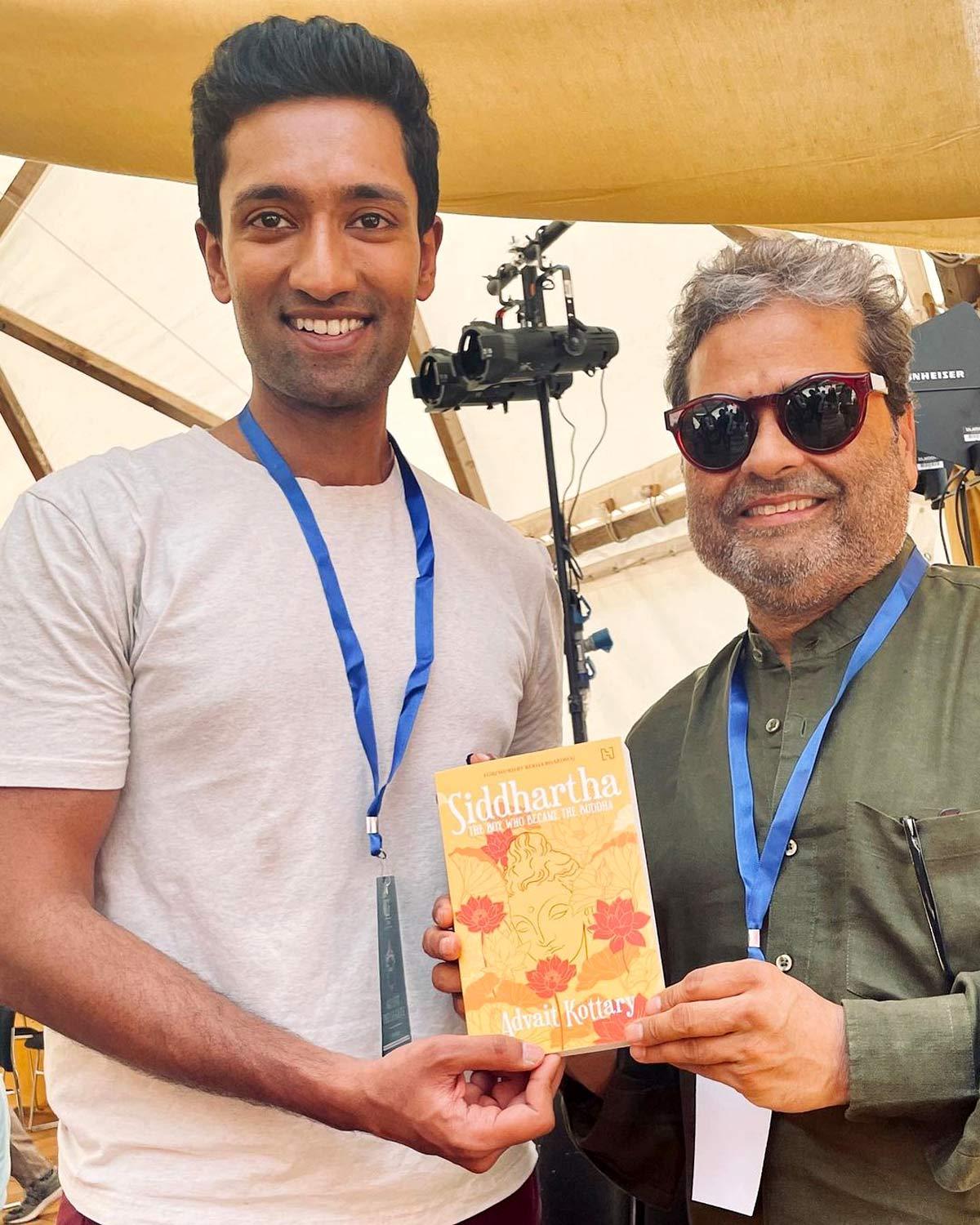
Advait picks a film director who he thinks might do justice in adapting his work for the screen. Watch here:
Do you find writing more cerebral than acting?
I don't think that's the case at all.
If you're in the process of creating, at any point in time, you have an equal amount of imagination and skill that you have to rely on to contribute. This is something that I personally feel is a misconception that needs to be addressed. And people need to be a little more charitable to people who are in the acting field as well.
Every actor I've met, who has had a successful career is a very intelligent person. And they have to draw on so many different aspects of knowledge, history, and their film vocabulary is so high.
And it's not just actors, as well, everyone who you see working on a film set, from the people designing the sets and the backdrops, to the costumes to the colourist as well, it's very intelligent work that people do.
Writing is a different discipline. I don't think it's fair to say that something is more cerebral than another thing. Both are equally cerebral in their own way.
What's been the most fascinating critique of your book so far?
I've had a lot of people reach out to me and talk to me about how they personally don't agree with the actions that Siddhartha had taken. This is something that I also struggled with.
Yes, he was on a spiritual path. And he did leave his wife and newborn child at the end of the day, to pursue something. Yes, it was a lot of hardship, but it was his own choice. So, where do you rationalise that? Is that justified? And the answer is, I don't know. It's not my place to decide that as well.
It's like one of those things where you look at choices that people have made in the past, and it's easy for us to critique them. But my only job here was to sort of tell you the story, and then you can decide for yourself.
There was also one lady who reached out to me and said that she wished she had more in the story, like she wished the book didn't stop as abruptly as it did. I have to admit that there was so much more of a story to be told. It was a choice that we had to make.
But then again, if it was 150,000 words I don't know if too many people would buy the book (laughs).
Will there be part two of the book?
Never say never.
With our already shrinking attention span, do you think people are losing out on the art of reading? Does it bother you as a writer?
Does it bother me on a day-to-day level? Yes. You look around, and literally, everyone's just kind of scrolling away.
It bothers me as well as an actor, to wonder what the future of AI is like, what the future of entertainment is.
But I've also been very surprised.
I've been introduced to a wonderful community of people who read, and encourage their children to read. There is still a huge amount of people who believe in the virtue of books and the power of the written word. There's still a very, very strong community of people who do that.
Yeah, sure, the attention spans may have reduced, but there is a fairly equal amount of those willing to invest the time and effort to be transported into a different portal through the eyes of the book.
You once said Buddha's last words, Aapo Deepo Bhava are more relevant to us today than ever before. Would you please elaborate on that?
Aapo Deepo Bhava literally translates to: Be Your Own Light.
If you take it in the context of today, there is always a quick fix or dopamine fix that the world is prepared to offer you. In a world where everyone sells you stuff, tells you what to do and offers you quick fix for all your problems, only you can be your light.
Listen to the voice that's in your head and keep your inner sanctum safe. Everybody has a conscience and that conscience is what we should focus on because that's what guides us.







 © 2026