
How well will Shubman Gill fit in the T20 team? Is it a gamble by the selectors in order to unite captaincy across formats? asks Harish Kotian.
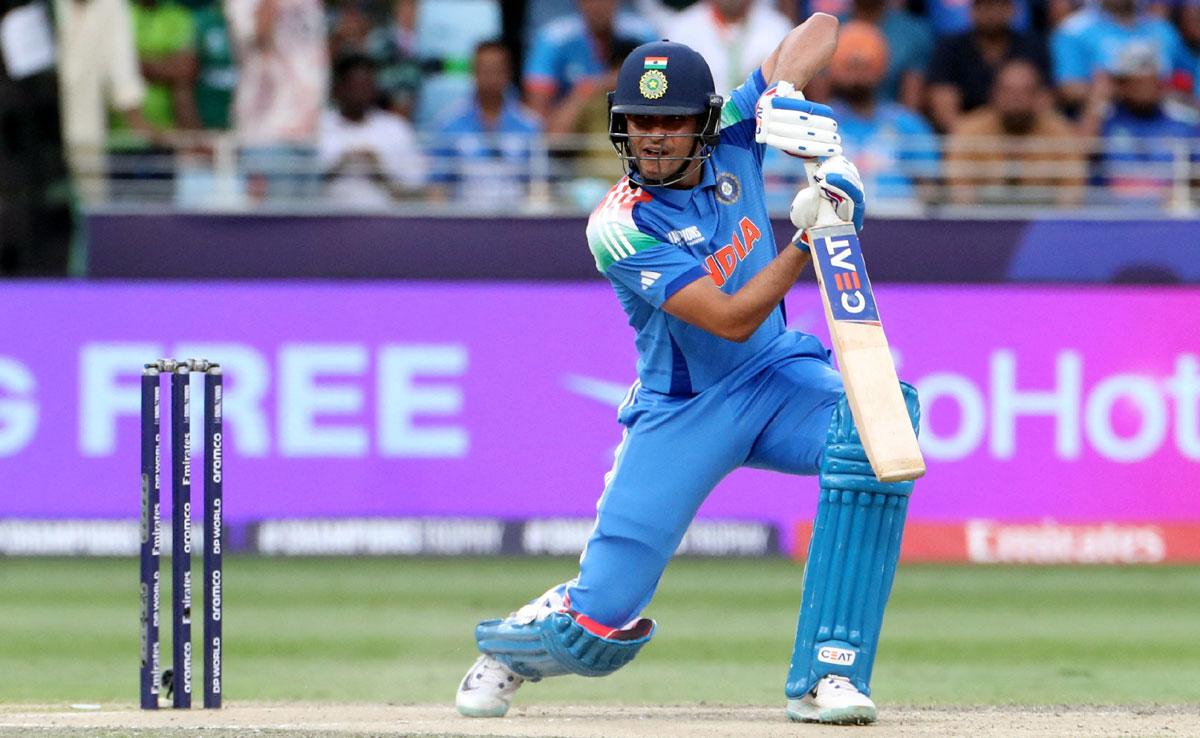
Shubman Gill's inclusion in the Asia Cup squad could turn out to be a defining moment for the Indian T20 team.
After a stellar performance with the bat in the England Test series, where Gill drew comparisons with some of the game's all-time greats, the selectors couldn't overlook him for the Asia Cup, probably enticed by the chance of uniting the captaincy across the formats in the long term.
Chief Selector Ajit Agarkar say quite clearly that Gill's leadership quality left a great deal of impression on the cricket establishment.
'We obviously see some leadership qualities in him, and his form in England was what we were hoping for.... exceeded all our expectations, which is a great sign when there's so much pressure as captain,' he said.
Modern-day cricket is as much about hero worship and fan power as it is about skill. Leadership aside, how else can one explain Gill's inclusion in the 15-member squad over Yashasvi Jaiswal, who is arguably a more dynamic T20 batter, or a Shreyas Iyer, a proven performer in the IPL in the last few seasons?
To their credit, the Agarkar-led committee showed great foresight by appointing Gill as vice captain, clearly signalling their intent to groom an all-format captain.
Historically, India has always preferred a single captain across formats, starting from Mahendra Singh Dhoni to Virat Kohli to Rohit Sharma. Gill, who turns 26 next month, appears poised to carry that legacy forward.
It is unlikely that Suryakumar Yadav, 35, would continue playing T20 Internationals after next year's World Cup, which positions Gill as the natural successor for the top post in T20Is.
In ODIs too, if Rohit Sharma retires by the end of this year, as is being speculated, Gill could lead India in the 2027 ODI World Cup, cementing his status as the undisputed leader across formats.
Gill boasts of an impressive record in T20 cricket. His strike rate of 138.89 for 5,121 runs in 160 T20 matches may not rank him among the elite T20 batters of our times, but on his day, Gill can dismantle any bowling attack.
In the last three IPLs, he has made a conscious effort to improve his scoring rate -- 157.80 in IPL 2023, 147.40 in IPL 2024 and 155.87 in IPL 2025.
Agarkar was clear about his committee's decision to reintegrate Gill into the T20 fold after a year's gap, with leadership as the key factor.
'Test cricket he is already leading, Surya mentioned he was the vice captain when he played T20 cricket for India. His form in England exceeded our expectations. I can only talk about T20 and Tests,' said Agarkar.
On Jaiswal not finding a place in the squad, he said: 'With Yashasvi Jaiswal, it's just unfortunate... Abhishek Sharma, what he has done in the last few months or a year... Plus that he can bowl a little bit. One of these guys was always going to miss out.'
One selection decision being panned is the exclusion of Iyer, easily one of the most dominating middle order batters in the IPL. Known for dominating spinners, Iyer's omission from even the stand-by list is puzzling, especially with the Asia Cup set to be played on the slow pitches in the UAE.
The only player he could have come in for was Tilak Varma, but the left-hander has cemented his place with back-to-back centuries in South Africa, and a match-winning half-century (72 not out from 55 balls) against a testing England pace attack in Chennai in January.
With Riyan Parag among the five back-ups, it is clear Iyer doesn't figure in India's T20 plans currently, despite being a key figure in the ODI set up.
The inclusion of Jitesh Sharma as the second wicket-keeper gives India a lot of flexibility as far as batting is concerned.
If Gill opens with Abhishek Sharma, Jitesh can take over the gloves; if Gill bats at No. 3 or 4, Samson can continue as the wicket-keeper and opener to partner Sharma.
The all-rounder department is pretty stacked too. Axar Patel and Hardik Pandya are guaranteed starters, irrespective of the conditions, allowing India the luxury to either go in with an extra batter or an extra bowler.
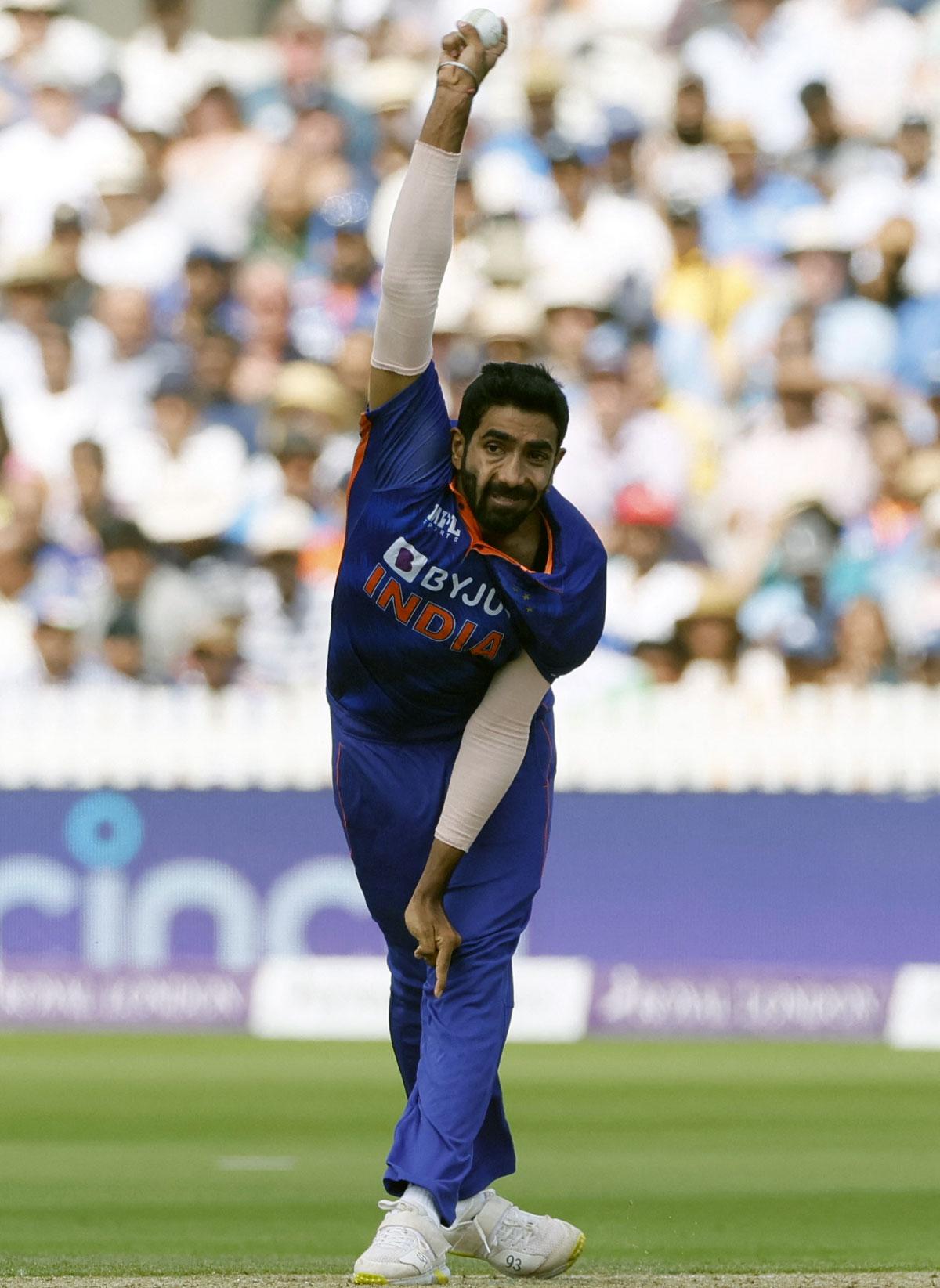
With Jasprit Bumrah back in the T20 fold, India's bowling looks formidable. He was integral to their T20 World Cup triumph alongside young Arshdeep Singh, who is adept at bowling with both the new ball and at the death.
The two wrist spinners -- Varun Chakravarthy and Kuldeep Yadav -- can run through any batting line-up on their day, even if their inclusion leaves the lower order a bit weak on the batting front.
The bottom four -- Bumrah, Arshdeep, Kuldeep and Varun -- don't inspire much confidence with the bat, but the team management will bank on the top-7's firepower and experience to deliver.
Rinku Singh, Shivam Dube and Harshit Rana will definitely get some opportunities, especially against minnows UAE and Oman.
India have won the Asia Cup a record eight times in 15 appearances. This is the third time that the Asia Cup will be held in the T20 format, with an eye on next year's T20 World Cup.
Packed with IPL superstars and given the recent decline of teams like Pakistan and Sri Lanka, India are strong favourites to claim their ninth Asia Cup title.










 © 2025