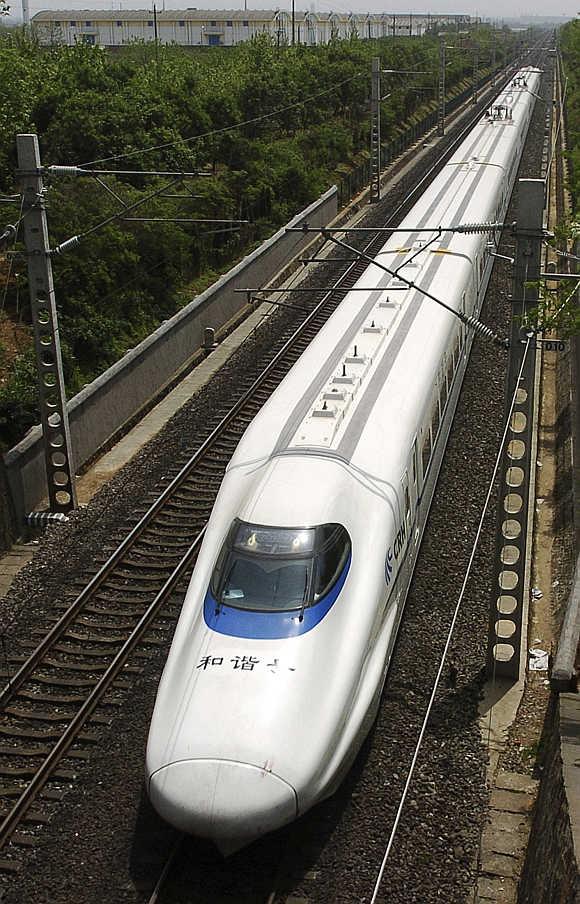
While India has many fast trains, but they come nothing close to some of the fastest trains in the world.
Let's take a look at some of the fastest trains in the world.
Source: Business Insider
...
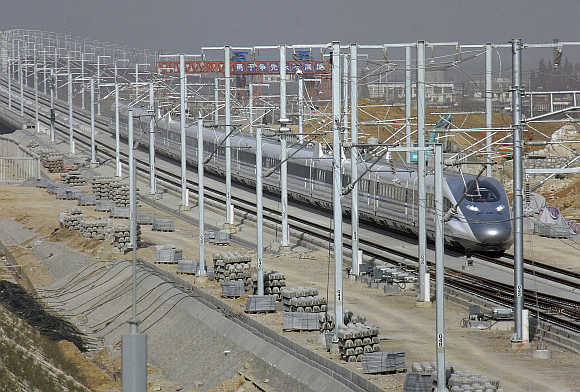
CRH380A
Top speed: 302 mp/h (486.02 km/h)
Country: China
Global rank: 1
...
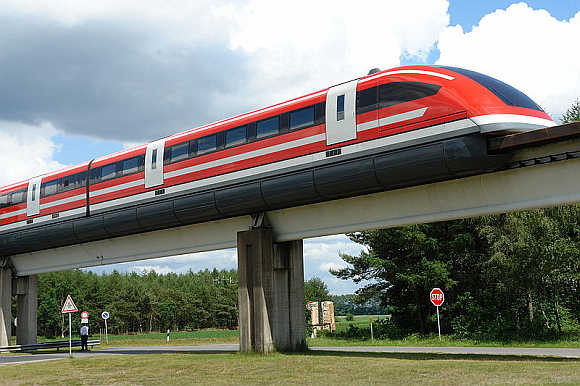
Transrapid TR-09
Top speed: 279 mp/h (449.01 km/h)
Country: Germany
Global rank: 2
...

Shinkansen
Top speed: 275 mp/h (442.57 km/h)
Country: Japan
Global rank: 3
...
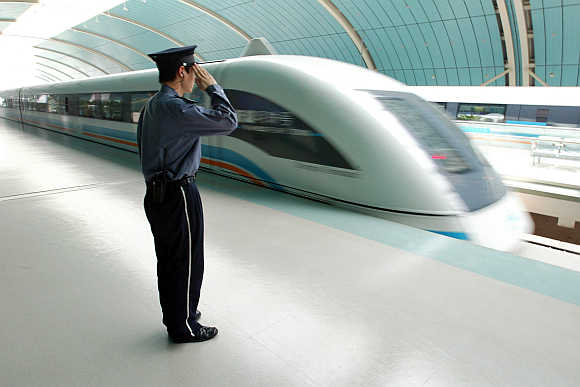
Magnetic levitation (maglev) train
Top speed: 270 mp/h (434.52 km/h)
Country: China
Global rank: 4
...
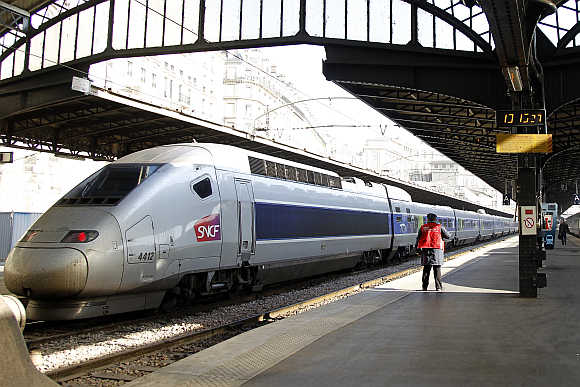
TGV Reseau
Top speed: 236 mp/h (379.81 km/h)
Country: France
Global rank: 5
...
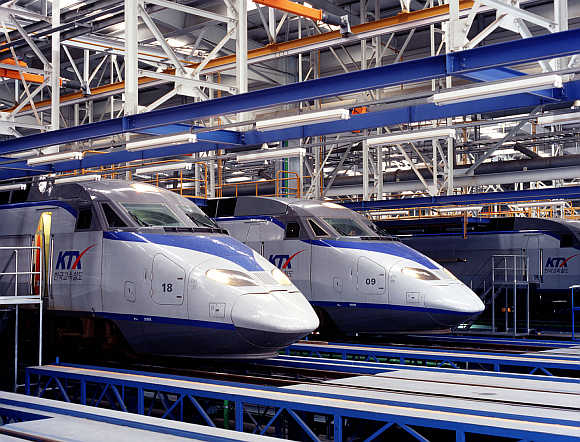
KTX 2
Top speed: 219 mp/h (352.45 km/h)
Country: South Korea
Global rank: 6
...
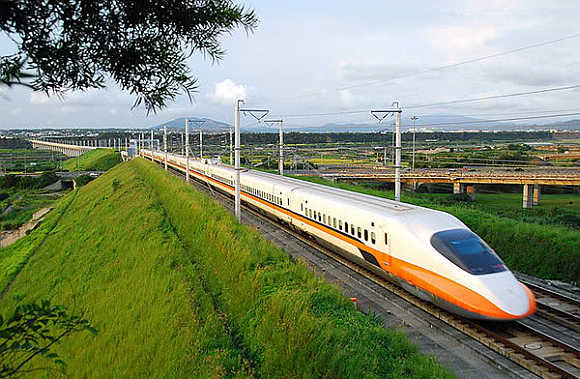
THSR 700T
Top speed: 208 mp/h (334.74 km/h)
Country: Taiwan
Global rank: 7
...
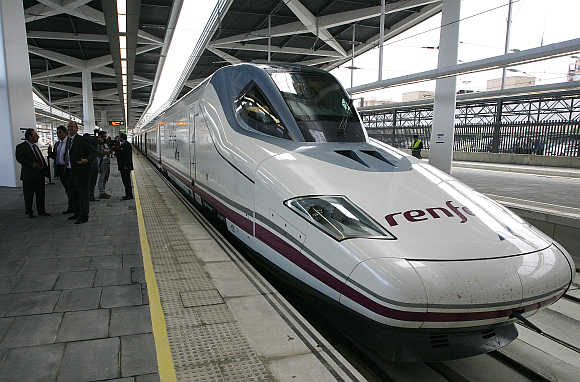
AVE Talgo-350
Top speed: 200 mp/h (321.87 km/h)
Country: Spain
Global rank: 8
...
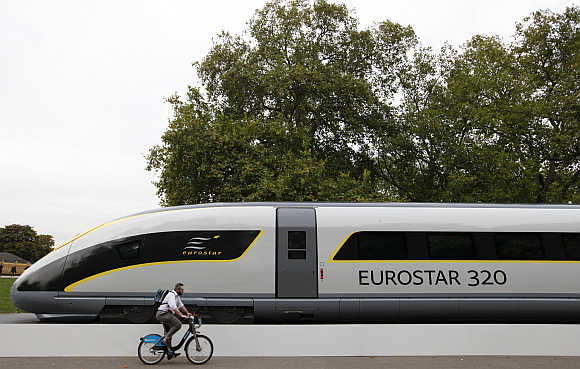
Eurostar
Top speed: 199 mp/h (320.26 km/h)
Countries: UK-France
Global rank: 9
...
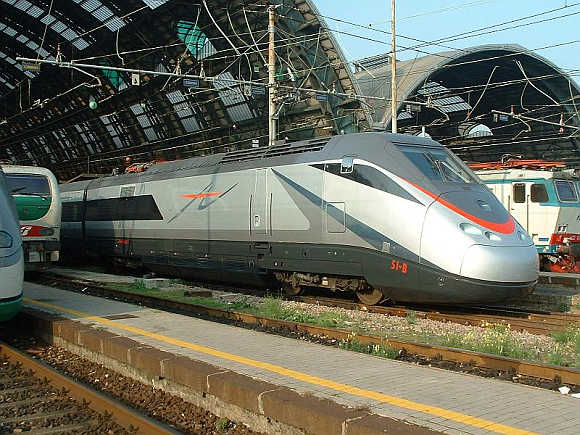
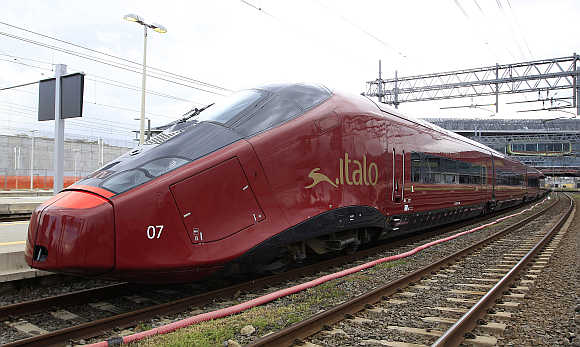
ETR 500
Top speed: 190 mp/h (305.78 km/h)
Country: Italy
Global rank: 10
...
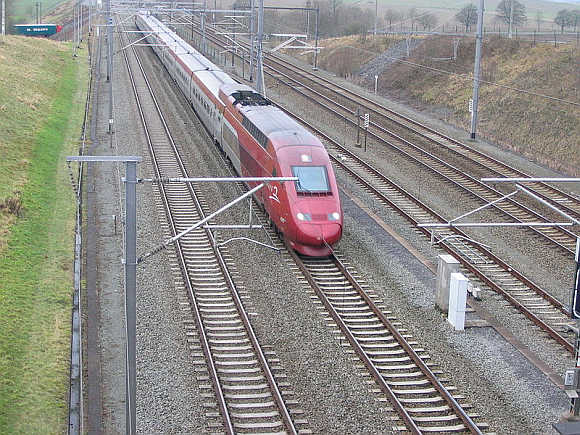
HSL-1
Top speed: 186 mp/h (299.34 km/h)
Country: Belgium
Global rank: 11
Click NEXT to read a bit about high-speed trains...
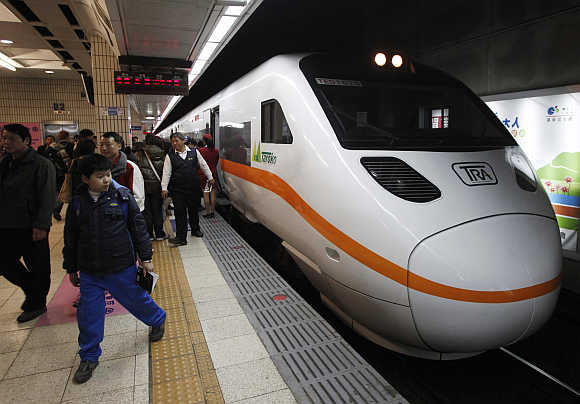
High-speed train is a type of passenger rail transport that operates significantly faster than traditional rail traffic.
...
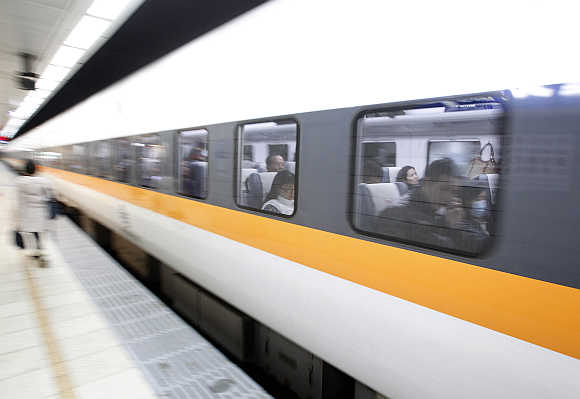
As of 2012 the maximum commercial speed was about 300 km/h (185 mph) for the majority of installed systems (China, Germany, Italy, Japan, South Korea, Taiwan, the United Kingdom), 310 km/h (195 mph) in Spain and 320 km/h (200 mph) in France.
...
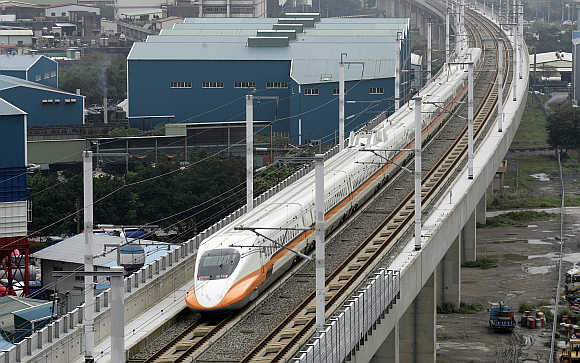
High-speed trains travel at their maximum speed on specific tracks, almost all using conventional tracks, generally using standard gauge (except in countries like Russia, Finland and Mongolia, which continue to use Russian gauge), while avoiding at-grade crossings and minimising curvature of the right-of-way.
...
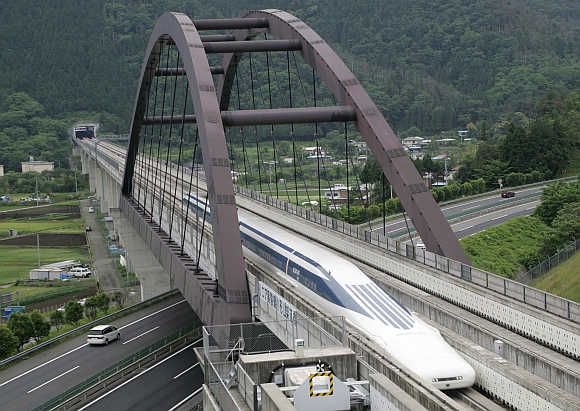
The world speed record for conventional high-speed rail is held by the V150, a specially configured and heavily-modified version of Alstom's TGV which clocked 574.8 km/h (357.2 mph) on a test run.
...
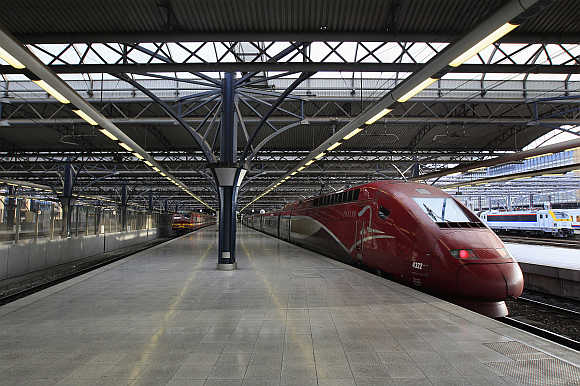
The world speed record for Maglev is held by the Japanese experimental MLX01: 581 km/h (361 mp/h).
...
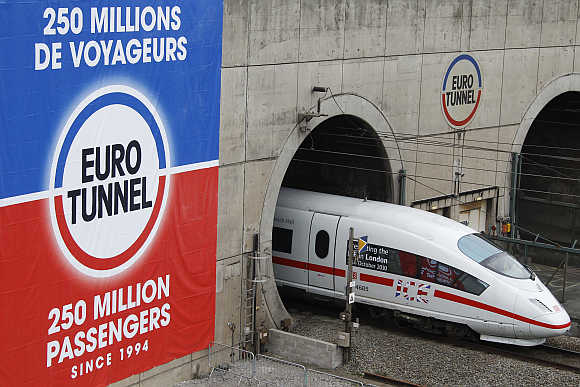
While high-speed rail is usually designed for passenger travel, some high-speed systems also offer freight service. For instance, the French mail service La Poste owns a few special TGV trains for carrying postal freight.
...
The International Union of Railways and EC Directive 96/58 define high-speed rail as systems of rolling stock and infrastructure which regularly operate at or above 250 km/h (155 mph) on new tracks, or 200 km/h (125 mph) on existing tracks. However lower speeds can be required by local constraints.
...
In the United States, the United States Code defines high-speed rail as services "reasonably expected to reach sustained speeds of more than 125 mph (200 km/h)", although the Federal Railroad Administration uses a definition of top speeds at 90 mph (145 km/h) and above.
The Congressional Research Service uses the term "higher speed rail" for speeds up to 150 mph (240 km/h) and "very high speed rail" for the rail on dedicated tracks with speeds over 150 mph (240 km/h).
...
Some features are unique to high-speed rail: many conventionally-hauled trains - beginning with the French "Capitole", launched in 1967 - reach 200 km/h in commercial service, but are not considered to be high-speed trains.
...
For several decades the Japanese Shinkansen was the only high speed rail service outside of Europe. In the 2000s a number of new high speed rail services started operating in East Asia.
 © 2025 Rediff.com - Investor Information - Advertise with us - Disclaimer - Privacy Policy - Feedback - About us - Terms of use - Grievances