

India's wholesale price inflation continues to climb, reaching 2.13% in February, fueled by rising food and manufacturing costs, impacting the overall economy and potentially influencing future monetary policy decisions by the Reserve Bank of India.
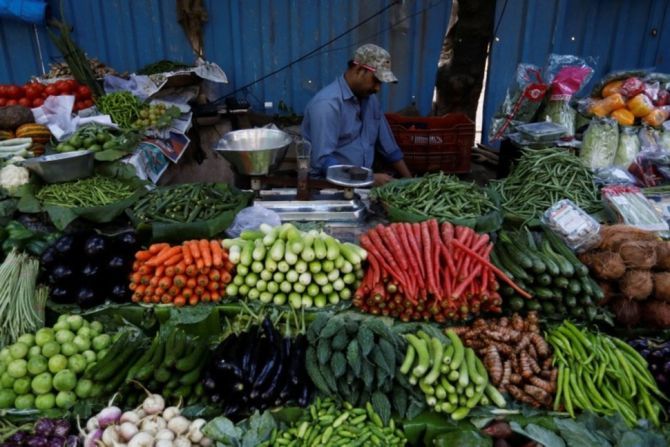
Key Points
- India's wholesale price inflation (WPI) rose to 2.13% in February, marking the fourth consecutive month of increase.
- The rise in WPI is primarily attributed to increased prices of food articles, non-food articles, and manufactured goods.
- While vegetable prices eased, pulses, potato, and egg, meat and fish saw inflation increase in February.
- The Reserve Bank of India (RBI) has reduced policy interest rates by 1.25 percentage points in the current fiscal year due to low inflation.
- Retail inflation in India also rose to 3.2% in February, further impacting the economic outlook.
Wholesale price inflation rose for the fourth straight month, at 2.13 per cent in February, driven by an uptick in prices of food and non-food articles, even though vegetable prices eased on a month-on-month basis, government data showed on Monday.
Wholesale Price Index (WPI)-based inflation was 1.81 per cent in the previous month and 2.45 per cent in February last year.
"Positive rate of inflation in February 2026 is primarily due to an increase in prices of other manufacturing, manufacture of basic metals, non-food articles, food articles and textiles, etc.," the industry ministry said in a statement.
Key Drivers of Inflation
According to WPI data, inflation in food articles was 2.19 per cent in February, as against 1.55 per cent in the previous month.

In vegetables, inflation eased to 4.73 per cent in February against 6.78 per cent in January.
However, pulses, potato and egg, meat and fish saw an uptick in inflation in February over the previous month.
In the case of manufactured products, WPI inflation inched up to 2.92 per cent in February, from 2.86 per cent in the preceding month.

Non-food articles category inflation spiked to 8.80 per cent in February, from 7.58 per cent in January.
Negative inflation, or deflation, continued in the fuel and power basket, at 3.78 per cent in February, vis-a-vis 4.01 per cent in January.
RBI's Response to Inflation
The country's retail inflation rose to 3.2 per cent in February, from 2.75 per cent in January, data released last week showed.
The Reserve Bank of India (RBI) has reduced policy interest rates by 1.25 percentage points in the current fiscal year as inflation remained low.
The RBI mainly tracks retail inflation for deciding on benchmark interest rates.



 © 2026