
Westlife Foodworld, fast-food chain McDonald's operator in West and South India, on Tuesday said food safety regulator FSSAI has verified the cheese used by it and is now allowed to use the word cheese in the name of its products. Additionally, an independent NABL (National Accreditation Board for Testing and Calibration Laboratories) has also confirmed that Westlife Foodworld uses authentic cheese in its food preparation and not cheese analogues or substitutes, its managing director Saurabh Kalra said.

Quick service restaurant McDonald's India (West and South) on Thursday said it will now also display Allergen & Nutritional information for the entire menu of in-store and on McDelivery app to enable customers to make the right food choices. McDonald's India (West and South) has also eliminated artificial colours, artificial preservatives and artificial flavouring from select food items, said a statement issued by the Quick service restaurant (QSR) chain on World Health Day. "McDonald's believes that consumers should have easy access to nutritional information to help them make informed food choices.
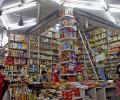
It may be a little early to cheer the recovery in the fast-moving consumer goods (FMCG) space as a deceleration in discretionary demand, after the festival season, may offset fragile rural recovery, analysts have cautioned. "The overall demand environment for staples remains muted, while discretionary demand trends have seen some deceleration after the festival season. "We believe margins in staples have bottomed out, but we expect only a gradual uptick with the ongoing softening in raw material prices.

Organised players have been the biggest beneficiaries after the lockdowns were lifted. Given real estate is not as expensive now, players want to take advantage of the trend.

Notwithstanding the inflation pinch, analysts believe the Indian retail sector is on the 'cusp of accelerated earnings growth' as consumer sentiment and discretionary purchases bounce back from the Covid-19 pandemic. "The shift in consumer preference from the unorganised sector to the organised, coupled with uptick in domestic demand as people resume work from office, will cheer the Indian retail sector," says Nishit Master, portfolio manager, Axis Securities. Shopping malls are witnessing increased footfall in lower tier towns and standalone stores as consumption picks up and mobility improves.

Oil content in mayonnaise slashed by 40 per cent, milk used in ice-creams 96 per cent fat-free, all wraps made of whole grain.
Zomato's mega initial public offering (IPO) ended with a bumper 38 times oversubscription on Friday as institutional investors poured money to get a pie of the hottest online food delivery platform. Zomato got bids for 2,751.25 crore shares against 71.92 crore shares on offer, stock exchange data showed. The IPO is India's biggest since March 2020. Institutional investors, who shied away in the first two days of the IPO, bid several times over the number of shares reserved for them.
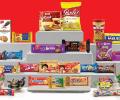
Indian consumers are likely to get respite from rising prices just before the festival season. Some consumer companies, including automakers, have indicated that they are planning to pause price hikes just before demand picks up in August, while keeping a close eye on volatile raw material prices.
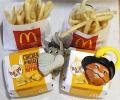
Vikram Bakshi, who controls 50% in JV and was MD, weighs legal options

Analysts say large firms in these segments don't need loan recast due to the efficient manner in which many of them operate.

Food delivery platform Zomato's initial public offering was oversubscribed on the opening day on Wednesday with retail investors bidding for 2.7 times the number of shares reserved for them. The offer received bids for 75.60 crore equity shares against an IPO size of 71.92 crore, stock exchange data showed. Retail investors sought 2.69 times the portion reserved for them. Against 12.95 crore shares reserved for retail individual investors, 34.88 crore shares were bid by 1700 hours.

Through the IPO, Burger King has raised Rs 450 crore, which will be used to rollout new outlets and retire debt.

The issue will comprise a secondary share sale worth Rs 600 crore by private equity major Everstone Capital and fresh fundraising worth Rs 400 crore.
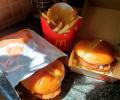
When Amit Jatia, vice-chairman of Westlife Development (WLDL), which operates fast-food chain McDonald's in West and South India, wanted to become the American fast-food giant's local partner in 1995, he had to first convince his family he would remain a staunch vegetarian. As McDonald's - home of the iconic Big Mac - completes 25 years in India, being one of the largest operators in the quick-service restaurant (QSR) segment in the country with over 300 outlets, Jatia has held on to the promise he made to his family. Not one to sit back and watch anyone flip the Big Mac, he gets straight to the meat of the matter when he says McDonald's success menu will see the QSR expand its ever-hungry 'foodprint' by doubling the number of joints and increasing its average unit volume by 35-40 per cent in five years.
The two parties have also approached the Delhi high court pleading that two earlier court orders be modified allowing Bakshi to sell his shares in Connaught Plaza Restaurant to McDonald's India.

'There is a clear business impact. People are avoiding crowded places and gatherings across cities. This is hitting business, both at traditional and modern trade outlets, during the Holi season, which kicked off from Saturday,' says Praveen Khandelwal, general secretary, Confederation of All India Traders (CAIT).

Experts feel that mall owners anticipate an increase in costs to the tune of 15-20 per cent annually, prompting a mixed response to the '24 hours' initiative. A mall owner said while the policy is good in spirit, implementing it would be a challenge as night shopping or eating out wasn't a habit in Mumbai yet.
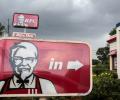
in the last three months, brands such as Tata Starbucks, KFC, and Pizza Hut have launched drive-through or kerb-side delivery services at their restaurants to catch consumers nervous about dining in.

A third of the total restaurant market in India - valued at Rs 4.25 trillion - could be wiped out in the current financial year, since many players have simply been unable to sustain operations in the absence of customers.

Declining interest rates, a near-normal monsoon leading to higher rural incomes and pay hikes for central government employees are key triggers, says Dev Chatterjee.
Excise duty hike for cigarettes could be lower.

Vikram Bakshi on Friday offered to sell his 50 per cent stake in Connaught Plaza Restaurants, the joint venture with McDonald's that operates fast-food restaurants in north and east India, for Rs 1,800 crore (Rs 18 billion).

Most business groups in India, including Godrejs, Tatas and Mahindras, have seen patience tested in JVs, with some of them winding up quickly

Vikram Bakshi, the estranged partner of fast-food chain McDonald's, will seek reinstatement as managing director of the 50:50 joint venture Connaught Plaza Restaurants, with a plea to the Company Law Board seeking the 'deadlock' in the August 6 board meeting be resolved.
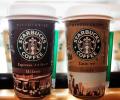
Faced with a clutter of coffee houses and cafes that also serve the brew, the chain that has 119 stores in seven cities in India is looking at ways to differentiate its brand from the rest.
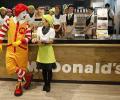
Bakshi rejects McDonald's proposal to buy his stake in JV for Rs 48-50 crore

McDonald's problems couldn't have surfaced at a worse time. Cut-throat competition, rapid expansion and a slowdown in consumer spending in the wake of demonetisation have seriously dented the overall quick-service restaurant business.

The 30-share Sensex ended 50 points lower at 28,112 and the 50-share Nifty declined 12 points to close at 8,531.
 © 2026 Rediff.com - Advertise with us - Disclaimer - Privacy Policy - Sitemap - Feedback - About us - Terms of use - Grievances