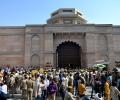
In an unusual coincidence, the two judges of a Supreme Court bench hearing a plea against the survey of the Gyanvapi-Shringar Gauri complex in Varanasi have had an association with a similar kind of dispute relating to the Ram Janmabhoomi-Babri masjid issue as well.
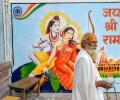
'The decision by this Hon'ble Court, whichever way it goes, will impact future generations.'

The bench on October 16 had reserved the judgment after marathon hearing of 40 days.

The apex court had on July 11 sought a report on the mediation process and said that a day-to-day hearing might commence from July 25 if the court decides to conclude the mediation proceedings.
A five-judge Constitution bench headed by Chief Justice of India Ranjan Gogoi, which started the day-to-day proceedings on August 6 after mediation proceedings failed to find an amicable solution to the vexatious dispute, has revised the deadline for wrapping up the proceedings and has fixed it on October 17.
The apex court requested the committee to inform it by August 1 about the outcome of the proceedings held till July 31.
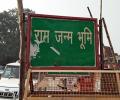
The Law of Limitation provides for mandatory filing of a lawsuit within a fixed statutory time period after the cause of action arises in favour of an aggrieved person.
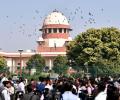
highlights of the Supreme Court judgment in which it unanimously granted the entire 2.77 acre of the disputed Ram Janambhoomi-Babri masjid land in Ayodhya to deity Ram Lalla.
The bench said after perusing the report, if it came to a conclusion that an amicable solution through mediation was not possible, then the apex court would commence day-to-day hearing in the matter from July 25.
A 5-judge Constitution Bench headed by Chief Justice Ranjan Gogoi, in its historic verdict delivered on a court holiday, held that the lawsuit of the deity was "within the period of limitation" and granted the title decree in its favour.
No one can claim ownership right over the sacred place by merely putting up a structure like a mosque, a counsel for 'Ram Lalla' told the Supreme Court.

Senior advocate Rajeev Dhavan, representing the Muslim parties in the case, tore up a pictorial map.
 © 2026 Rediff.com - Advertise with us - Disclaimer - Privacy Policy - Sitemap - Feedback - About us - Terms of use - Grievances