
The United States Trade Representative (USTR) has expressed concerns that India's Digital Personal Data Protection (DPDP) Act, particularly the lack of a deemed consent mechanism for credit information companies, and the Information Technology (IT) Rules of 2021, along with frequent internet shutdowns, could negatively impact the ability of US companies to operate and trade in India.

India and the United States are committed to finalising an interim trade agreement, despite recent challenges including the US imposing a blanket 10 per cent surcharge and India's decision to wait for a new global tariff architecture. The US Trade Representative's annual report highlights India's maintained high import tariffs and various non-tariff barriers across several sectors.
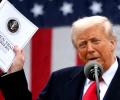
The additional 25 per cent duty will come into effect after 21 days or August 27.
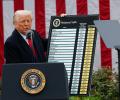
United States President Donald Trump has imposed a 10% tariff on most US imports, with even higher rates for China (34%), India (26%), Japan (24%) and the EU (20%), escalating a global trade war.
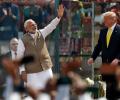
'It's important for India to think about areas where it wants the US to move.' 'We can be far more innovative in what we ask the US.' 'Given that there's a package deal, why not do it?'

The US Trade Representative noted that India's average applied tariff rate stood at 17% per cent, the highest of any major world economy.

The US wants India to recognise internationally accredited labs, harmonise labelling requirements and the validity period of test reports and certification with global practices, and eliminate retesting requirements.
The official said there are both challenges and opportunities for India as many of its competitor countries in exports, such as China Vietnam, Bangladesh, Cambodia and Thailand, face higher duties.
Here is the complete list of tariffs imposed by US President Donald Trump on Wednesday.
While growth in India is largely domestic and hence the overall GDP effect may not be more than 0.15-0.2%, but overall trade will be impacted due to every country going back to the drawing board, points out Madan Sabnavis.

The USTR report, released just ahead of the US' April 2 deadline for implementing reciprocal tariffs, has also cited high tariffs and price caps, which have not increased in line with inflation, as key obstacles for US businesses.
"These latest so-called 'Liberation Day' tariffs are reckless and self-destructive, inflicting financial pain on Illinois at a time when people are already struggling to keep their small businesses afloat and put food on the table."
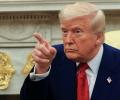
Trump's sweeping tariffs and penalties on China-built ships have turned global shipping into the front line of economic war, observes Shyam G Menon.

USTR has said India imposed several barriers in major services industries such as insurance, banking, audiovisual, accounting, legal, telecommunications, distribution services, postal and express delivery services.

In its latest report '2013 National Trade Estimate: Foreign Trade Barriers' the US Trade Representative has listed out a whole range of difficulties US companies face in India, which according to officials prevent them from realising the full potential of India-US economic relationship.

India's drug policy of stringent price control regime is a major concern for United States industries because it creates obstacles to maintaining viable businesses in the country, according to a report by the United States Trade Representative.

The proposed policy is increasingly becoming an item of negotiation, as the US pushes hard to change India's stance.

Even as India continues on the priority watch list of the Office of the US Trade Representative, strong voices from Washington, DC, have spoken out in favour of India, reports Aziz Haniffa/Rediff.com.
 © 2026 Rediff.com - Advertise with us - Disclaimer - Privacy Policy - Sitemap - Feedback - About us - Terms of use - Grievances