
After four failed reform drives, a new plan aims to rescue India's debt-laden power discoms through privatisation, accountability and long-term financial fixes.

India's power demand rose 4.5 per cent year-on-year (Y-o-Y) to 143 billion units (BUs) in January, marking the highest consumption for the month since 2010, primarily on the back of severe cold wave conditions across northern and eastern regions of the country.
The idea is to establish a robust and forward-looking legal framework that addresses the financial stress of power distribution companies, which are facing losses of over 6.9 trillion, while curbing high industrial tariffs that, according to the government, have affected competitiveness, constrained economic growth, and slowed the transition to clean energy.

India is growing fast, but to keep growing strong, the government must make more things at home, create jobs, and spend money wisely, suggests Rajiv Memani, regional managing partner, Africa-India Region, EY.

The power sector presents a puzzle. A fast-growing economy should be aligned to higher power demand but that hasn't been the case in the financial year 2026 till date (FY26TD).
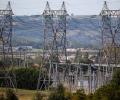
The ambitious proposal by the power ministry to allow network sharing between distribution licensees operating in the same geographical area will face three key challenges, said a former bureaucrat.

Adani Power on Thursday posted a 12 per cent decline in consolidated net profit to Rs 2,906 crore in the September quarter, driven by a rise in expenses. It had clocked a net profit of Rs 3,297.52 crore in the July-September period of the preceding 2024-25 financial year, the Adani Group entity said in an exchange filing.
There are some apparent paradoxes visible in the data from the first quarter of 2025-26 (Q1FY26). The gross domestic product (GDP) delivered a positive surprise with 7.8 per cent year-on-year (Y-o-Y) growth.
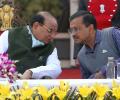
The ruling Aam Aadmi Party termed the LG's orders removing Shah and Gupta from the boards of discoms "illegal and unconstitutional". The LG does not have the power to issue such orders, it claimed.
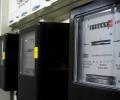
NB-IoT provides cellular-based connectivity with wide coverage and low power consumption, making it ideal for large-scale smart metering deployments.

Experts say the state's economy is grappling with hidden debt, rising welfare costs, and lack of transparency.

Former Andhra Pradesh Chief Minister YS Jagan Mohan Reddy has strongly refuted allegations of bribery by the Adani Group for solar power purchases during his government. He claimed his name was not mentioned in a US court's indictment and that meetings with Adani Group chairman Gautam Adani were not unusual for a chief minister. Reddy said the power supply agreement was between the state's DISCOMs and SECI, with no third-party involvement. He also defended the deal, calling it 'historic' and highlighting the cost savings for the state. Meanwhile, former CM N Chandrababu Naidu has alleged irregularities in the deal and promised to act upon the alleged charges.

LIC, EPFO and PSBs are likely to be asked to subscribe to bonds.
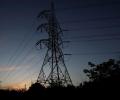
The Cabinet Committee on Economic Affairs (CCEA) on Wednesday approved a five-year-long reform-based result-linked power distribution scheme worth Rs 3.03 lakh crore, for strengthening system of utilities to improve efficiency. Briefing after the CCEA meet here, Power and New & Renewable Energy Minister R K Singh said, "We have done a lot for power distribution reforms. It needs to be strengthened. Today, the Cabinet has approved the new scheme worth Rs 3.03 lakh crore, including Rs 97,000 crore central outlay." He said the funds would be given to power distribution companies (discoms) to strengthen their system.

Reliance Infra-backed BSES discoms on Tuesday criticised the Delhi government for recommending to power regulator Delhi Electricity Regulatory Commission to revoke their licenses, saying the proposal was "arbitrary" and "illegal" and will be a huge setback to power sector reforms.

Delhi's peak power demand reached an all-time high of 8,302 MW on Wednesday afternoon as the city logged its highest-ever temperature of 52.3 degrees Celsius at the Mungeshpur weather station.
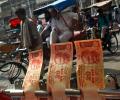
Restructured debt from Indian power distributors lures investors

Chief Minister Arvind Kejriwal on Tuesday gave deadline of one week to them to address the problem of outages saying government will not hesitate to cancel their licenses if they fail to comply with the directive.

Reliance Infra-backed BSES discoms have sought Rs 450 crore "dues" from Delhi government and the Municipal Corporation of Delhi to overcome their immediate "financial difficulties" and avoid black outs in 70 per cent areas even as the AAP dispensation maintained it will not adopt a "lenient" approach in dealing with the firms.
Rates to go up as Delhi power regulator works out plan to liquidate past dues.

Power distribution company officials said several areas, largely in central and east Delhi, were affected due to the failure. Some areas in north Delhi also faced outages.

Seven major state power distribution utilities, identified by the central government for financial restructuring, have failed to increase their tariff considerably to improve their financials.

Directing the DISCOMS to make the payments to the employees within three months, the Delhi high court asked them to adopt a method to pay pension, gratuity, leave encashment etc.
Tata Power's Q2FY25 reported results were above consensus despite challenges like low plant availability at Mundra and Odisha discom operations affected by rain. A positive development for the power major included module manufacturing hitting nearly 100 per cent capacity utilisation. The Board has approved an investment proposal for a 1GW pumped storage project (PSP).

rediffGURU Patrick Dsouza, founder of Patrick100 offers advice on how to optimise your preparation for CAT 2025.
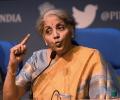
Finance Minister Nirmala Sitharaman presented her third Budget on February 1.

BSES entities BRPL (BSES Rajdhani Power Limited) and BYPL (BSES Yamuna Power Limited) supply electricity to around 12 lakh and 16 lakh customers respectively.

Amid the scorching heat, with temperatures soaring between 47 and 50 degrees Celsius, irregular electricity supply has added fuel to the fire, aggravating problems for people, farmers, and the industrial sector. While the state's Bhajan Lal Sharma-led Bharatiya Janata Party (BJP) government claims to be improving the power supply, the opposition is trying to corner the government on the issue. Amid all this, undeclared power cuts are continuing in districts including the capital, that are already facing power cuts.
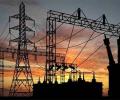
The monthly electricity bills of the majority of domestic consumers in Delhi -- who use more than 200 units and up to 600 units -- will be hiked by up to Rs 265 due to an increase in the power purchase adjustment cost (PPAC) levied by discoms in the city, officials said on Monday.

Tata Power saw a big sell-off, with the stock falling almost 8 per cent after declaring disappointing results for the October-December quarter (Q3) of 2023-24 (FY24) on Friday evening. The company reported net consolidated revenue of Rs 14,650 crore, up 4.4 per cent year-on-year (Y-o-Y), and earnings before interest, tax, depreciation, and amortisation (Ebitda) of Rs 2,607 crore, up 2 per cent Y-o-Y, in the quarter, led by higher sales across Odisha distribution companies (discoms) and capacity addition in renewables. This was well below consensus estimates.

Lt Governor says discoms must cooperate or face cancellation of licences. Ficci cries interference.

Tata Power declared encouraging results for the April-June quarter (Q1) of the 2023-23 financial year (FY24). The firm's revenue rose 5 per cent year-on-year (Y-o-Y) to Rs 15,210 crore. It was driven by higher sales to distribution companies (discoms) and capacity addition in renewables. Company's adjusted profit after tax (PAT) rose 3 per cent to Rs 906 crore with reported PAT at Rs 1,100 crore on a one-time gain of Rs 235 crore.

Five people died in rain-related incidents in Delhi Friday as Monsoon arrived with a fury early in the morning, lashing the city with its highest rainfall in a single day of June in 88 years which brought it to a standstill with streets flooded, traffic in chaos and some commuters stranded on roads.
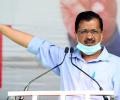
According to sources at the LG office, chief secretary Naresh Kumar has been asked to conduct an inquiry and submit a report within a week.

To ensure immediate cooling of the body, the hospital has set up a first-of-its-kind heatstroke unit.

Union Finance Minister Nirmala Sitharaman on Friday said political parties that come to power on pre-poll promises of freebies should pay for those through budgetary provisions. Citing the example of free electricity being promised in many states, the finance minister said the burden for the freebies should not be thrust upon the power discoms or gencos. "If a promise has been made to the people at the time of the election, you are looking at a quid pro quo. "You should be, as a responsible party, assume after you come to power, make a provision in the budget for it," Sitharaman said, speaking at the FE Best Bank Awards event.
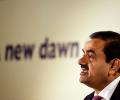
Adani Power, part of the Adani group, plans to add close to 6 gigawatts (Gw) of new power assets in the next five years, according to an investor presentation by the company. That is clearly meant to ride on India's burgeoning power demand. But there is another side to it: All of this new capacity is expected to be thermal power, or power produced from coal.

Finance Minister Nirmala Sitharaman on Thursday said Pradhanmantri Suryodaya Yojana will enable one crore families to get up to 300 units of free electricity monthly and help them save up to Rs 18,000 annually. "There is provision of Rs 10,000 crore for rooftop solar (scheme) in the Budget," said finance secretary T V Somanathan in press conference on Budget later in the day. Earlier in the day Sitharaman in her interim Budget speech said through rooftop solarisation, one crore households will be enabled to obtain up to 300 units of free electricity each month.
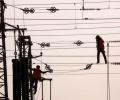
At present, a large number of power distribution utilities (discoms) across the country are state-owned. They are unable to ensure 24-hour 'power for all' as envisaged by the central government because they are cash strapped.
As the Centre pushes reforms in the power sector, especially for the beleaguered electricity distribution segment, several states, especially those ruled by Opposition parties, are clamouring against it. Maharashtra, West Bengal, Tamil Nadu, and Kerela have voiced their reservations against the proposed amendments to the Electricity Act, 2003. The irony is the states opposing the amendments on the ground of threat of privatisation already have private partnerships in power supply. The proposed Bill was slated to be placed on the floor of Parliament in the Monsoon session. But it still awaits Cabinet approval amid several states complaining that they have been not consulted on the issue.
 © 2026 Rediff.com - Advertise with us - Disclaimer - Privacy Policy - Sitemap - Feedback - About us - Terms of use - Grievances