
India's rapidly ageing truck fleet, with 42% of vehicles over 12 years old, is set to trigger a replacement-driven growth of 3-5% annually over the next five years.

The Supreme Court of India has directed the NHAI and MCD to consider relocating or temporarily closing toll plazas at Delhi's borders to alleviate traffic congestion and reduce air pollution. The court also addressed school closures and financial aid for construction workers affected by pollution control measures.

In absolute terms, both types of cars must cut emissions by about 28-29 g/km. But in percentage terms, the lighter 900-kg car must reduce emissions by 27 per cent, while the 1,500-kg car needs a 22 per cent cut. And the target becomes progressively stringent for both -- but, once again, the tightening is sharper for the 900-kg car than for the 1500-kg car.

Automotive (auto) stocks have been among the best performers in the BSE 200 index in recent months. More than half of the top 15 gainers over the past one, two, and three months have come from the sector.

Clean air needs action all year round; and that it will work only if we act jointly and at scale, asserts Sunita Narain.

'We are very quickly going to announce the timeline of our launches, which should start giving us the turnaround'
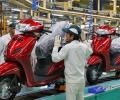
The battle for the top spot in the two-wheeler market is intensifying. The gap between Hero MotoCorp and Honda Motorcycle & Scooter India (HMSI) in retail sales narrowed to just 45,607 units in June. This improvement comes as HMSI has clawed back market share after dipping to a historic low of 18 per cent in May 2023. Now, the retail market shares of the two companies are 28.86 per cent and 25.54 per cent, respectively, compared to 35.54 per cent and 18.05 per cent in May 2023.
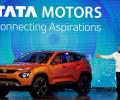
Notwithstanding robust volume growth and a strong performance from Jaguar Land Rover (JLR), Tata Motors, the country's second-largest automobile (auto) manufacturer by market capitalisation, disappointed the Street with its January-March quarter (Q4) results for 2023-24 (FY24). While consolidated revenues saw a 13 per cent increase, lower-than-expected realisations in the Indian operations weighed down overall performance.

Union Minister of Road Transport and Highways Nitin Gadkari on Tuesday unveiled the prototype of the world's first Bharat Stage (BS)-VI-compliant electrified flex-fuel car, developed by Toyota Kirloskar Motor. The car, which runs on 100 per cent ethanol (E100), is based on the Toyota Innova HyCross. It can cover 40 per cent of its distance on ethanol and the remaining 60 per cent on electric, with the petrol engine shut off.

The limited availability of flexible (flex)-fuel vehicles in the Indian market and the slow rollout of ethanol-blended petrol by oil-marketing companies (OMCs) remain major obstacles to achieving widespread use of biofuels in the transportation sector in India. Recently, two Union ministers have emphasised India's biofuel potential, arguing that it has the capacity and potential to lead a transition towards widespread biofuel adoption. Road Transport Minister Nitin Gadkari signalled that this transition is well underway and urged car manufacturers to quickly adapt and introduce new biofuel-run vehicles, lest the government resort to taxing diesel vehicles.

'Battery electric, hydrogen fuel cell and hydrogen ICE, could be the three technologies which have the potential of being zero emission and that are what we will have to work on,'
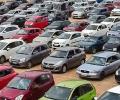
Passenger and commercial vehicle prices are expected to rise as automobile companies invest in upgrading vehicles to meet stricter emission norms that kick in from April next year. The Indian automobile industry is currently working to make their products meet the second phase of Bharat Stage VI, equivalent to Euro-VI emission norms, in real time driving conditions. Four-wheeler passenger and commercial vehicles will need more sophisticated equipment to be added to meet the next level of emission standards.

Buying a car, particularly a diesel-powered one, is set to pinch the customers' pockets even more from the next financial year, as the second phase of Bharat Stage VI (BSVI) emission norms kicks in. The rules require cars to be compliant with real driving emission (RDE) norms, which measure pollutants emitted by cars while they are being driven on the road, unlike in a laboratory test. The norms may increase the cost of producing diesel vehicles by nearly Rs 75,000 to Rs 80,000, and petrol-powered ones by Rs 25,000 to Rs 30,000, analysts said.
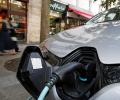
Automobile manufacturers, new and old, as well as ancillary suppliers are set to spend a combined Rs 70,630 crore over the next five years on either entering the electric vehicle segment or stepping up their presence in it. Data culled from announcements made by firms shows India, the world's fifth largest automobile market, is poised to receive one of the biggest capex pushes ever to fuel the transition from internal combustion engines to electric motors and batteries as part of a green drive. The EV push, egged on by the government's emphasis on electric mobility to meet its net zero targets, is expected to yield at least 25 electric vehicles - new ones as well as electrified versions of existing vehicles running on internal combustion engines.

Size matters on the road. Small is not dominating India's car market any more. The share of cars priced up to Rs 5 lakh in the passenger vehicle market has fallen to 10.5 per cent in the first 11 months of 2021-22, compared with 26 per cent in 2018-19 (FY19), the lowest in four years, according to data from industry sources. Even the share of those in the price range between Rs 5 lakh and Rs 7.5 lakh has dropped to 32.4 per cent in the same period, from 34.9 per cent.

A three-judge bench headed by Justice Madan B Lokur made it clear that only BS VI compliant vehicle shall be sold in the country from April 1, 2020.

The government said in a statement earlier this year that by April 1, 2017 cars sold in all Indian cities will need to meet the Bharat Stage IV norms.

The figures are encouraging for the auto industry amid apprehension that due to higher cost and lack of fuel availability, cars with stricter emission standards may not be popular in initial stages. Automakers had even cited this confusion as one of the reasons for dwindling car sales in India, reports Arindam Majumder.

For deciding which vehicles are to be scrapped, the setting up of fitness centres and regulating them would be a humongous task.

According to industry sources, the company has stopped its production of the current SX4 model in order to change engine, which would be in compliant with the Bharat Stage-IV norms.
A bench headed by Justice Arun Mishra said Bharat Stage-IV vehicles sold after March 31 this year and those whose details have not been uploaded on the e-Vahan portal of the government will not be registered.

The FM said, change in the mindset of the millennials not to commit any EMIs towards buying an automobile and instead taking Ola, Uber or the Metro (train) services also led to automobile sector slowdown.
Dealers say the significant increase in sales was driven by a need to plug the diminishing inventory as most dealerships were transitioning from BS-IV to BS-VI when the Covid-19 lockdown was announced.

GM India is working on launching a BS-IV variant of the car, but is in no hurry.

With the April 1 deadline for complying with Bharat Stage-III fuel standards closing in, oil marketing companies are likely to import the green fuel to meet a part of the demand in 11 cities.
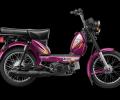
TVS Motor Company, the only company in India to manufacture mopeds, said domestic sales dropped by 25.58% in April-Oct and exports fell by nearly 40%.

Every time we pointed out the overwhelming evidence of diesel's toxicity, we were brushed aside.
According to the National Auto Fuel Policy, Bharat Stage-IV, the Indian version of Euro-IV, is to be applicable in the country by April 2010. However, the plant upgradation plans of the oil refiners, who have to sell petrol and diesel with the stringent emission standard from April 1, are facing a delay as suppliers of the equipment are heavily booked.

As India is progressing towards Bharat Stage IV (BSIV) emission norms, most cars still run under BSIII standard.

Air pollution is the third highest cause of death among all health risks in India, ranking just above smoking.

Retail sales of passenger vehicles - the largest component of the pie - jumped 11 per cent year-on-year in October to 248,036 units, largely because of discounts offered during Navratri and Diwali.
The major highlight of this New BS IV model will be the 2.0L 4-cylinder TCDI diesel engine.
The BS-IV emission norms will come into force from April 1, 2017.
The engine of this car is now Bharat Stage IV compliant.
The pollution rules set to be enforced from 2015 require heavy investment in R&D, new tech.

Maruti is sticking to this strategy at a time when rival Hyundai is looking to make the most of the monopoly it will have in the compact diesel segment from April 1, 2020, when the BSVI emission norms kick in. The market leader's confidence stems from the rapid shift in favour of petrol in the PV segment. For newer models such as MG Hector and Seltos, nearly 75 per cent bookings are for petrol variants, Kia has 55 per cent from petrol variants. The change in customer preference from diesel variants to petrol has happened quickly over the past few years.

The entire range of Hyundai's diesel cars - from compact ones to SUV models, including the soon-to-be-launched Aura - will be eco-friendly.

While the share of diesel vehicles sales in the overall passenger car industry has already fallen sharply, sales of CNG vehicles have shown a compound annual growth rate of 15.5 per cent over the past five years.

Sales of four- and two-wheelers almost halved in August, compared to the equivalent month last year.

Net sales growth for the quarter ended December (Q3FY20) was 4.5 per cent on a year-on-year (YoY) basis for companies that have declared their results so far, compared to an 8.4 per cent rise in the first half of the financial year. This indicates that there could be a further rise in days' sales of inventory.
 © 2026 Rediff.com - Advertise with us - Disclaimer - Privacy Policy - Sitemap - Feedback - About us - Terms of use - Grievances