
Supreme Court Justice B V Nagarathna has emphasised the critical importance of an independent Election Commission to ensure the neutrality and integrity of the electoral process in India.

Supreme Court judge Justice B V Nagarathna stated that judicial independence in the modern era includes freedom from algorithmic influence, emphasising that AI should only assist judges, who must ultimately decide based on constitutional values and human judgment.

The Supreme Court of India has dismissed the use of information from 'WhatsApp University' as evidence in a case concerning religious freedom and discrimination against women at religious sites, including the Sabarimala Temple.
Supreme Court judge Justice B V Nagarathna has cautioned against the over-reliance on Artificial Intelligence (AI) in the judiciary, emphasising the need for judicial independence from algorithmic influence. She stressed that AI should only serve as a tool and not replace human judgement, which is guided by legal reasoning, constitutional values, and a deep sense of justice.

The Supreme Court questioned the chief priest of the Sabarimala Ayyappa Temple regarding the constitutionality of preventing believers from touching the deity, during hearings on discrimination against women at religious sites.
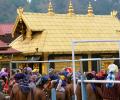
The Travancore Devaswom Board (TDB), managing the Sabarimala temple, argued in the Supreme Court that religious beliefs should be judged subjectively by the community, as the court hears petitions related to discrimination against women at religious places.
Supreme Court judge Justice B V Nagarathna stated that judicial independence in the modern era is not just freedom from external power, but also from algorithmic influence, while speaking at a conference in Bengaluru.
Karnataka Chief Minister Siddaramaiah has called for the establishment of a Supreme Court bench in South India to improve accessibility to justice. Speaking at a conference on Artificial Intelligence in the judiciary, he also highlighted the need to address algorithmic bias and ensure judicial independence in the age of AI.

The Centre has supported the restriction on women of menstruating age entering Kerala's Sabarimala temple, arguing that the Supreme Court's 2018 judgement assumes male superiority.

Chief Justice of India Surya Kant cautioned against the uncritical adoption of AI in the judiciary, emphasising the need for human judgement and ethical considerations in judicial decision-making.
Chief Justice of India Surya Kant has cautioned against the uncritical adoption of Artificial Intelligence in the judiciary, emphasising the need to balance technological advancements with human intellect and ethical considerations.
The Supreme Court is hearing petitions related to discrimination against women at religious places, including the Sabarimala temple. A nine-judge bench is examining the scope of religious freedom and the exclusion of women based on age and menstrual status.
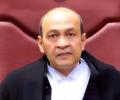
Justice Yashwant Varma of the Allahabad High Court has resigned amid impeachment proceedings sparked by the discovery of burnt currency at his residence, raising questions about judicial conduct and accountability.

India's sugar consumption is projected to fall by nearly 400,000 tonnes in the 2025-26 season, primarily due to the ongoing liquefied petroleum gas (LPG) shortage exacerbated by the West Asia conflict and unseasonably cool weather.
The Supreme Court has declined to hear a plea challenging the denial of parole extension to Santosh Kumar Singh, convicted in the 1996 Priyadarshini Mattoo murder case, while the Delhi High Court is already reviewing the matter.

The Supreme Court of India has asserted its jurisdiction to determine what constitutes a superstitious practice within a religion, during a hearing on petitions related to discrimination against women at religious sites.
The Supreme Court of India questioned the Centre regarding the eligibility of non-devotees to challenge the customs of the Sabarimala temple in Kerala, during a hearing on religious freedom and discrimination against women at religious sites.

The Supreme Court has criticised the central government for engaging in unnecessary litigation, imposing a fine for challenging a High Court order regarding the dismissal of a CISF official.

The Supreme Court has criticised the central government for engaging in unnecessary litigation, imposing a fine for challenging a High Court order regarding the dismissal of a CISF official.
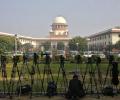
A nine-judge Supreme Court bench has commenced hearing on petitions related to discrimination against women at religious places, including the Sabarimala temple, and the scope of religious freedom across faiths.

The Supreme Court of India has emphasised the importance of open access to all temples and 'maths' for everyone, warning that excluding any denomination would negatively impact Hinduism and divide society. This statement was made during hearings on petitions related to discrimination against women at religious sites and the scope of religious freedom.
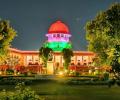
The Centre has asked the Supreme Court to reconsider its judgements decriminalising adultery and same-sex relationships, arguing they were based on a subjective application of 'constitutional morality'.

The Centre has informed the Supreme Court that the restriction on women of menstruating age entering Kerala's Sabarimala temple is a matter of religious faith and denominational autonomy, falling outside the purview of judicial review. Solicitor General Tushar Mehta argued that courts should not apply 'secular standards of reason' to religious practices.

The Supreme Court has granted bail to Vishal Agarwal, the father of the minor accused of driving the Porsche in the fatal Pune crash, in connection with the blood sample swapping case.
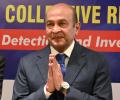
Lok Sabha Speaker Om Birla has reconstituted a three-member committee to investigate the potential removal of Justice Yashwant Varma following the recovery of cash from his residence. The committee has been granted a three-month extension.

The Supreme Court has granted bail to a doctor arrested for allegedly tampering with blood samples in the Pune Porsche crash case, where a minor is accused of killing two people.
The camera was activated on January 30, 2024 at Dongguan--an industrial metropolis in China, and is among various material objects and electronic devices found and examined by the investigators connected with conspiracy.

The Supreme Court has raised concerns over the title of the film 'Ghooskhor Pandat', questioning its potential to denigrate a section of society. Notices have been issued to relevant authorities.
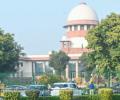
The Supreme Court has urged political leaders to promote fraternity while declining to entertain a PIL seeking guidelines on political speeches, emphasizing the need for objectivity and even-handedness in addressing concerns about hate speech and constitutional values.
The Supreme Court has disposed of a plea against the Netflix film 'Ghooskhor Pandit' after filmmaker Neeraj Pandey withdrew the title and promotional material. The court acknowledged Pandey's affidavit and expects the controversy to be resolved.
The Supreme Court has allowed a minor boy, rusticated from an Indore school for circulating an objectionable meme, to appear for his Class 10 examination, directing the CISCE to issue an admit card.

The Supreme Court has directed the government to raise awareness, compensate, and protect vulnerable individuals who have lost money in cyber scams. The court's remarks came while granting bail to an accused in a cybercrime case, emphasizing the need for public education and cybersecurity awareness.

The Supreme Court has directed the central government to investigate the possibility of a nationwide network or state-specific groups involved in the increasing number of missing children cases across India.
The Supreme Court of India quashed a rape FIR, stating the case was a consensual relationship that turned sour. The court emphasized the need for caution in identifying genuine rape cases versus disputes arising from consensual relationships.

The Supreme Court of India has allowed a 17-year-old girl to terminate her 30-week pregnancy, emphasizing that courts cannot force a woman, especially a minor, to continue an unwanted pregnancy.
The remarks were made by the bench which refused to agree with the submission made on behalf of Justice Varma that the deputy chairman of Rajya Sabha had no power to reject a motion and, under the Judges (Inquiry) Act of 1968, only the Speaker and the chairman have the power to accept or reject a motion against a judge.

India's marine product exports facing rough weather from punitive US tariffs are expected to get a big boost following the reduction of 26 per cent tariff as part of the India-EU Free Trade Agreement (FTA), but concerns over non-tariff barriers, which are a dominant aspect of marine trade to the EU, still remain.

Maharashtra has pipped Tamil Nadu in NITI Aayog's latest Export Preparedness Index (EPI) for 2024. While Gujarat, Uttar Pradesh and Andhra Pradesh gained ground, Karnataka and Haryana slipped out of the top five, the central government think tank said in its report released on Wednesday.
The Supreme Court has quashed the conviction of a man in a rape case, noting the complainant and the convict have married each other and observed that the consensual relationship between the parties was given a criminal colour owing to a misunderstanding.

The Supreme Court of India has expressed concern over the increasing tendency to label failed relationships as rape, emphasizing the need to distinguish between genuine sexual violence and consensual acts within a relationship.
 © 2026 Rediff.com - Advertise with us - Disclaimer - Privacy Policy - Sitemap - Feedback - About us - Terms of use - Grievances