
The Ministry of Heavy Industries (MHI) has debarred Hero Electric and Benling India, two defaulters under its flagship Faster Adoption and Manufacturing of Electric Vehicles in India Phase-II (FAME-II) scheme, from participating in any of its incentive programmes in future. This action follows the ministry's findings that the phased manufacturing programme (PMP) guidelines were violated by these two companies, senior officials told
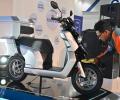
Seven electric two-wheeler companies have suffered a cumulative loss of over Rs 9,000 crore on account of unpaid dues and loss of market after their subsidies were stopped last year, the Society of Manufacturers of Electric Vehicles (SMEV) said on Wednesday. These companies have also been directed by the govt to refund the subsidies availed by them. The audit by SMEV's chartered accountants indicates the total, cumulative damages to affected companies could account for over Rs 9,000 crore on a conservative basis, it noted.

The country saw a massive year-on-year surge in the demand for electric vehicles, with retail sales of electric two-wheelers rising by 58 per cent, passenger vehicles by 130 per cent, three-wheelers by 82 per cent, and commercial vehicles by 171 per cent in March 2023, according to the data shared by the Federation of Automobile Dealers Associations (Fada). According to a report by JMK Research, the EV segment as a whole grew by 157 per cent during FY23, to 1,180,597 units, from 458,746 units a year ago. Overall, EV sales in March 2023 rose by 82 per cent from the March 2022 figure, the JMK report added.

India will have 30 per cent of its two-wheeler industry turning electric by 2030 as new manufacturers lead the shift, said a report on Monday. Passenger vehicles will be 15 per cent electric and the three-wheeler segment 75 per cent electric by 2030, said the report by BNP Paribas called 'India Autos-Electric vehicles: Minutes to midnight'. "We see FY22 as the year of inflection for the two-wheeler EV industry, with an accelerated EV adoption helped by incentives, wider availability, model launches, rise in crude prices and improved general awareness. We see 30 per cent of the 2W industry turning electric by 2030; the pace of incentive withdrawal presents an upside/downside risk," the report (India Autos - Electric vehicles: Minutes to midnight) said.

Auto Expo 2023 may not trigger a fresh rally in automobile stocks, say analysts, as this year's edition lacks participation from major listed players. It is also owing to the focus on electric vehicles (EVs), a segment where four-wheelers have minuscule market share. "In the passenger vehicles (PV) segment, Maruti Suzuki India and Tata Motors are the only listed players.
Subsidies have been stopped for several manufacturers that are under investigation for alleged violations of local-sourcing rules.

With just a month left in this financial year, electric two-wheeler sales, so far, are at just 62 per cent of the ambitious target of 1 million units set for 2022-23 by the NITI Aayog. According to VAHAN data, compiled by the Society of Manufacturers of Electric Vehicles (SMEV), 620,006 units of electric two-wheelers were sold across the country in FY23 until February 21. Though the industry may miss the 1-million target, sales in FY23 are already up 146 per cent from 249,621 units sold in FY22.
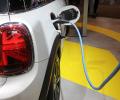
Electric vehicle retail sales in the country witnessed over three-fold jump last fiscal with two-wheeler offtake leading the segment, according to data compiled by automobile dealers' body FADA. Total electric vehicle (EV) retails reached 4,29,217 units in 2021-22, a rise of three-fold from 1,34,821 units in the financial year 2020-21, the industry body said. Total EV sales had stood at 1,68,300 units in the 2019-20 fiscal, it noted.
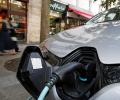
Automobile manufacturers, new and old, as well as ancillary suppliers are set to spend a combined Rs 70,630 crore over the next five years on either entering the electric vehicle segment or stepping up their presence in it. Data culled from announcements made by firms shows India, the world's fifth largest automobile market, is poised to receive one of the biggest capex pushes ever to fuel the transition from internal combustion engines to electric motors and batteries as part of a green drive. The EV push, egged on by the government's emphasis on electric mobility to meet its net zero targets, is expected to yield at least 25 electric vehicles - new ones as well as electrified versions of existing vehicles running on internal combustion engines.
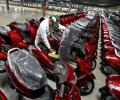
So far at least eight incidents of EV fires have been reported in just over a month's time.

Ola Electric became the latest among electric scooter (e-scooter) makers to have started the exercise of recalling a specific batch of its model after a rap on the knuckles by the government. Union Minister of Road Transport & Highways Nitin Gadkari on Thursday advised electric vehicle (EV) companies to act responsibly by identifying and recalling defective batches without waiting for orders or guidelines from the ministry. The Bengaluru-based start-up is conducting pre-emptive diagnostics and health check on 1,441 scooters, it said in a statement on Sunday.

Sona Koyo, India's largest car steering system maker, on Friday announced the acquisition of 21 per cent stake in Fuji Autotech France for Euro 5 million to gain a toehold in Europe.
The strike, however, had no impact on production of auto majors Maruti Suzuki India, Hero MotoCorp, Honda Cars India, Mahindra & Mahindra, Tata Motors and Hyundai Motors India as their plants in various parts of the country functioned normally.
The new scheme may link the incentives to the battery power - higher the power, higher the incentive and most electric two-wheelers running on Indian roads use low power and fast charging batteries.
The impact for all electric two-wheelers, which are imported mostly from China, is that it will lead to price escalation that will be passed onto customers.

Besides electric vehicles, some start-ups present are working in the area of bike customisation, motorsports, auto gaming arena, autonomous vehicle and so on

Not just from the likes of Alibaba and Didi Chuxing, Indian startups saw a surge in Chinese funding from financial investors in 2019. This is a seven-fold jump from $459 million in 2016.
 © 2026 Rediff.com - Advertise with us - Disclaimer - Privacy Policy - Sitemap - Feedback - About us - Terms of use - Grievances