
'If all of us (all the 57 Shiv Sena MLAs) stand together we can change the dynamic. We are not afraid of anyone.'
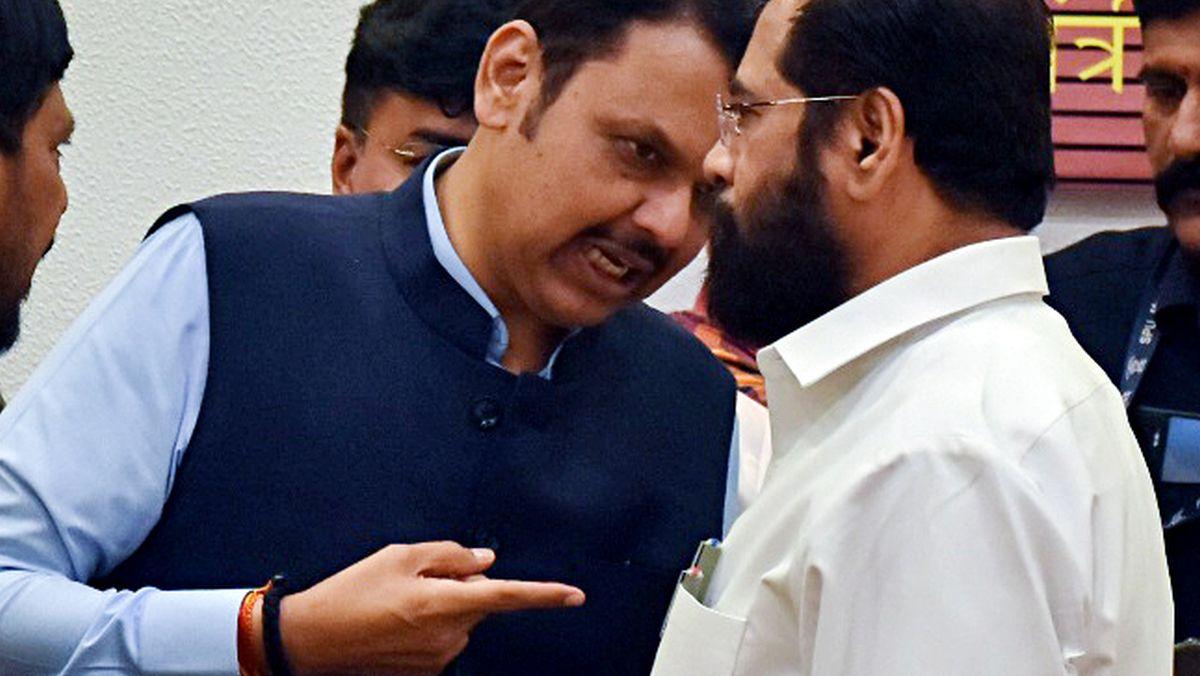
For months, the signs were visible -- the stray remark from a district-level Shiv Sena leader, the cryptic social media post by a Sena MLA, the curt statements emerging from the Eknath Shinde camp.
But on the afternoon of November 18, Tuesday, when the Eknath Shinde-led Shiv Sena boycotted the Maharashtra cabinet meeting, the underlying truth burst into the open: A groundswell of rage is sweeping through the Shinde faction against its ally, the Bharatiya Janata Party.
While all the Shiv Sena ministers decided to boycott the meeting, they requested Shinde to go ahead and attend it. But, said one of the MLAs, Shinde is so angry with Chief Minister Devendra Fadnavis that he overrode his colleagues' suggestion and stayed away too.
Over the last few hours, this correspondent spoke to four Shiv Sena MLAs, including two from the Mumbai-Thane belt, one from North Maharashtra, and one from Marathwada.
What emerged were unfiltered arguments, humiliation-laced hurt, and a profound sense of betrayal. And the proverbial wheel seems to have come the full circle.
All these MLAs had stood with Eknath Shinde since the dramatic June 2022 split when he rebelled against and toppled the Maha Vikas Aghadi government led by then chief minister Uddhav Thackeray in Maharashtra with help from the BJP and Fadnavis.
Today, ironically, they are speaking the same language, using the same idioms -- in rustic as well as chaste Marathi -- which once Uddhav Thackeray had used against the BJP when he joined hands with the Congress and the then undivided Nationalist Congress Party to form the government in Maharashtra after the 2019 assembly election.
These four Shiv Sena MLAs say, they (all Shiv Sena ministers in the government) are being humiliated -- their language and sense of betrayal echo the sentiments expressed by the Uddhav Thackeray camp against the MLAs of the Shinde's Sena camp ever since they were thrown out of power by Shinde's rebellion in June 2022 -- by the very party (the BJP) they once trusted, fought an election (the 2024 Maharashtra assembly election) in alliance with, and formed the Mahayuti government.
'The BJP is finishing us'
"We carried them to power. We took the heat (from the SS [UBT]), we stood up in the hot sun. Now they behave as if we are expendable," said MLA 1.
"They have put their men everywhere -- even the departments we used to control are now run by outsiders," added MLA 2.
"We broke (the Shiv Sena led by Uddhav Thackeray in June 2022) for them (the BJP and Devendra Fadnavis). We carried the burden. We formed the government. And they (SS [UBT]) call us khoke-wale, gaddar. The BJP doesn't defend us. They enjoy it," added MLA 2.
What the MLAs described was not a single betrayal but an institutional overtaking of power around two pillars in particular: A retired-but-omnipresent bureaucrat, Shrikar Pardeshi, and a rising set of BJP operatives and businessmen whose influence goes beyond party structures.
"The BJP is finishing us. They want to crush us," added the MLA.
Pardeshi, a retired IAS officer who earlier served in Prime Minister Modi's office between 2015 and 2020 -- the time which overlapped with Fadnavis' first chief ministerial tenure and during which he often met Pardeshi in the PMO -- now wields major influence as chief economic adviser in Chief Minister Fadnavis' office, aver these MLAs.
Former Pune municipal commissioner Pardeshi was also appointed as secretary to Fadnavis when he was deputy chief minister after the BJP-Sena (Shinde) formed the government in June 2022.
The MLAs pointed, with particular bitterness, to what they called "RSS-men on an Rs 80,000 salary" posted across ministries and departments -- a claim they offered as explanation for the constant surveillance and micromanagement of Shiv Sena activity at the ground level.
This figure could not be independently verified; this report attributes it to the MLAs' testimony.
Pardeshi: Fadnavis' shadow -- and why it matters
If there is a single name that the four MLAs returned to again and again, it was Shrikar Pardeshi -- described by them as "Fadnavis' man", the administrative nerve through whom policy, purse and personnel flow.
"They listen to Pardeshi more than they listen to ministers," said MLA 3. "If Pardeshi says no funds, nobody gets funds. He is the gatekeeper. Even Ajit dada (the other Deputy Chief Minister and Finance Minister Ajit Pawar) can't override him."
Pardeshi's prominence in the Fadnavis administration is not mere rumour. Recent reporting has documented Pardeshi's post-retirement clout as Fadnavis's go-to officer and a figure with an unusually wide remit -- a development that, critics like these Shiv Sena MLAs say, centralises administrative power in the hands of a bureaucratic circle close to the chief minister.
"Pardeshi is not just an adviser," said MLA 1. "He is the voice that gets heard in the CM's room. And there's a network around him -- people planted in revenue, in water, in roads -- who keep an eye on our work."
That network, the MLAs said, includes party-linked functionaries and activists -- some with direct RSS links -- who act as both informants and gatekeepers for officials and ministers. The MLAs' charge is explicit: If the Sena asks for funds, permission, transfers or even small administrative favours, those requests get filtered or blocked through Pardeshi's desk and through the informal RSS-staff who are embedded across ministries.
'They keep us thirsty of funds'
The withholding of funds was the single most repeated grievance. "Projects that should have been cleared in 30 days take months, or die quietly," said MLA 2. "Funds for welfare are frozen; district-level works are blocked. If you fight for your people, you are labelled a troublemaker."
One example they cited was the alleged squeeze on constituency-level releases -- a tactic they say is deliberate: Starve an MLA of money, make them ineffective at ground work, reduce their political value. The narrative the MLAs paint: A deliberate marginalisation designed to make the Sena's elected MLAs look useless to voters, thereby weakening their bargaining power.
The RSS-men and the Rs 80,000 watchers
The image that came up repeatedly was of a "parallel bureaucracy" of party-paid functionaries -- the MLAs called them "RSS-men" -- whose job, they said, is to keep watch. "They are everywhere -- in Mantralaya (the state secretariat in Mumbai), even outside our ministers' cabin," said MLA 4. "They have monthly payments coming in. We were told the number is around Rs 80,000. I don't know who authorised that. But they are here to monitor us."
Again, this is how the MLAs framed their complaint; the salary figure and the formal status of these workers were not independently traceable for this report, but the claim matters politically: It underlines a belief among Shinde-Sena legislators that the BJP has created a shadow chain of control that bypasses elected representatives.
The Mohit Kamboj factor

Across the interviews, another name -- just like Pardeshi -- surfaced repeatedly: Mohit Kamboj. To the MLAs, he represents a new breed of BJP-aligned businessmen whose influence rivals that of formal ministries.
"He is everywhere now," said MLA 3. "If someone whispers his name, officers fall in line."
Kamboj, a jewellery and real-estate businessman who has grown into a key political figure in Mumbai, has been linked by critics to decisions in sectors like urban redevelopment and water resources. MLAs say his access and authority often exceed that of elected representatives.
"Tell me why a businessman is involved in SRA (Slum Rehabilitation Authority projects). Why does he sit with ministers?" MLA 2 asked. "This isn't politics. It's a takeover."
The sharpest allegations focused on Kamboj's proximity to the state's top leadership.
"Why does he have so much power?" said MLA 1. "We wait hours to meet the chief minister. He walks straight in."
To the MLAs, Kamboj symbolises what they call a parallel power structure inside Mantralaya -- shaped not by elected representatives, but by businessmen, advisers, bureaucrats and political outsiders whose influence increasingly defines the government's inner circle.
How Ravindra Chavan and the Guwahati operation changed everything
Several MLAs returned to the memory of June 2022 -- when Eknath Shinde's rebellion culminated in the relocation of rebel Shiv Sena MLAs to hotels in Surat, Guwahati and Goa, and the eventual toppling of the Uddhav Thackeray government.
The operation that spirited legislators away and brought the Shinde faction together involved a calculated logistics push; contemporary reporting credited a BJP troika -- including Ravindra Chavan (the incumbent state BJP president), BJP MLA Sanjay Kute and Mohit Kamboj -- with organising the movement of the dissidents.
That episode, the MLAs say, signalled that the BJP had the muscle and the organisational depth to not just ally with Sena rebels but to manage them.
"Chavan and his people were there to make sure the operation ran smoothly. That's when the dynamic changed -- from partnership to patronage," said MLA 1.
Why the BJP, with 132 MLAs, isn't afraid
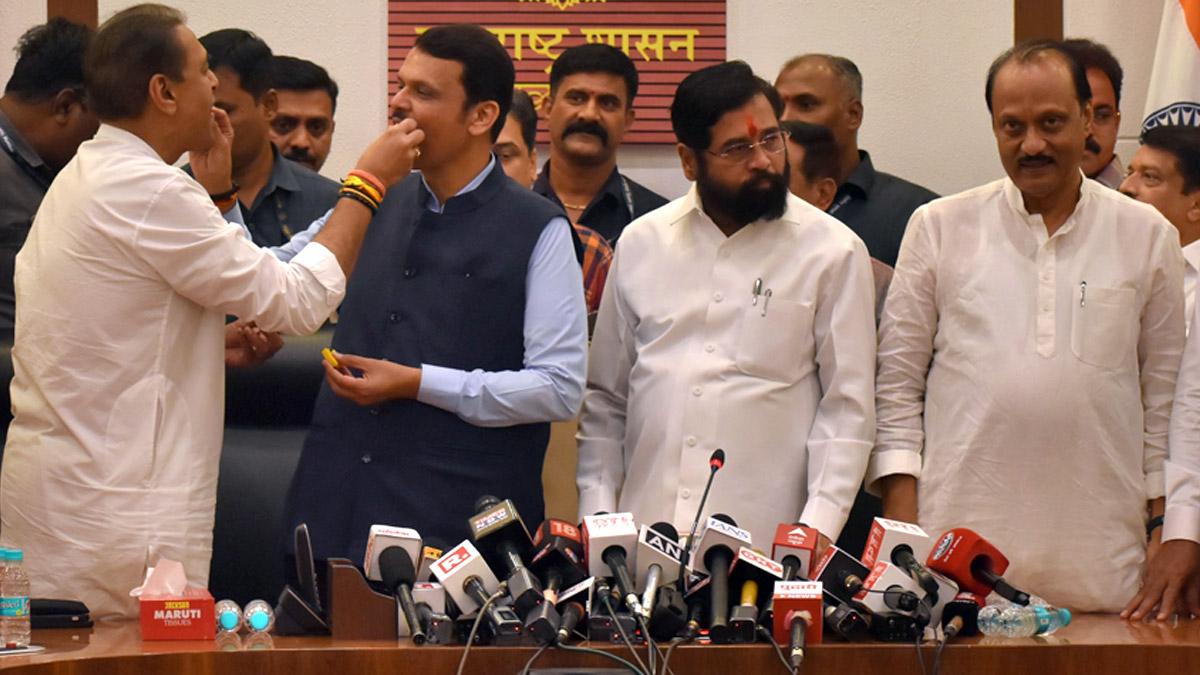
The political arithmetic is stark and part of the Shiv Sena's grievance. In the 2024 assembly verdict the BJP emerged as the largest party with 132 seats -- a numerical heft that, the MLAs say, has fed arrogance inside the alliance.
The BJP's numerical cushion in the assembly means it can sideline partners like Shinde's Sena (57 seats) and lean on Ajit Pawar's NCP (41 seats) for stability; in the MLAs' calculus, that reduces the leverage the Sena once had.
"When you have 132 MLAs, you feel you can re-engineer equations and split parties on the fly," said MLA 4. "The BJP can say -- if you do not behave, Ajit Pawar will keep us in power. We are dispensable. As it is, Ajit dada too has no leverage left now after his son Parth Pawar's involvement was exposed in the Pune land deal."
And that, the MLAs argue, permits both subtle and blunt strategies: Replacing Sena-backed local functionaries with BJP-loyalists, starving Sena ministers, and cultivating influential outsiders who can deliver projects without the party's involvement.
The Malegaon Flashpoint
One MLA revealed the incident that, he says, exposed the BJP's attitude.
"Take Malegaon. In Dada Bhuse's (minister of school education in the Maharashtra government) constituency, they troubled him so much -- cut his funds, blocked his works, humiliated him. Why? Because he's Sena."
"Advay (Hire) has repeatedly positioned himself as Bhuse's challenger. Even while in the BJP earlier, he led agitations against Bhuse to show his independent strength. After joining the Shiv Sena (UBT), he contested directly against Bhuse but lost (in 2024). His re-entry into the BJP now sets up another round of political rivalry in Malegaon (Outer)," says this MLA explaining the rivalry between Hire and Bhuse after the former's re-entry into the BJP on November 18.
Advay Hire, heir to Nashik's influential Hire political dynasty, has built his career around opposing senior leader Dada Bhuse. After shifting between the BJP and Uddhav Thackeray's Sena, he returned to the BJP with renewed clout. His comeback is seen as a direct challenge to Bhuse's growing dominance in the Malegaon region.
When this correspondent asked whether Eknath Shinde took up the Hire matter with Fadnavis or the BJP leadership, the reply was scathing: "Shinde Saheb told them. They said -- 'leave it'. That's all. No action."
Another MLA cut in sharply: "If we speak openly, we will have to tell the chief minister -- 'We are leaving. Throw us out.' Why should we suffer like this?"
Shinde: Ready to go home, or ready to fight?=
The MLAs conveyed contradictory assessments about Eknath Shinde's mood. Some suggested Shinde is "mentally prepared" to retreat to private life if the price of leadership becomes too steep.
"Shinde has said to some of us -- 'I have done my bit. If this is the way it has to be, I can go home,'" said MLA 2.
Others, however, insisted Shinde is not a man to surrender easily -- that he has the grit to push back, and that the Sena's anger could tip into a full-blooded confrontation.
"He can also fight," said MLA 3. "Don't mistake his calm for weakness."
It is important to stress: These assessments are the MLAs' interpretations. Shinde's own public postures have generally been controlled; whether he chooses to escalate the conflict politically remains to be seen.
Uddhav versus the BJP: A cautionary tale
A recurring refrain from the MLAs was an ironically grudging respect for Uddhav Thackeray's resilience. "Even when the party was hollowed out, Uddhav didn't vanish," said MLA 1. "He fought back -- in the courts, in streets, in the symbolic fight for the party's soul. That's a lesson."
For the Shinde-Sena MLAs, Uddhav's ability to sustain a counter-narrative despite organisational blows is evidence that political survival is not only about cash or control of departments -- it is also about narrative, legitimacy and, crucially, organisational roots at the local level.
What the Sena MLAs want -- and what they say they'll do
The four MLAs rallied around three public demands: Restored access to funds; ministerial authority that is not purely symbolic; and respect as equal partners in governance.
"If all of us (all the 57 Shiv Sena MLAs) stand together we can change the dynamic," said MLA 4. "We are not afraid of anyone. But we will not let our people suffer."
They said Tuesday's boycott of the cabinet meeting was an act of protest, not the start of a walkout. But the language of contingency -- "at the right moment" -- was repeated like a refrain.
The political takeaway
This is not, the MLAs insist, merely about ego. It is about a shrinking space for a regional power that once defined Maharashtra's politics. Whether the BJP intends to finish the Sena as a political force, or whether it is simply consolidating influence inside an alliance, the effect is the same so far: Shinde's MLAs feel marginalised, and they talk -- privately and angrily -- of reasserting themselves.
The names and events they point to -- Pardeshi's administrative clout, the operatives in the field, the rise of businessmen like Kamboj, the logistics of the Guwahati episode in 2022 -- are verifiable parts of a larger story about how power is now exercised in Maharashtra's government.
As one MLA put it shortly before the interview ended: "We helped them win. If you don't respect those who made you, you are asking for a rebellion of a different kind -- not just against you, but against the idea that politicians are accountable to people."
If the BJP continues to consolidate power through administrative centralisation and extra-party operatives, the four MLAs warned, the consequences will be political and civic: A more brittle coalition, a debilitated partner in government, and an angry base in the constituencies where the Sena still claims roots.
For now, they are watching -- and, in their words, waiting for the "right moment."





 © 2025