
Sonam Wangchuk is under tight surveillance within the three-tiered prison, with CCTV cameras monitored around the clock, reports Prakash Bhandari.

Sonam Wangchuk, the Ladakhi activist currently detained under the National Security Act, has been lodged in the high-security Jodhpur Central Jail, in a large cell equipped with a bed, fan and toilet.
The activist is under tight surveillance within the three-tiered prison, with CCTV cameras monitored around the clock. He is allowed out of his cell twice daily -- once in the morning and once in the evening.
Crucially, he is not permitted visitors, and his wife's request to meet her 59-year-old husband has been denied.
Jodhpur Central Jail has an interesting history, having previously held Punjab militants, Kashmiri terrorists, and other leaders during insurgencies in the respective regions.
Interestingly, the jail was targeted during the 1965 India-Pakistan War. The jail was bombed by the Pakistani air force, tragically killing 30 inmates.
While the jail was not the intended target, it is believed that Pakistani bombers, facing anti-aircraft and 'ack-ack' guns, were aiming for a military installation in Jodhpur. In panic, they dropped the bomb on the prison.
Many of the casualties were in the prison hospital at the time of the bombing.
On Tuesday, September 30, Amara Ram, the Communist Party of India-Marxist member of Parliament from Sikar, visited the Jodhpur Central Jail to meet Wangchuk but was denied permission by the jail authorities.
Wangchuk was arrested in his village in Ladakh under the stringent NSA on the ground of allegedly instigating protests on September 24 in Leh and other parts of Ladakh, which resulted in four deaths following police firing.
The Ladakh Union Territory administration invoked the NSA, which empowers the local administration to act pre-emptively against individuals considered a threat to public order or national security.
However, the administration reportedly believed that lodging Wangchuk in a local jail would cause further unrest, as various organisations opposing his arrest would likely demonstrate, demanding his release.
Consequently, it sought advice from the Union home ministry which advised sending him to Delhi.
Following several meetings, the decision was made to shift him to Jodhpur Jail, deeming it a safer location and far from Ladakh, thus avoiding potential public demonstrations.
Wangchuk was moved from Leh to Jodhpur after obtaining a transit remand to shift him from the cooler climate of Leh to the hot desert of Jodhpur. Given his detention under the NSA, he was not given any opportunity to oppose the transit remand.
Ladakh officials informed his wife Gitanjali Angmo that they would arrange for him to speak to her on a mobile phone once certain procedures were completed.
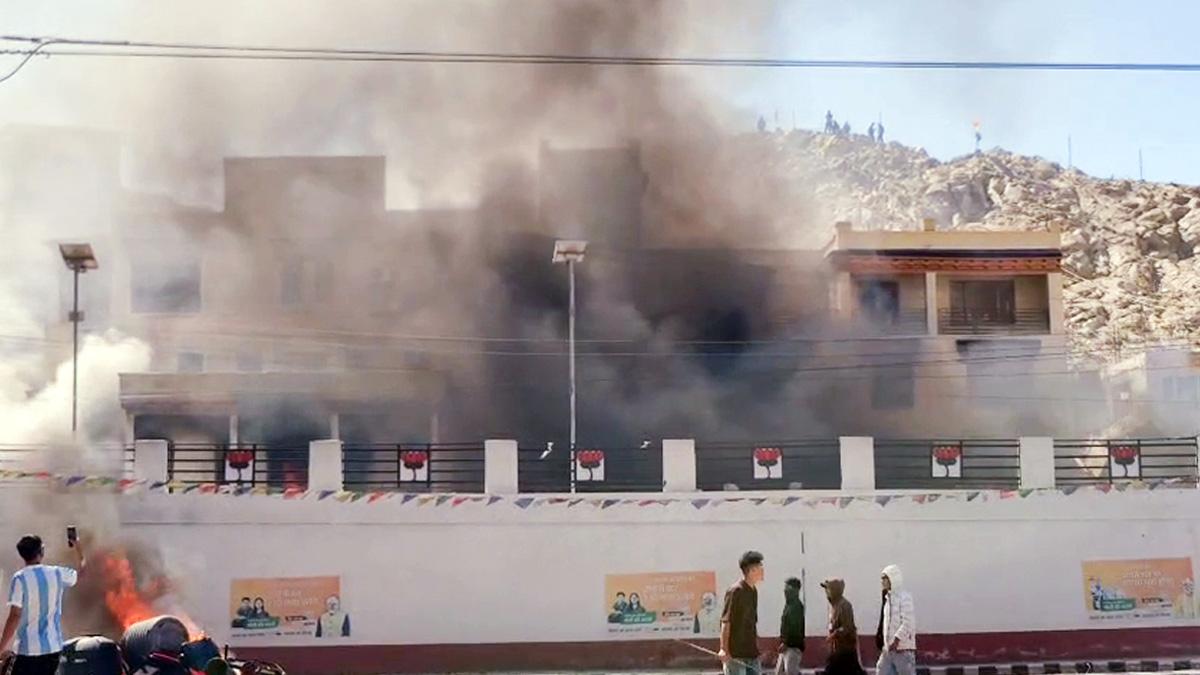
The home ministry, which flew Wangchuk from Ladakh to Delhi by special aircraft, kept him in the capital for a few hours. The decision to then shift him to Jodhpur was made as it was considered safe to lodge him there, being in a Bharatiya Janata Party-ruled state where the district administration could effectively control any public agitation in Wangchuk's support.
Rajasthan Chief Minister Bhajan Lal Sharma, who also holds the home department portfolio, agreed to billet him in Jodhpur Jail.
Home ministry officials had promised Wangchuk that he would be allowed to speak to his family soon after his transfer to Jodhpur, but that promise has reportedly not been fulfilled.
A senior official from the Rajasthan home department confirmed that Wangchuk was billeted in the Jodhpur Central Jail only after all legal procedures had been undertaken before his arrival.
Rajasthan officials further stated that under the NSA, designated officials have the power to hold individuals in designated places, transfer them across states, and impose conditions.
The Ladakh administration served Wangchuk with the 'grounds of detention' order on September 30. A copy of the order was also sent to the jail officials in Jodhpur.
Under the NSA provisions, the grounds of detention must be communicated within five to fifteen days, allowing detainees to submit a representation to the government.
However, a copy of the 'grounds of detention' order has not been served to his wife. In the absence of this document, she has been unable to initiate legal proceedings to challenge her husband's arrest.
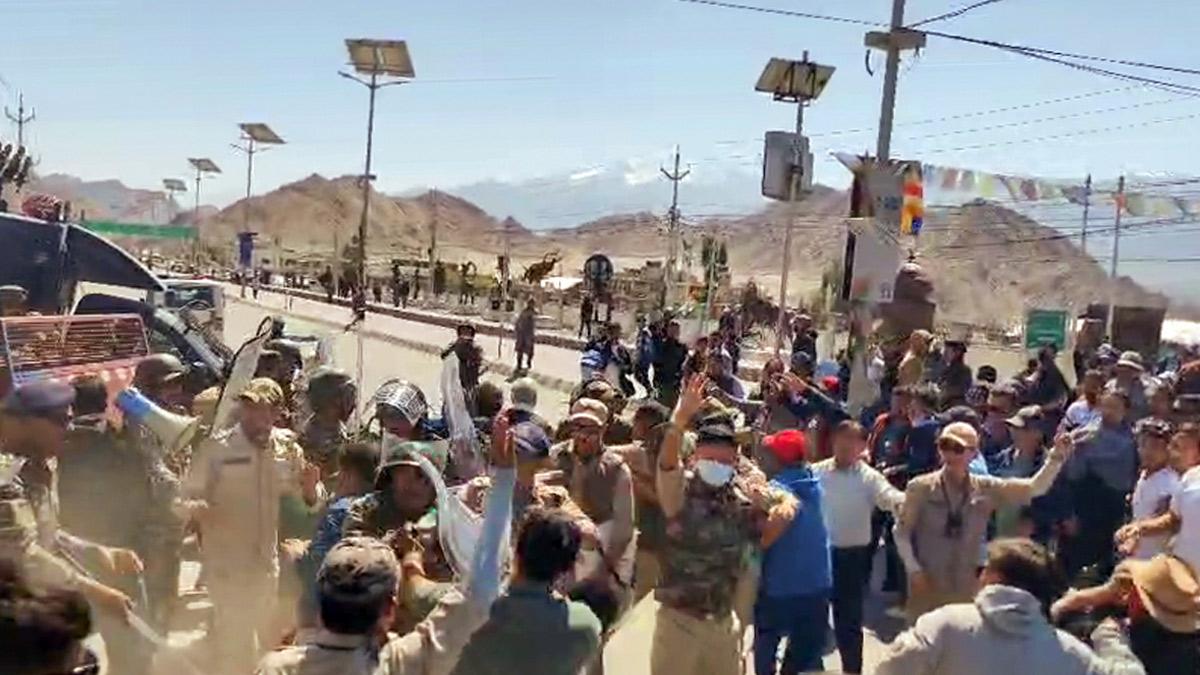
"It's a very typical case of arrest and detention," says Ajit Bhandari, a senior lawyer in Jaipur. "The person [Wangchuk] was arrested in Ladakh on September 26 under the NSA, one of the toughest preventive detention laws used in the past against separatists, gangsters and radical preachers."
"Surely, the law allows the government to pre-emptively detain individuals deemed a threat to public order or national security. Preventive detention is the practice of detaining a person not only for a crime already committed but also to prevent them from acting in a manner that could threaten public order or security," adds Bhandari. "It basically aims to stop potential harm before it occurs."
Since Wangchuk was served the order of 'grounds of detention' on September 30 while lodged in the Jodhpur Central Jail, he can now seek legal redressal, explains Bhandari.
An advisory board of high court judges must review his case within three weeks and order his release if there is insufficient cause; detention can last up to twelve months.
"Now that the order of detention has been served on him, he could go for legal redressal, questioning his detention and demanding his release from prison to pursue legal remedies. Sonam Wangchuk can move the high court, questioning his detention through a writ petition," says Bhandari.
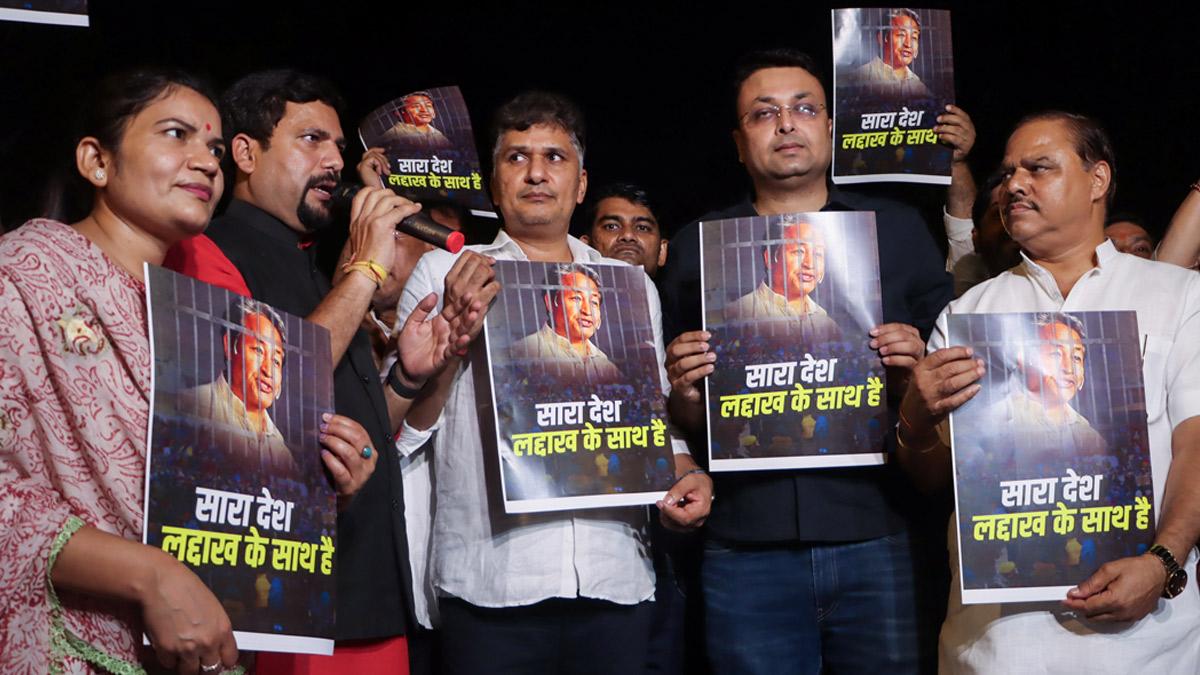
Despite the tight security, a brief moment of high drama was witnessed outside the jail. Vijaypal, a 50-year-old activist from Sujangarh in the Churu district of Rajasthan, threatened to go on a hunger strike to protest Wangchuk's arrest.
Vijaypal reached the prison's gates a day after Wangchuk was brought from Delhi, raising slogans of 'Bharat Mata Ki Jai!' When local police attempted to remove him, he threatened to begin a hunger strike outside the jail if he were forcibly sent away.
The Ladakh administration's detention order accuses climate activist Wangchuk of repeatedly suggesting self-immolation to the people of Ladakh, similar to protests seen in Tibet. It further alleges that Wangchuk proposed the 'overthrow' of the Ladakh government, akin to the Arab Spring uprisings, if their demands were not met.
The order also blames him for the violence that left four people dead and approximately 150 wounded. The order insists there is 'no witch hunting or smoke screen', and that the administration's actions were based on credible inputs and documents.
Jodhpur Central Jail was in the news when movie star Salman Khan was lodged there following his conviction by a lower court in the 1998 blackbuck poaching case.
The high-security wing of the jail is a V-shaped ward that includes both barracks and single rooms. The jail authorities have not clarified whether Wangchuk is being treated as a political prisoner or an ordinary inmate.
"He is not under solitary confinement, as the solitary confinement of prisoners is prohibited following a high court order, as it was considered inhuman. He is given food according to the jail manual provision," reveals a jail official.
The area where Wangchuk is lodged has multiple CCTV cameras for surveillance, and the lights are kept on at night for monitoring purposes.
Dating back to the princely era, Jodhpur Central Jail has held many high-profile individuals over the years.
It was converted into a high-security jail, and terrorists from Punjab, who could not be held in Punjab jails during the insurgency, were transferred here.
The prison has also held Indian Mujahideen terrorists and the Jammu and Kashmir separatist leader Abdul Ghani Lone.
Feature Presentation: Aslam Hunani/Rediff







 © 2025