
Shubhanshu Shukla, the Indian Gaganyatri currently aboard the International Space Station as part of the Axiom-4 mission, has acknowledged the efforts of the team Indian Space Research Organisation in ensuring his safe travel to the ISS.
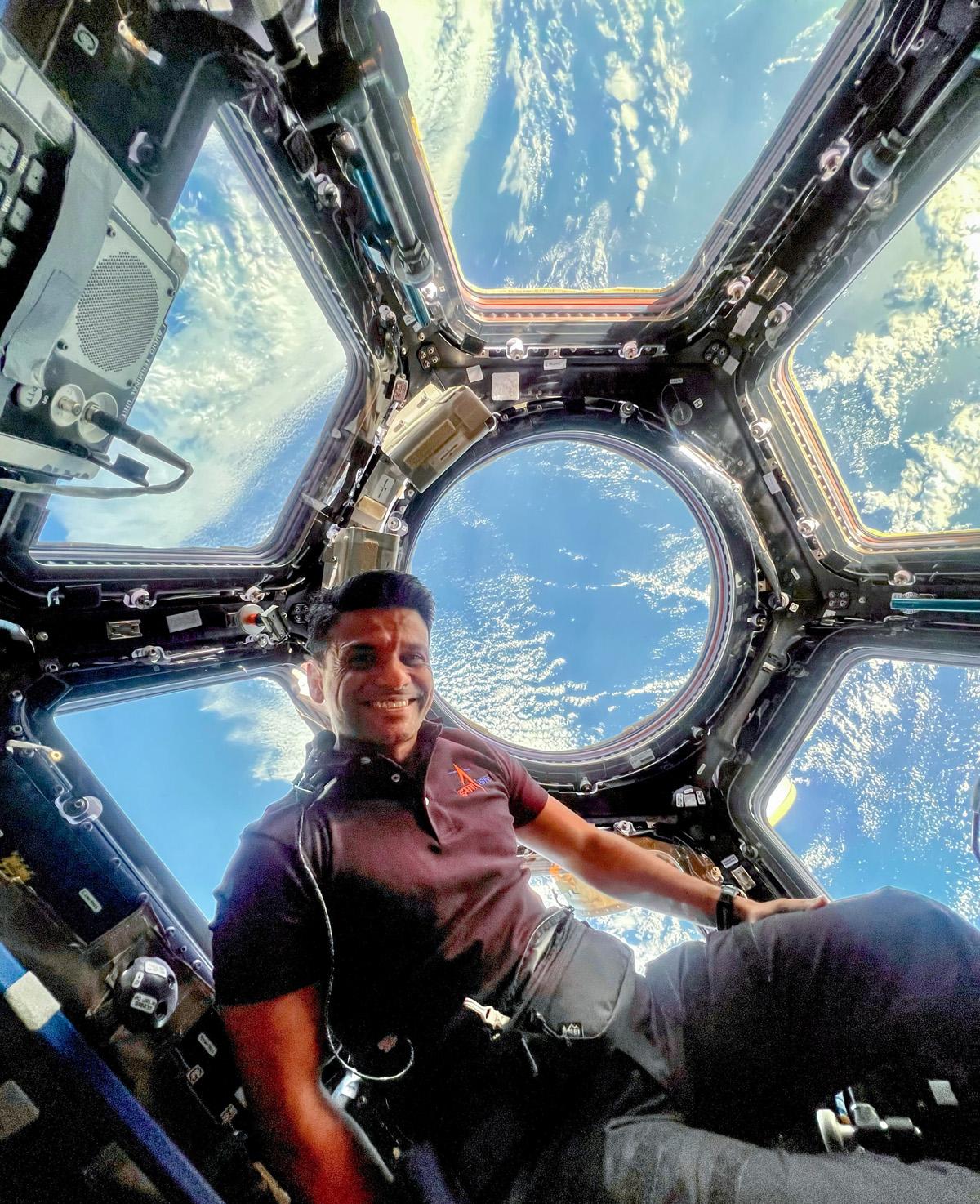
Shukla had called ISRO chairman V Narayanan on July 6, the space agency said on Monday.
During the call, Narayanan expressed his keen interest in Shukla's well-being and inquired about the various scientific experiments and activities being conducted on the ISS.
Narayanan, also secretary of department of space, emphasised the significance of documenting all experiments and activities meticulously after Shukla's return to Earth, as this will provide valuable insights and inputs for the development of India's human spaceflight programme, Gaganyaan.
According to ISRO, the Gaganyaan programme aims to demonstrate India's capability to launch a crewed spacecraft into low Earth orbit, and the experiences and knowledge gained from this mission will be crucial for its success. Shubhanshu Shukla's ISS mission has been executed under the ISRO-Axiom Spaceflight agreement.
The discussion was attended by several senior officials from ISRO, including Dr Unnikrishnan Nair, Director of Vikram Sarabhai Space Centre and Chairman of the Program Management Council for Human Space Programme; M Mohan, director of Liquid Propulsion Systems Centre; Padmakumar E S, Director of ISRO Inertial Systems Unit; M Ganesh Pillai, scientific secretary of ISRO; and N Vedachalam, former director of LPSC.
Shukla also shared updates on the progress of the experiments and activities being carried out on the space station, highlighting the scientific objectives and the challenges being addressed.











 © 2025