
'When I undertook a study of temple desecration in precolonial India, it was not enough simply to document what temples were desecrated, by whom, when, and where.'
'It was also important to explore the total historical context of such incidents, with a view to discovering patterns, which in turn could reveal the reasons why they occurred.'
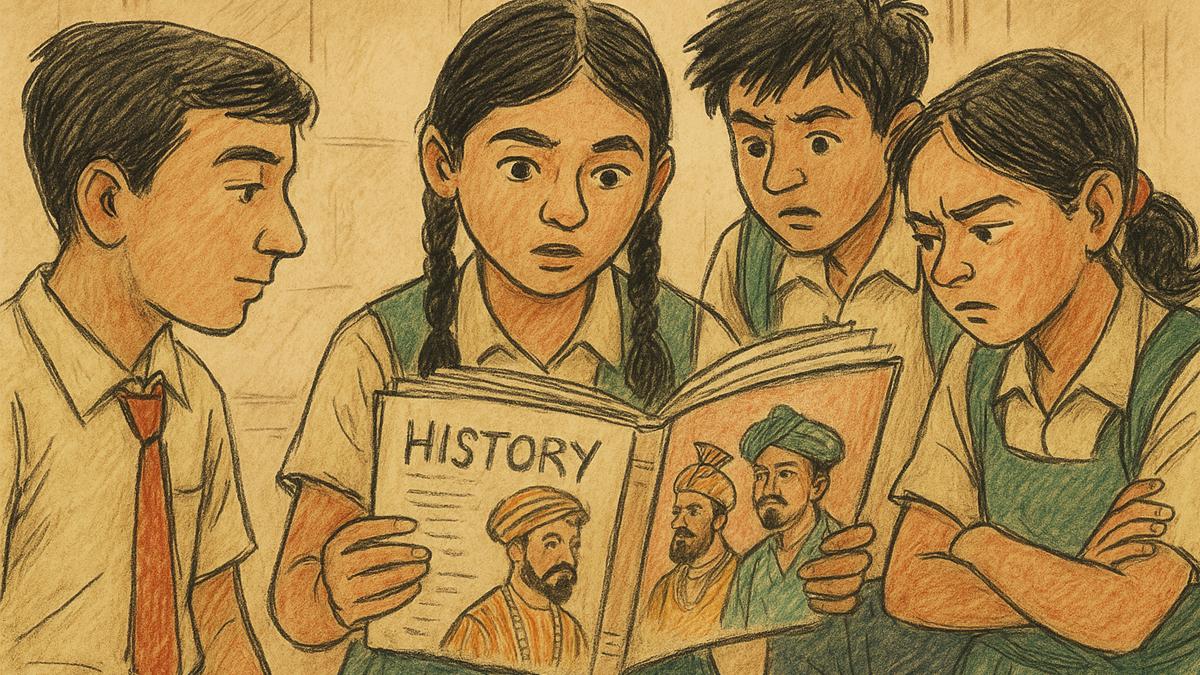
The history section of the new Class 8 NCERT textbook discusses Akbar's seizure of the Chittor fort and Aurangzeb's edicts to demolish schools and temples, portraying Mughal rulers as 'intellectuals' who also 'plundered' the Indian population.
The section, titled 'Note on Some Darker Periods in History', offers 'context for the inclusion of sensitive and violent events', primarily war and bloodshed.
It has sparked a debate over how such events -- marked by brutality or injustice -- should be remembered in today's politically charged climate.
Should historians contextualise uncomfortable truths or fear their misuse by vested interests?
In the second part of his interview with Rediff's Utkarsh Mishra, Professor Richard M Eaton -- author of India in the Persianate Age: 1000-1765 and several other books on medieval India -- offers a historian's perspective on difficult episodes from India's past, including the killing of Guru Gobind Singh's sons and the Mughal policies under Aurangzeb and Akbar.
- Part 1 of the Interview: 'Those Resisting Mughals Should Never Be Forgotten'
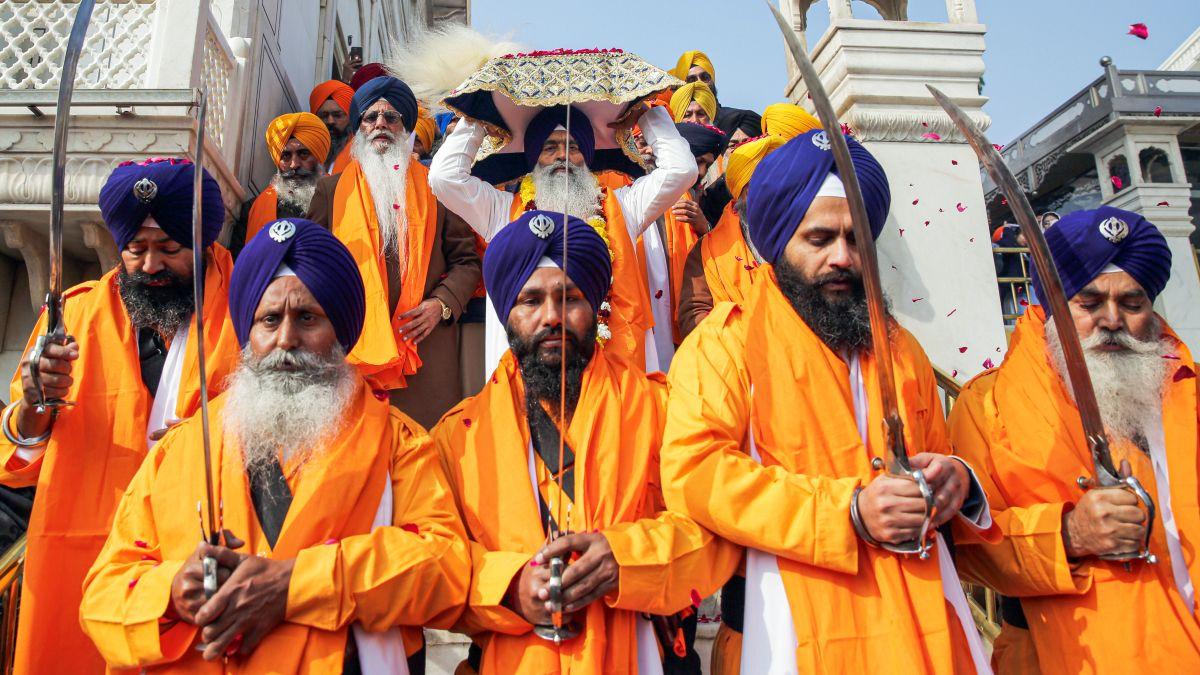
Historical events often carry multiple perspectives. However, some acts -- such as the torture and killing of Guru Gobind Singh's sons by Aurangzeb's forces -- naturally evoke deep anguish and can be exploited by vested interests.
At the same time, would it not be dishonest or insensitive to downplay such events as mere examples of 'medieval brutality' just to avoid political provocation?
Facts of history must be faced and acknowledged, even when they may be brutal.
While never downplaying such facts, it is essential to learn why they happened, which requires historians to contextualise and understand historical actors on their own terms, not ours.
For example, when I undertook a study of temple desecration in precolonial India, it was not enough simply to document what temples were desecrated, by whom, when, and where.
It was also important to explore the total historical context of such incidents, with a view to discovering patterns, which in turn could reveal the reasons why they occurred.
The death of Guru Gobind's sons is a case in point.
Emperor Alamgir had ordered Mughal officials in the Punjab to leave the guru alone so long as he adopted a modest lifestyle and refrained from kingly ways.
But his radically egalitarian vision, articulated in his establishment of the Khalsa in Anandpur, conflicted with the hierarchically ordered societies and Brahmin-dominated royal courts of the nearby rajas in the Siwalik hills.
Further angered by Sikh raids on nearby villages for supplies, those rajas in 1704 or 1705 besieged Anandpur and requested Mughal authorities to intervene in the conflict.
But when Guru Gobind was forced to abandon the town, local imperial officers, ignoring the emperor's sworn promise to ensure the Sikhs' safe passage from Anandpur, captured and killed the guru's two youngest sons, prompting the guru to defiantly censure the Mughals and demand a personal meeting with the emperor.
The emperor agreed to this and ordered safe passage to his court in the Deccan, but he died before the guru could reach the imperial court.
We do not know why those Mughal officials took matters into their own hands, defying the emperor's orders guaranteeing the safety of the guru's family.
Of course, things might have worked out differently had the emperor not been a thousand miles away and approaching his own death at that time.
But that is mere speculation. Writing history often resembles solving a jigsaw puzzle with a third of the pieces missing. This is one of those cases.
Similarly, there are instances where imperial decisions appear to go beyond politics or expansionism. For example, Akbar is said to have declared the siege of Chittorgarh in 1567 as a 'jihad against infidels', and Aurangzeb's 1669 firman ordered the demolition of temples and schools.
Should secular historians not criticise these acts as religious bigotry, even if there's a risk that such criticism might be weaponised for demagoguery?
Bigotry is prejudice on the basis of a person's or a people's membership in a particular community, whether religious or otherwise.
In general, whereas bigots might seek to influence public policy, a ruler's top priority is to maintain the stability of their state and the continuation of their own rule.
Akbar's long reign is a fascinating case in this respect.
On grounds of practical policy, he had already begun assimilating Rajput princes into the Mughal government three years before the siege of Chittorgarh.
Even though his siege of Chittorgarh aimed at advancing his political agenda, he justified it in terms of struggling against non-believers ('jihad' and 'infidels').
Yet he did not finally reject the narrow, scripturalist understandings of Islam promoted by his own clerics until three years after that siege, when he embraced pantheistic doctrines.
So, the period between 1564 and 1572 saw a moment of transition during which his rhetoric and his policies were not fully aligned.
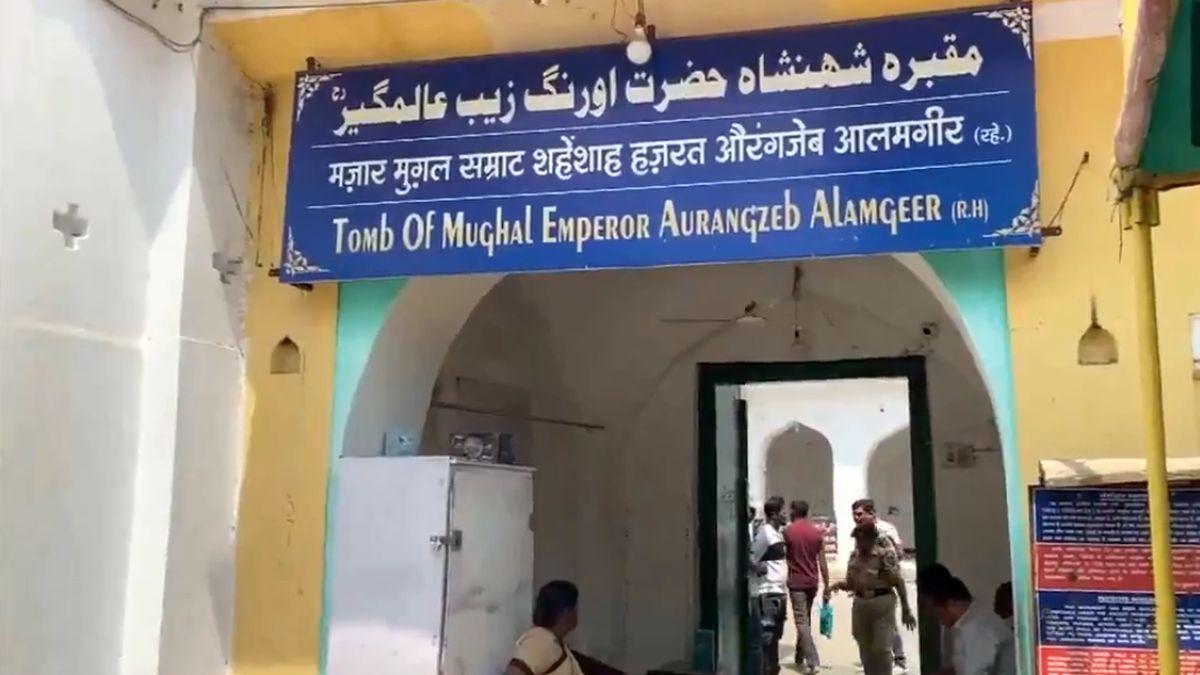
By contrast, Alamgir (or Aurangzeb, which was his princely name) was far more consistent in both practice and rhetoric.
Throughout his reign -- totaling 49 years, like that of Akbar -- he never dealt with subordinates based on their religious or even sectarian (Sunni or Shi'a) affiliation.
As he declared, 'What connection have earthly affairs with religion? And what right have administrative works to meddle with bigotry? For you is your religion and for me is mine' [Qur’an 109:6].'
'Wise men,' he continued, 'disapprove of the removal from office of able [Hindu] officers.'
Above all, Alamgir was a pragmatist.
Accordingly, the emperor's 1669 firman did not order the demolition of all of India's temples, as is often said.
Rather, it stated that certain schools or 'places of worship' (ma'abid) were subject to demolition if Brahmins associated with them were found to be teaching books that were declared 'false' (batil), the study of which had been attracting both Muslims and Hindus from great distances.
We know nothing of the nature of these 'false books'. But it seems that the emperor was concerned with perceived threats to the stability of the State posed by the exposure of such books to peoples of both major communities.
In short, this appears to have been an extreme form of book banning, of which the world has a long history.
In your book, you suggest that Aurangzeb feared being overthrown by his sons, which may explain why his military campaigns -- especially in the Deccan -- never ceased. You also note that he tried to project himself as a 'correct Muslim' in contrast to Dara Shukoh.
Taken together, do these factors reflect a deeper obsession with power, even as he outwardly rejected the imperial grandeur associated with it?
Yes, Alamgir rejected the imperial grandeur associated with his father, Shah Jahan, largely owing to the severely strained relationship between the two men.
Nor is there any doubting his obsession with power.
After all, he spent his entire princely life assiduously preparing for the inevitable contest for the Peacock Throne with his three brothers. And once he achieved this goal, he had every reason to fear being overthrown by his own sons and even grandsons, knowing full well that he had set a dangerous precedent by deposing and imprisoning his own father.
Alamgir did indeed contrast his posture as a 'correct Muslim' with Dara Shukoh's religious sensibilities, which he considered wayward or even heretical.
But until the very end of Dara's life, his dispute with him was primarily political and personal in nature, not religious.
It was mainly after having defeated Dara in the contest for the throne that he began to see his brother as religiously deviant.
Ultimately, he rationalised executing him on the grounds that Dara had regarded the Vedas as divine speech and wore jewellery inscribed with the Sanskrit word Prabhu, or 'Lord'.
Then, craving legitimacy after deposing his father and eliminating all three of his brothers, he felt an urgent need to justify his actions, if to no other, at least to himself and to his God.
But it was in his correspondence with his father, whom he had illegally imprisoned in Agra, that Alamgir most strenuously juxtaposed his own Islamic piety with Dara's alleged heresy, even claiming that his military victories over Dara had demonstrated that God was on his side, not Dara's.
Ironically, the more he violated Islamic prohibitions against murder and theft -- in the latter's case, of an entire empire! -- the more he craved justification for his actions and absolution for his sins.







 © 2025