
'China reduced its exports of urea to India gradually.'
'In 2020-2021 we imported 28 lakh tonnes of urea which reduced to 16 lakh tonnes in 2022-2023 and that has now reduced to 1 lakh tonnes in 2024-2025.'
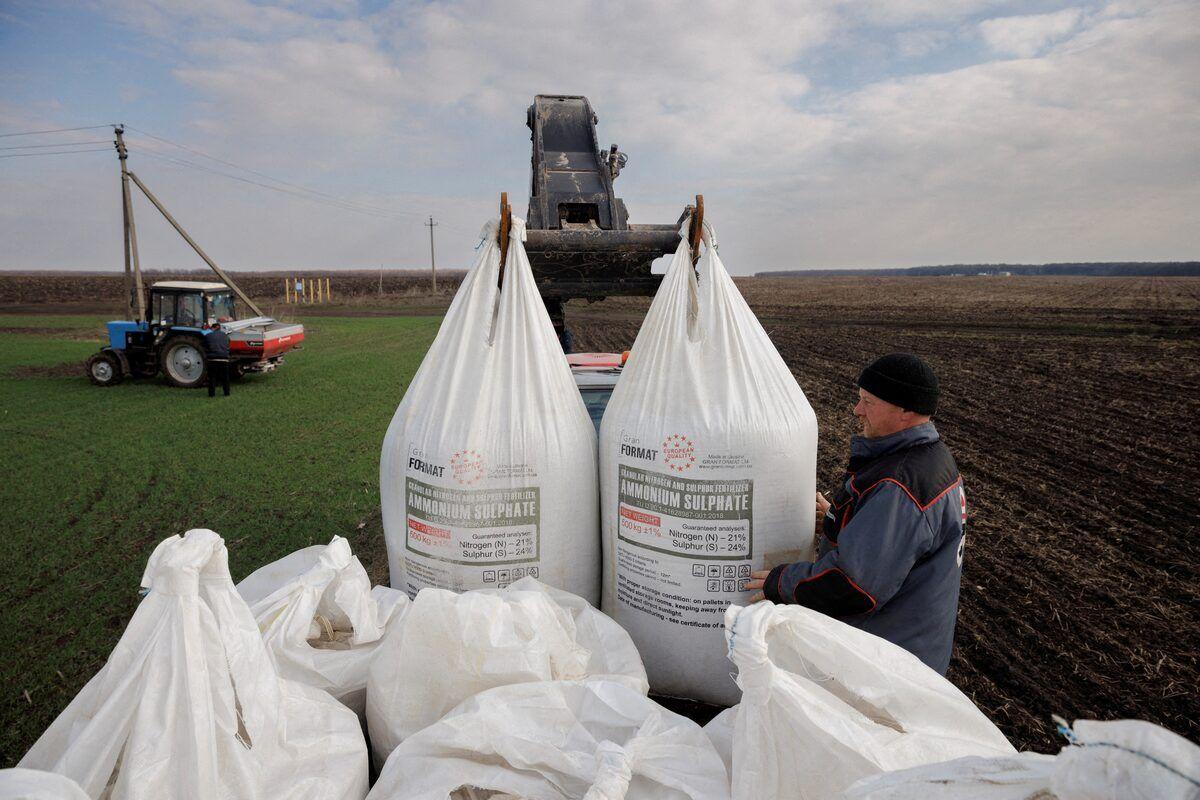
As India's agricultural heartland faces mounting pressure from a deepening urea crisis, farmers across states like Uttar Pradesh are taking to the streets in protest.
A significant drop in urea availability, a steep decline in imports -- particularly from China -- and the government's push toward nano-urea are creating widespread concern among cultivators during the crucial Kharif season.
In an interview with Syed Firdaus Ashraf/Rediff, Pushpendra Singh, president, Kisan Shakti Sangh, shares his views on why farmers are agitating in Ayodhya, how poor planning has led to this fertiliser shortfall, and what the implications are for food security and the rural economy.
Why are farmers protesting in Ayodhya?
The reason is the stock of urea which is used as fertiliser by farmers to cultivate their land is very less this year in our country this year, compared to last year.
The stock of urea, for example, in April 2024 was 80 lakh tonnes and this year it was 56 lakh tonnes in April.
On August 1, 2024, the urea stock was 86 lakh tonnes and this year it is 37 lakh tonnes on August 1, 2025.
What is the reason for this?
One of the reasons is the import of urea from China has drastically reduced.
In 2021-2022, we imported 28 lakh tonnes of urea which has reduced to 1 lakh tonnes in 2024-2025.
Our domestic urea plants, in Kakinada and other places, faced some problems in production and that too led to the production of less urea.
Thirdly, urea price rose from $380 to $530 in the international market. Timely action was not taken by the government and that led to mismanagement on the urea front.
Can you explain to a layperson residing in the city why urea is important for farmers?
When the sowing season starts farmers (mostly) need two chemicals -- Di-ammonium phosphate (DAP) and urea.
Right now the kharif crop sowing season is going on. In kharif crops, the main crop is paddy, that is rice. DAP is needed initially to sow paddy in the months of June and July. Later, in August, the rice crop needs urea for better yield.
And this year the rains have been very good which has increased the sowing land area compared to last year.
Till last year the sowing area was 363 lakh hectares for rice and that has increased to 400 lakh hectares this year because of good rainfall.
The same applies to maize whose land capacity has increased to 93 lakh hectares from 83 lakh hectares last year.
This has resulted in a surge of demand for urea as farmers want more urea for their crops at this moment. And due to the shortage of urea there is a lathi-charge going on in many places in Uttar Pradesh due to uncontrollable crowds at urea distribution centres.
Black marketers too have stepped in as urea, which costs Rs 270 for a 45 kg bag, is now selling for anywhere between Rs 350 and Rs 500.
DAP, which was selling at Rs 1,350 for a 50 kg bag, is now selling at Rs 1,800 to Rs 2000.
In October, potato crop, sarson (mustard) and wheat will be sown and a few rich farmers are now in advance storing urea for these crops as they fear a shortage of urea in the future.
If China is not selling more urea why not go to other countries, like Saudi Arabia or Morocco?
This was poor planning by the government as they failed to take timely action despite knowing very well that China was not giving you the required urea for your needs.
Why is China reducing its urea import to India?
China reduced its exports of urea to India gradually.
In 2020-2021 we imported 28 lakh tonnes of urea which reduced to 16 lakh tonnes in 2022-2023 and that has now reduced to 1 lakh tonnes in 2024-2025.
Can we then say China is killing Indian farming by reducing its export of urea?
This was one among many reasons, but then we as a nation should have got an alternative source to procure more urea.
Charan Das Mahant, the Opposition leader in the Chhattisgarh assembly, said the government was intentionally reducing the quantity of urea and di-ammonium phosphate because it does not want farmers to grow paddy which is in excess. Is it true?
This too is one of the reasons as the government does not want to buy paddy from farmers.
The government gives MSP (Minimum Support Price) to paddy and they do not want to pay for it because they have excess of paddy.
Is it a design to discourage farmers from not producing paddy and grow some other crop?
Yes. Already we have a surplus in paddy. We are also the largest exporters of paddy. It also takes a lot of water to produce paddy. Therefore, the government wants less people in the business of paddy.
Do you feel we will see a food crisis because of the non-availability of urea?
No, we will not see a food crisis. Farmers use cow dung or other such things (as fertiliser) to replace urea in times of crisis.
What should the government have done?
The government has all the data and we have a fertilisers ministry too. They are expected to know the production level of urea in the country or for that matter what the international price of urea is. This is every day's work.
This was not done by them and they did not import urea on time. The government could not have raised the price of urea to Rs 500 per bag as this would have created chaos in the country, therefore they got another strategy by creating shortage and non-availability.
What can the government do if the international price of urea has gone up?
These things happen as the price fluctuates in the international market. But it is the job of the government to know what needs to be done and buy urea from international markets by ordering in advance.
Prime Minister Narendra Modi had stated that farmer income will double by 2022 and here in 2025 we are seeing farmers struggling to get urea. What is the thinking in the government?
They are an anti-farmer government. The BJP works for the business class, traders and moneylenders and it is their government.
Moneylenders have only one criteria and that is to make farmers slog and make them go mad by creating a shortage of urea.
This is what the government is doing and it is their policy.
And now they want to promote nano-urea.
What is nano-urea?
They want to do away with urea and want to promote liquid urea of 1 litre.
The government is claiming that this nano-urea in one bottle is as effective as one bag of 45 kg of urea.
The government was selling 10 bags of urea and with that they were giving five bottles of nano-urea to farmers. It is produced in India only and does not require a subsidy as the cost of production is less.
Is it good?
No concrete study has come to my knowledge so far. It is possible that the government wants to shift the strategy of farming. But there is no trust among farmers for nano-urea. It is easy to transport bottles to your farms rather than transporting 45 kg bags of urea. You just mix nano-urea in your tube well and spread it in your farm.








 © 2025