
Sitiveni Rabuka's visit to New Delhi marks a major shift in India-Fiji ties as the former coup leader who once expelled India's envoy now returns as an honoured guest, explains Ambassador T P Sreenivasan.
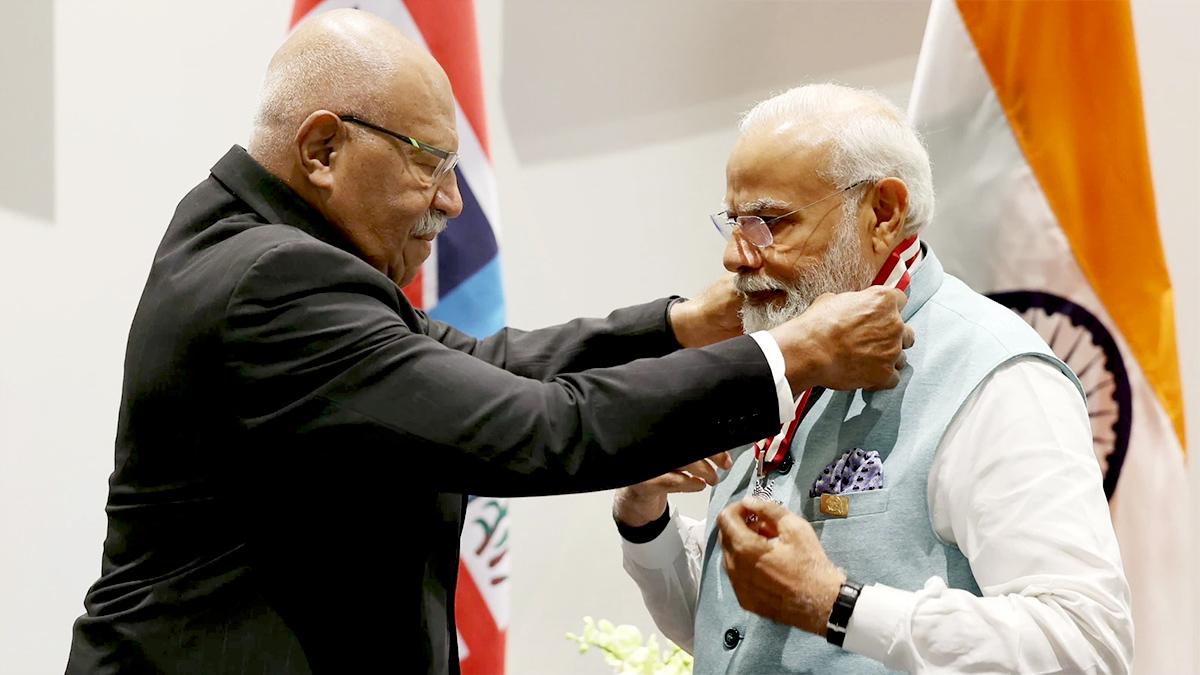
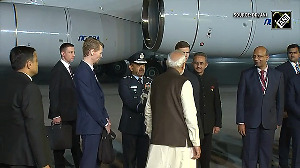
When Prime Minister Sitiveni Rabuka of Fiji is received by Prime Minister Narendra Modi in New Delhi on August 25, 2025, it will create a unique moment in India's diplomatic history.
Never before has a prime minister like him visited India. He was trained in India, became a popular figure at the Wellington Staff College, wrote a thesis on 'Rebuilding a developing nation after a military coup', returned to his country at a time when a democratically elected multiracial government was in power, staged a coup at the instance of the Opposition and changed the constitution to disenfranchise Fiji Indians and demanded deportation of Indians, expelled the Indian envoy, closed the Indian mission and 35 years later, became the prime minister of Fiji with the support of Fiji Indians.
None of his past will be remembered in Delhi as the ministry of external affairs has highlighted that Rabuka's visit underscores the longstanding and enduring ties between India and Fiji.
India-Fiji relations are based on mutual respect, cooperation and strong people to people ties. This is rightly so, because bilateral relations have to be maintained with any elected leader of a country, whatever his background may be.
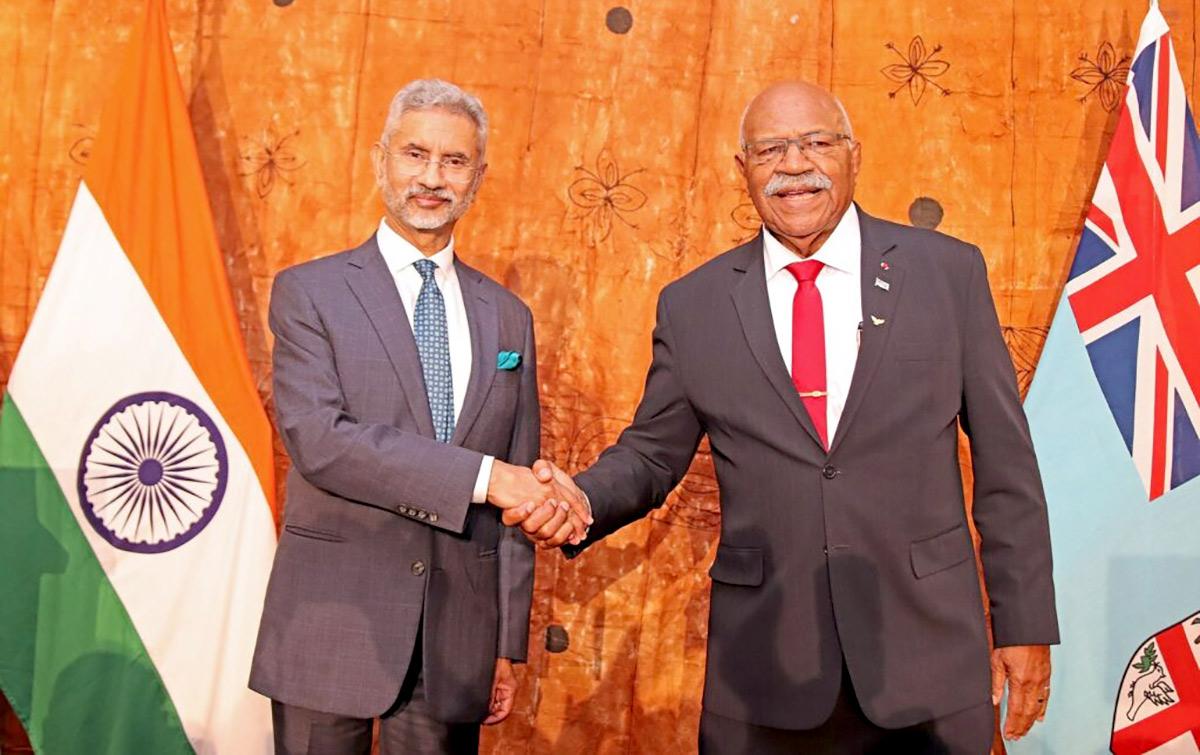
Having been Rabuka's golf partner as the Indian high commissioner for a few months before the military coup, then as ambassador, following Fiji's expulsion from the Commonwealth at the instance of then prime minister Rajiv Gandhi, then an open supporter of the Democracy Movement in Fiji, I was his constant headache.
I continued in Fiji for nearly two years, though India had not recognised the military regime, a rarity in diplomacy.
Rabuka tolerated my speeches and activities like keeping Indian leaders in my residence whenever they felt threatened.
Indian statements in Parliament and at the UN, asking to restore democracy in Fiji put pressure on the military government.
Finally, when hundreds of Sikhs congregated in Fiji, when they heard about the burning of a gurdwara there, Rabuka feared a racial conflict.
In my speech, I tried to lower tension by explaining that the attack on the gurdwara was not on the Sikh religion, but on democracy and the political rights of Fiji Indians.
Describing my speech as explosive, I was given 72 hours to leave the country and I left in 48 hours, saying that I would one day like to come on a holiday to Fiji.
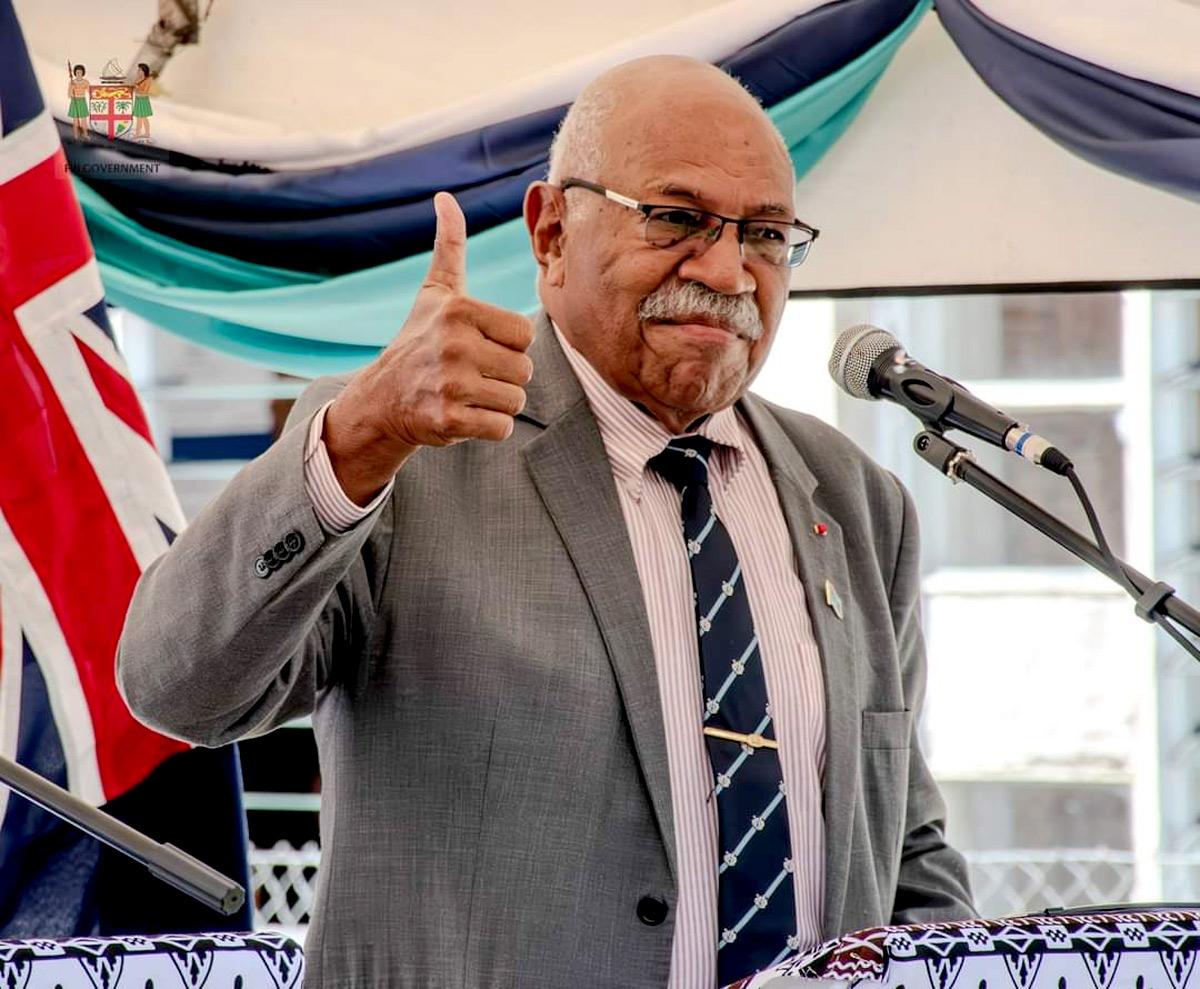
Though I was his adversary, Rabuka was never disrespectful to me during the two years I spent there after the coup.
Moreover, he did not object to my visit to Fiji on the invitation of an Indian organisation in 2014.
He even invited me to a game of golf and lunch. He told me that since both of us were private citizens now, we should have no animosity to each other.
Both of us were carrying out our orders from our bosses, he said, contradicting his claim at the time of the coup that he acted alone to save the reputation of the first prime minister of Fiji, Ratu Sir Kamisese Mara.
Neither of us had any idea that he would become prime minister again with the support of Fiji Indians.
Our meeting on the Suva Golf Club was characterised as 'a pivotal moment in the mending of fences between them and it helped facilitate a new phase of bilateral relations between India and Fiji' by journalists at the time.
Rabuka has come full circle after being a popular trainee at the Wellington Staff College, then a coup leader, who disenfranchised Fiji Indians and expelled the Indian envoy and now an honoured guest in New Delhi as the embodiment of racial harmony in Fiji.
A 19th century British prime minister is famously quoted as saying, 'We have no eternal allies, and we have no perpetual enemies. Our interests are eternal and those interests it is our duty to follow.'
India and Fiji have permanent interests in each other with our age-old ties and the fact that Fiji Indians constitute 37% of the population of the country. That alone should matter!
Welcome to India, my friend Steve! How I wish I could play a round of golf with you in Delhi.
Photographs curated by Manisha Kotian/Rediff
Feature Presentation: Rajesh Alva/Rediff







 © 2025