
The message from Sunday’s event will undoubtedly reverberate globally. It's a landmark occasion that will be remembered for generations and will inspire many other states to introduce the story of Rajendra Chola into school curricula, says Tarun Vijay.

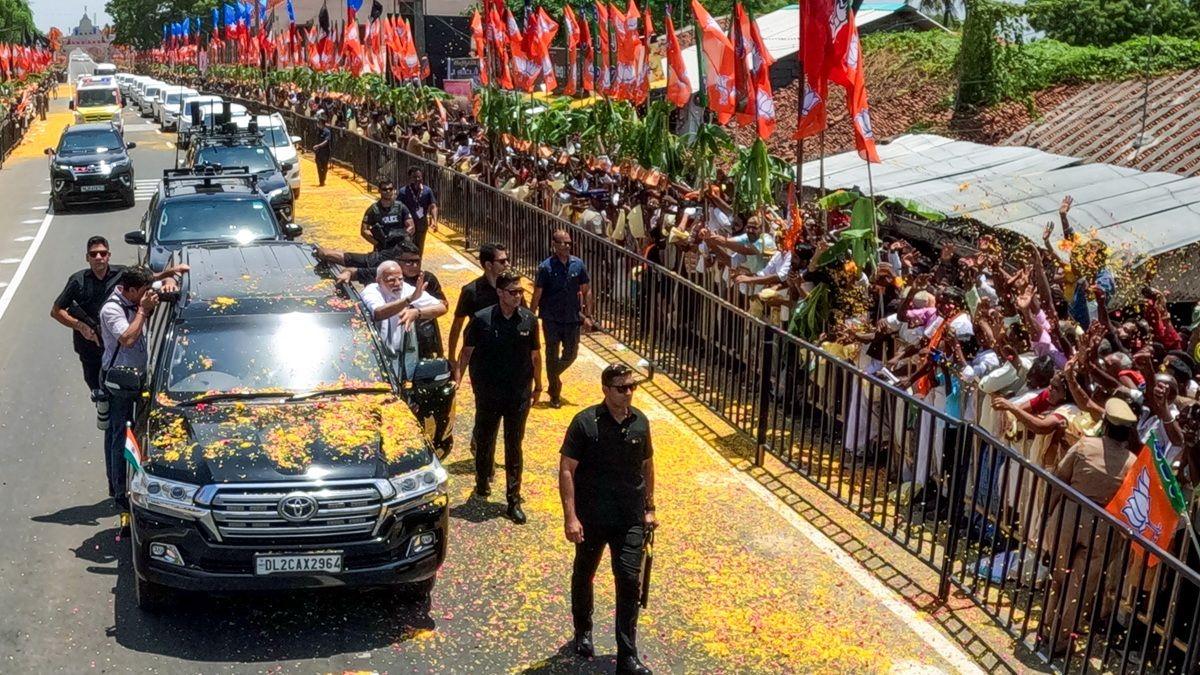
It's no coincidence that Prime Minister Modi arrived directly in Gangaikonda Cholapuram, Tamil Nadu, from Maldives. The PM, who has silenced the "Modi Out" calls from across the seas, truly understands how to neutralise anti-India sentiment and raise the tricolour for unity.
His visit to the land of Rajendra Chola, the world's greatest naval emperor, holds profound significance in the current climate.
Rajendra Chola was a brave, innovative, and masterful emperor, a creative genius who surveyed all, a compassionate king dedicated to his people's welfare, and deeply devoted to Shiva. He was humble before the Lord and his subjects, yet a fierce force against his enemies.
It's a great pity that the story of Rajendra Chola, the greatest of all emperors, was confined to a mere paragraph in our school history books.
In stark contrast, children were made to pore over numerous pages in various classes, studying the biographies of those enemies who looted and pillaged India.
Students were taught the names of invaders' sons, grandsons, wives, and daughters-in-law, as well as British queens, viceroys, and generals who ordered the massacres of Indians.
Yet, hardly any school in the North, West, or East educated them about the great emperors who brought glory to our motherland and protected Dharma.
I had the distinct honour of becoming the first Indian MP to speak on the remarkable life and works of the Chola emperor.
I also had the privilege of presenting a grand portrait of Rajendra Chola to two defence ministers (Nirmala Sitharaman and Rajnath Singh) and arranging its installation at the Mazagon Dock, Mumbai -- India's largest warship builder -- in the presence of the then Maharashtra governor, Ch Vidya Sagar Rao, and Chief Minister Devendra Fadnavis.
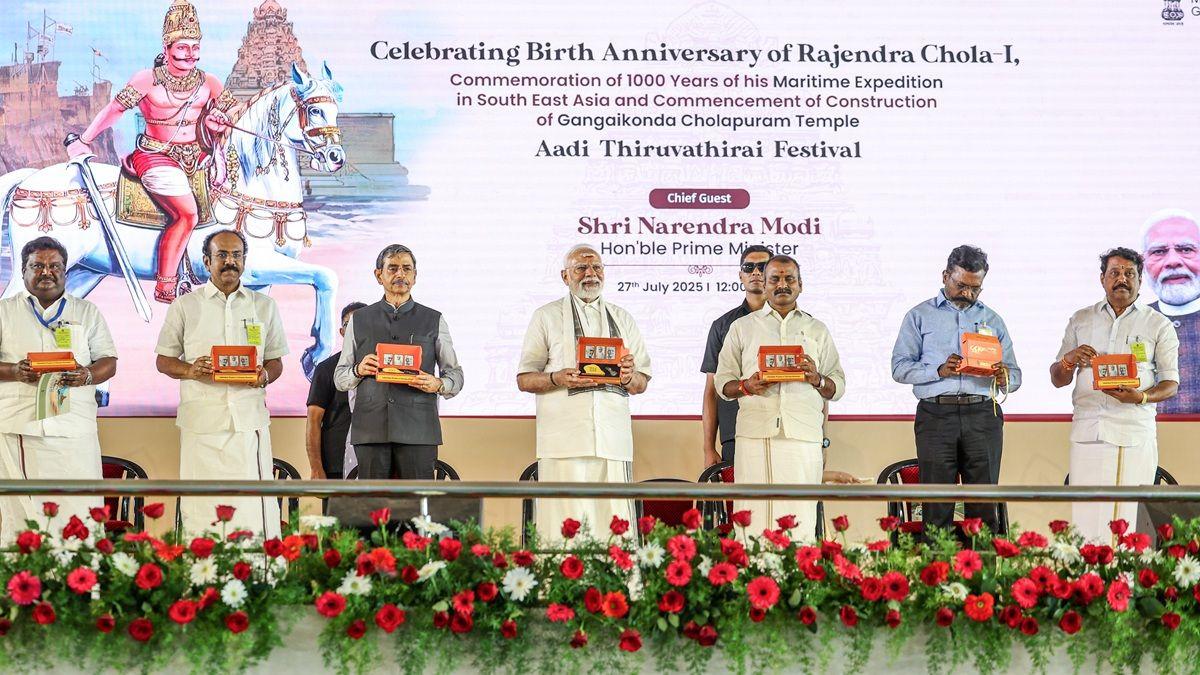
Prime Minister Narendra Modi corrected a historical wrong with his visit to Gangaikonda Cholapuram. If I'm not mistaken, he is the first Indian prime minister to honour Rajendra Chola in his native land and capital city.
I recall visiting Gangaikonda Cholapuram to address a gathering of scholars. The thought leaders assembled there asserted that national unity wouldn't be possible unless the government took action to honour the great Tamil culture and its warrior kings and reformers.
I believe Narendra ModiJi is doing precisely what they expected. He frequently quotes Thiruvalluvar, often speaks a few lines in Tamil, and is now coming to revive the glory of a Tamil emperor.
The message from Sunday’s event will undoubtedly reverberate globally. It's a landmark occasion that will be remembered for generations and will inspire many other states to introduce the story of Rajendra Chola into school curricula.
There isn't a single king or emperor in the entire world whose visionary strategies and colossal ideas for people's welfare can compare to those of Rajendra Chola.
Rajendra Chola I (1014-1044 CE), son of Rajaraja Chola I, was one of the most powerful and influential rulers in Indian history. His desire to bring the holy Ganga waters to purify his kingdom's new capital should be viewed as the wish of a benevolent, Dharmic citizen-king, aiming to harmonise spiritualism with the rule of law.
After consolidating power in the South and expanding the Chola empire, Rajendra I decided to establish a new capital city. This city would be worthy of his conquests and sanctified with water from the Ganga, a symbol of Chakravartin -- influence over India's cultural and religious heartland.

This ambition led to a military expedition. Rajendra's army journeyed north from the existing Chola capital of Thanjavur, covering thousands of kilometres through modern-day Odisha, Madhya Pradesh, Jharkhand, Bengal, Bihar, and Uttar Pradesh, to the Ganga.
The expedition was more than just a journey to collect water. To achieve their goal, Rajendra's forces had to conquer kingdoms along the way, including the Somavamsi dynasty in Kalinga (present-day Odisha) and the Pala king Mahipala I in Bengal. The Chola army successfully brought back Ganga water in golden pots, fulfilling Rajendra's ambition.
In fact, Rajendra Chola must be credited with the concept of creating a 'Sangam' of the North's Ganga with the South's Kaveri, a Prayag representing Bharatvarsha's heart, soul, and sinews at Gangaikonda Cholapuram.
Rajendra Chola I launched naval expeditions across the Indian Ocean to Southeast Asia in 1025 CE. He conquered regions of present-day Indonesia, including the capital Kadaram and Pannai in Sumatra, and Malaiyur in the Malay Peninsula. He also invaded Tambralinga and the Langkasuka Kingdom in modern Malaysia and South Thailand.
These conquests expanded Chola influence and control over vital maritime trade routes. He also subdued the islands of Laccadives and the Maldives.
Rajendra strengthened the Chola fleet, allowing him to project power across the Indian Ocean. His conquests and control over maritime trade routes significantly increased the economic prosperity of the Chola Empire.

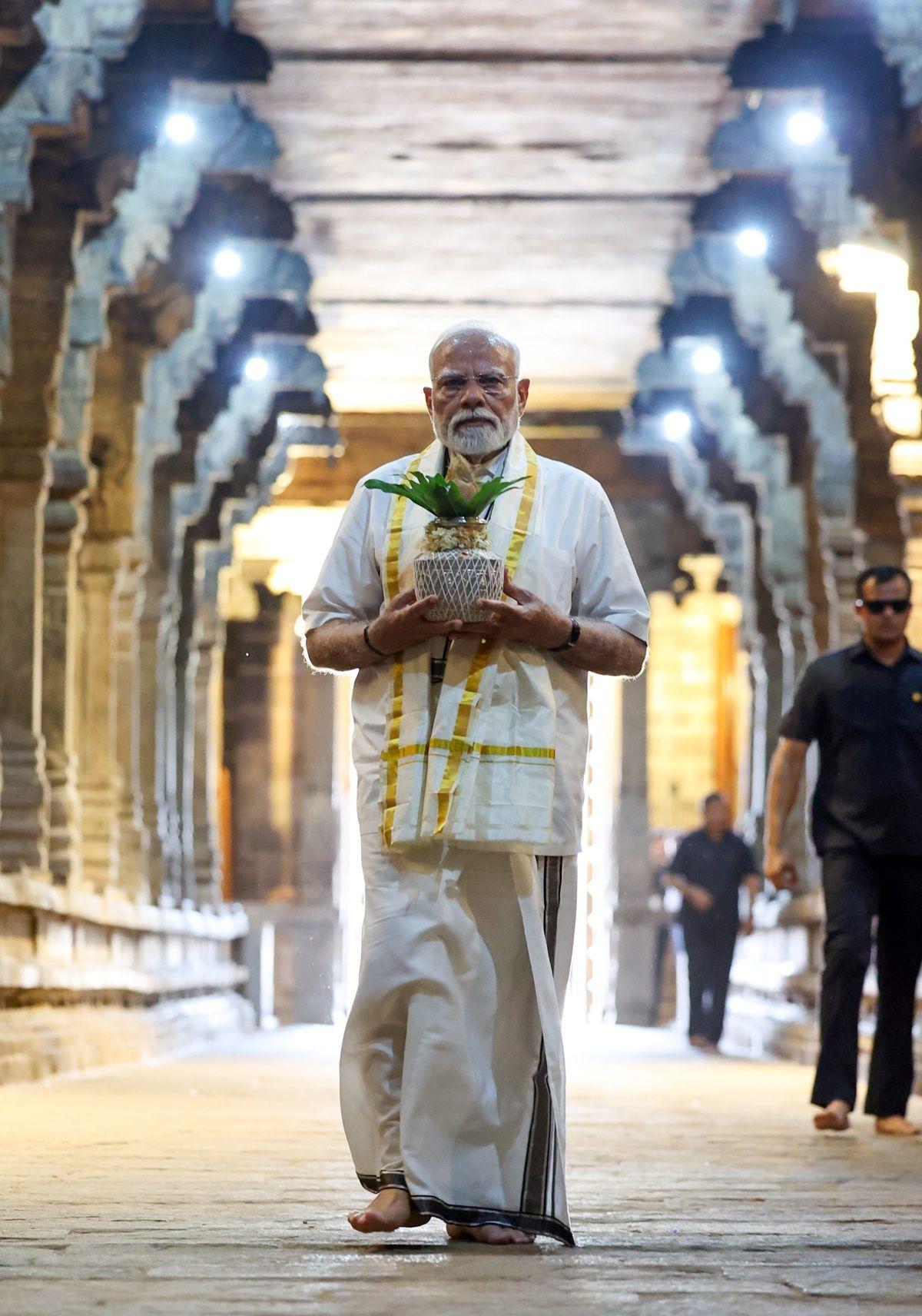
Rajendra I was a patron of art, literature, and architecture. He built the Brihadeeswarar Temple at Gangaikonda Cholapuram, a true testament to Chola grandeur.
The Brihadeeswara Temple in Thanjavur, also known as the "Big Temple," stands as a monumental testament to the might and glory of the Chola dynasty and Dravidian architecture. It's a UNESCO World Heritage Site, built around 1010 AD.
Its glory lies in its monumental scale, remarkable engineering feats for its time, and its profound cultural, historical, and spiritual significance, remaining a potent symbol of Chola power and devotion.
The temple boasts a towering Vimana (tower) over 200 feet high and a massive Nandi statue, adorned with intricate carvings and frescoes that narrate its past.
Its construction, completed in just seven years, involved intricate stone bonding without mortar and the transport of materials like granite.
The use of a massive base, internal construction methods, and the placement of an 80-ton stone capstone at the pinnacle of the Vimana showcase advanced engineering and artistic skill for the era.
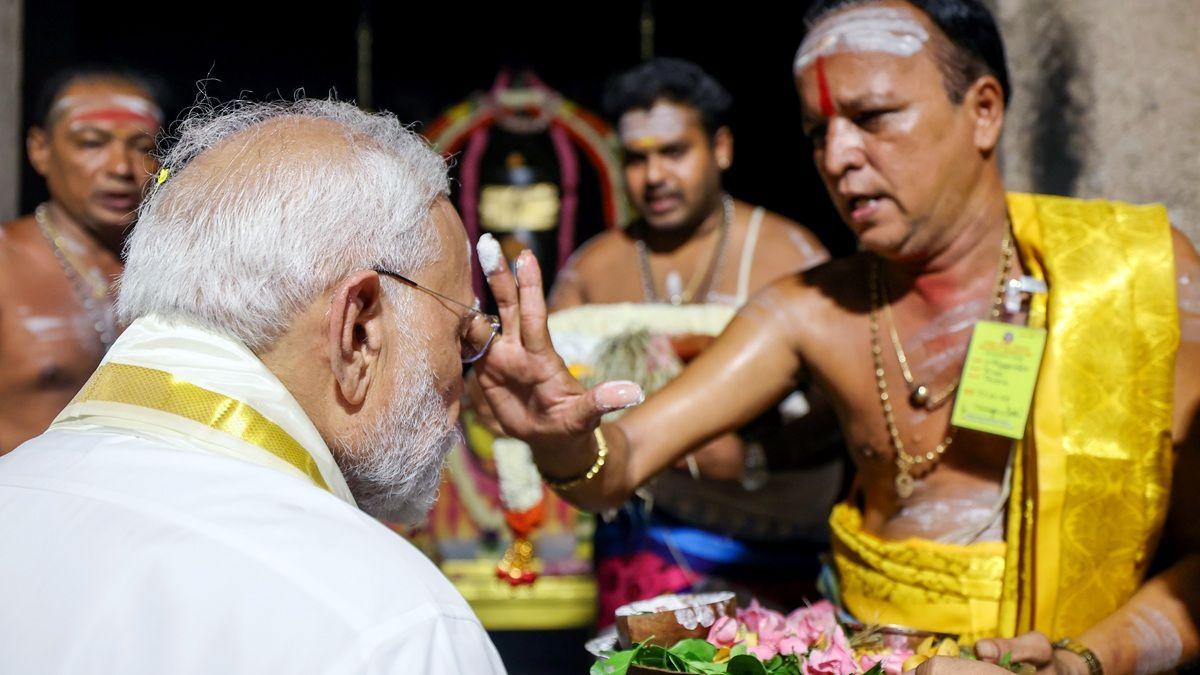
As a dedication to Lord Shiva, the temple embodies the deep religious devotion of the Chola period and serves as a powerful symbol of their cultural heritage. According to some sources, it's considered as culturally, historically, and spiritually important as the pyramids of Cheops.
Despite being over a thousand years old, the Brihadeeswara Temple continues to stand strong, defying time and serving as a profound representation of Chola ingenuity and spiritual depth. Its inscriptions and frescoes provide a vivid account of the region's history, and modern technology is now being utilised for its preservation and to enhance visitor experiences.
Rajendra Chola was a true Ganga bhakt. He built a 17 km wide lake named Chola Gangam, which remains India's biggest man-made water reservoir.
The great scholar K A Nilakanta Sastri notes, "A few kilometres away from the Brihadisvara Temple at Gangaikonda Cholapuram lies a tank stretching over 17 km. Chola Gangam, locally known as Ponneri, was dug by Rajendra Chola to celebrate his northern campaign. This lake was a 'liquid pillar of victory' (ganga-jalamayam jayastambham) in his capital with the waters of the Ganga in the form of the tank Cholaganga."

He was a true Vedantic Hindu. A Shaivite at heart, he welcomed Vaishnavism and Buddhism with equal respect.
The saga of Rajendra Chola I is one of bold ambition, military brilliance, and cultural patronage.
His reign transformed the Chola empire into a dominant force in Asia, leaving a lasting legacy on the region's history and culture.
Tarun Vijay is a former MP, and a Thiruvalluvar devotee who installed the saint-poet's statue at the Ganga in Haridwar.





 © 2025