
The era where nations thrived through rigid alignments is giving way to an age where the connective State defines power.
For India, that era has arrived, points out Dr Nishakant Ojha.
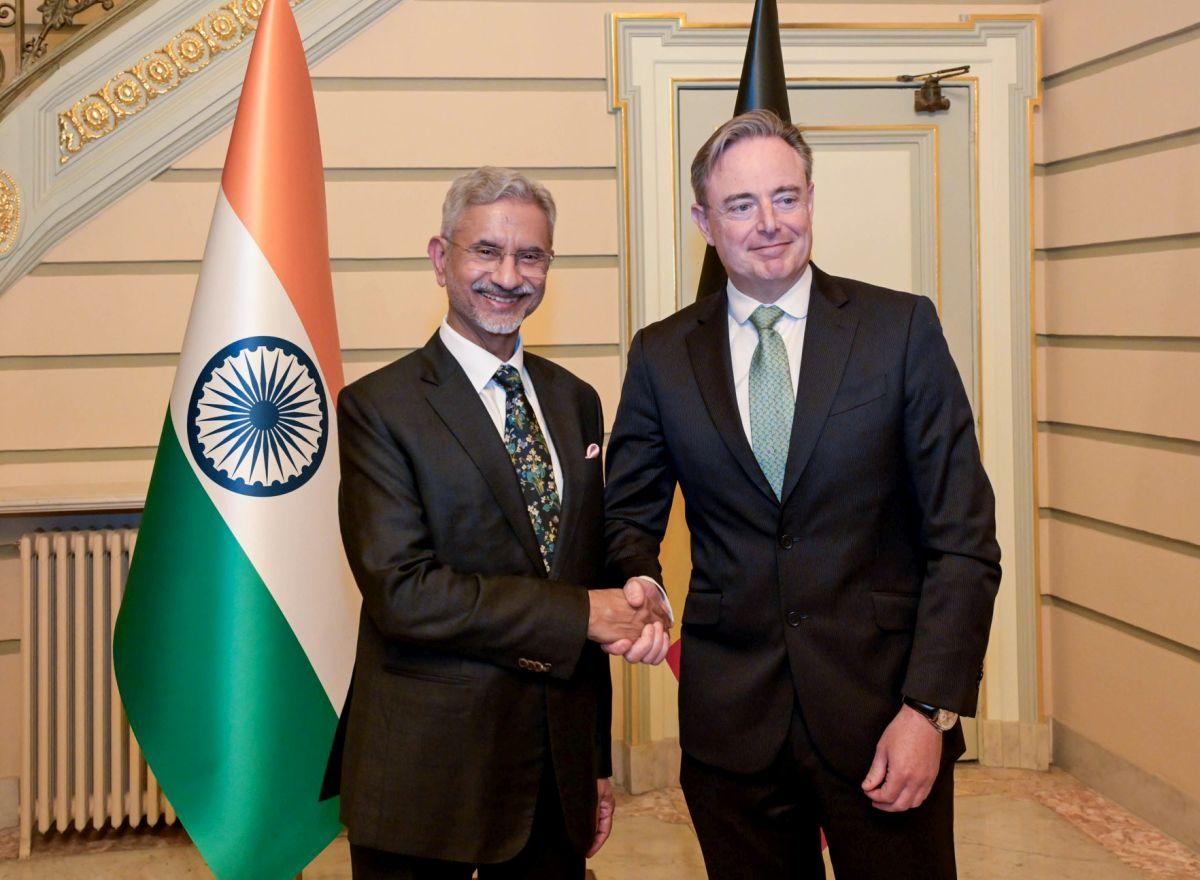
India stands at a geopolitical crossroads, navigating a world where Western reliance no longer affords certainty, and strategic opportunities in West Asia beckon with far greater pragmatism and influence.
European partners, long-time allies, are visibly hesitant: The EU continues to link trade deals to political values, criticise India's democratic credentials, and urge restraint on its Russian energy imports -- even as Europe itself sources LNG indirectly from Moscow.
This persistent value-based conditionality underscores the fragility of Western alignment.
Meanwhile, the Gulf region offers India a transaction-based architecture rooted in energy security, diaspora influence, and corridor-driven connectivity.
Over 60 percent of India's crude oil and around 70 percent of its gas needs come from GCC nations, while trade with Gulf economies has surged past $161 billion annually (India-GCC bilateral relations).
Nearly nine million Indians reside in the Gulf, remitting over $50 billion yearly -- turning the diaspora into both an economic stabiliser and a diplomatic asset.
At the centre of India's new strategic calculus is the India-Middle East-Europe Economic Corridor (IMEEC), formally endorsed by India, the GCC countries, the EU, US, and European powers such as France, Italy, and Germany at the G20 Summit in New Delhi.
IMEC proposes an east corridor connecting India to Gulf hubs, and a northern corridor linking the Gulf to European ports such as Haifa, Piraeus and Trieste.
Once operational, it is expected to reduce logistics costs by up to 30 percent and transit time by 40 percent, and potentially shift intra-EU trade dynamics from the northwest toward its southeast, forging southern Europe into a new geoeconomic heartland.
Italy has emerged as a strategic partner in this venture, aiming to position the port of Trieste as the Mediterranean hub linking Europe to the Gulf and Indian supply chains.
The EU's recalibrated perception of the Middle East -- from instability toward viewing the region as a critical energy and investment partner -- creates an invitation for India to serve as a pivotal connector.
Brussels now sees Gulf States not only as energy suppliers but also as sources of sovereign wealth investment in European infrastructure and digital finance (e.g. hydrogen, fintech).
This shift coincides with India intensifying its Link West strategy, a robust effort to transform 'Look West' into multidimensional cooperation spanning trade, energy, defence, and diaspora diplomacy across West Asia.
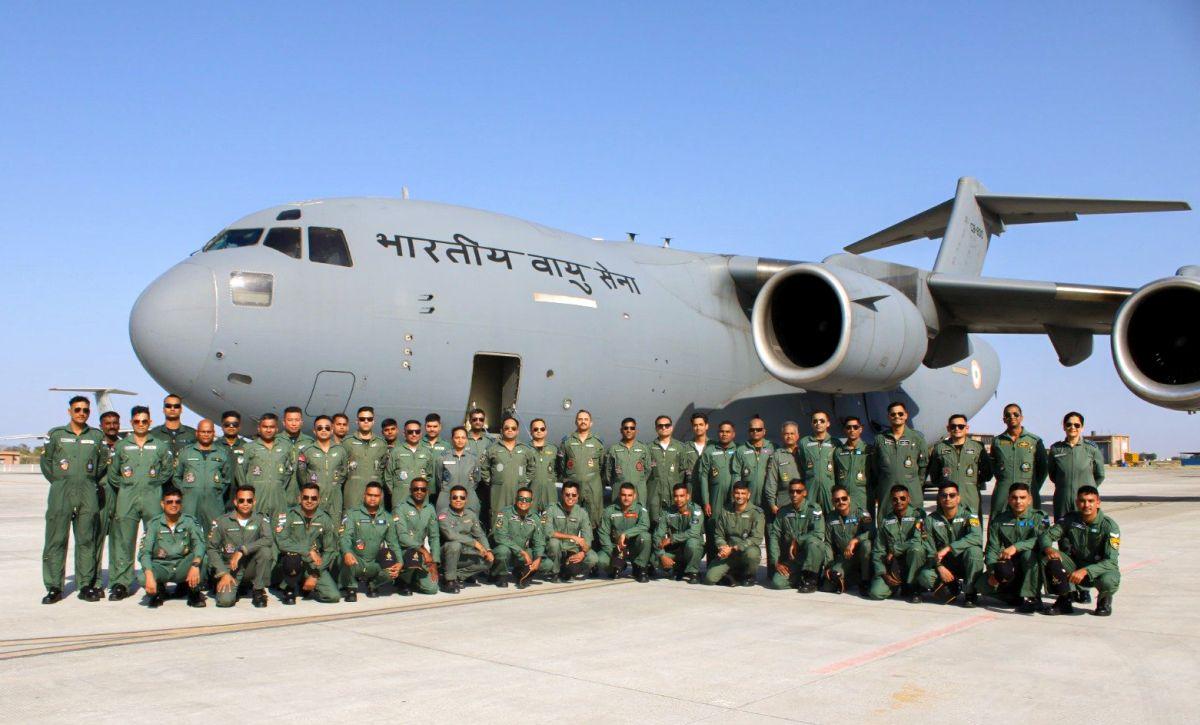
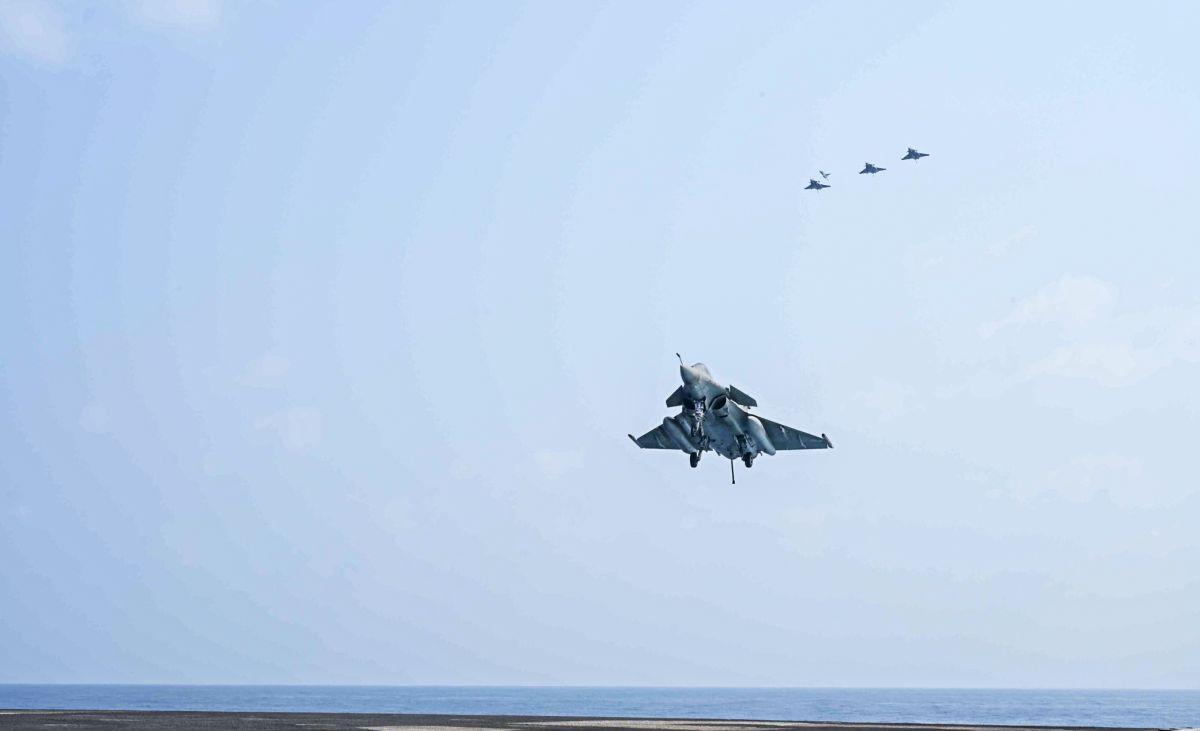
India's naval footprint in the Gulf has expanded: It hosts exercises such as Desert Eagle with the UAE air force and joint naval drills under the Maritime Partnership Exercise initiative involving India, the UAE and France in the Gulf of Oman, reflecting growing defence trust and interoperability.
Concurrently, the Indo-Abrahamic Alliance/I2U2 -- with India, the UAE, Israel and the US -- prioritises energy, agriculture, health and space cooperation, illustrating how economic-security blocs offer India greater flexibility than traditional military alliances.
What emerges is a strategic mosaic: While India maintains selective ties with the EU and US, its engagement with Gulf partners rests on shared interests, not political alignment.
Projects such as Bharat Mart in Dubai, UPI-based digital corridors, bonded warehouses, fintech linkages, and MSME export hubs illustrate the underlying business logic shaping the corridor vision -- quickening the shift from transactional trade to transformative interconnectivity.
India's diplomatic outreach continues apace under Prime Minister Modi's active mentorship.
External Affairs Minister S Jaishankar meeting leaders from the UAE, Oman, Greece, Egypt, and business forums in Cyprus and Marseille, championing IMEC's viability despite the Gaza conflict disruptions.
These visits underscore India's resolve to elevate its economic connectivity rather than revert to ideological discomfort over Middle East instability.
Nonetheless, challenges loom: Regional volatility -- ranging from Iran-Israel tensions to Houthi disruptions in the Red Sea -- threatens corridor resilience; the EU's internal incoherence and lack of a unified coordinator role for IMEC complicate European participation; and lingering perceptions of India's human rights practices may pose political friction with Brussels.
Therefore, India's reoriented diplomatic architecture must institutionalise annual 'Link West' summits involving GCC members, EU representatives, and multilateral development agencies to frame IMEC not as a boutique infrastructure project but a multispoke connectivity enterprise; concurrently, India should scale defence exports like BrahMos systems and maritime platforms to Gulf navies to deepen security interdependence; it should pursue green hydrogen partnerships linking Indian production, Gulf financing, and EU market demand to embed India in the emerging energy transition; and formalise diaspora councils to convert expatriate presence into formal foreign policy levers.
Importantly, India must maintain its balancing act -- deepening ties with Israel on high-tech cooperation while preserving strategic projects in Iran such as the Chabahar port and INSTC corridor -- thereby safeguarding connectivity both southward and northward across Eurasia simultaneously.
In dealings with Europe, India should reframe relations not as Western dependency but as mutual exchange -- emphasising technology cooperation, investment convergence, and supply-chain diversification -- in which India acts as Asia's gateway for EU capital and innovation while the Gulf provides resource and logistic depth.
EU participation in IMEC thus becomes less about political alignment and more about economic necessity -- providing Brussels with a hemispheric hedge and India with global recognition as a bridge power.
India's reoriented foreign policy demands a structured roadmap that consolidates its emerging role as a bridge between Europe, the Gulf, and Asia.
Central to this vision is the institutionalisation of annual 'Link West' summits, fostering sustained dialogue with GCC nations on energy, trade and defence cooperation.
Accelerating the operationalisation of the India-Middle East-Europe Economic Corridor (IMEEC) within five years will be pivotal in embedding India's centrality in EU-Gulf trade networks and reshaping global logistics.
By driving triangular cooperation between India, the EU, and the Gulf, New Delhi can channel Gulf capital into European infrastructure while leveraging European technology for deployment in Gulf and Indian markets.
Strengthening defence diplomacy through expanded training exchanges and defence exports will deepen security interdependence.
Concurrently, green hydrogen partnerships should link Indian production with Gulf financing and EU demand, positioning India as a key player in the global energy transition.
Finally, formalising strategic diaspora engagement through institutional councils will harness the influence of over nine million Indians in the Gulf, transforming remittances and community networks into diplomatic assets.
Collectively, this roadmap will cement India's status as a pivotal connector State, balancing EU scepticism and Gulf opportunity while asserting true strategic autonomy in a multipolar world.
In sum, India's foreign policy recalibration is not ideological withdrawal but strategic expansion.
By anchoring itself in Gulf energy systems, logistics corridors, diaspora networks, and multi-stakeholder platforms like IMEC and I2U2 -- while reframing European engagement into a transactional engine rather than values-based drama -- India emerges as a connector State between GCC capital, EU markets, and Asian production.
This pivot not only enhances India's sovereignty in a multipolar world but also positions it to shape regional order rather than react to it.
As EU perceptions evolve to view West Asia through economic opportunity instead of crisis, India's role in linking Middle East aspirations with European and Asian ambitions becomes central.
The era where nations thrived through rigid alignments is giving way to an age where the connective State defines power. For India, that era has arrived.
Dr Nishakant Ojha is a national security and strategic affairs expert, specialising in foreign policy, emerging technologies, and geopolitical risk analysis.
Feature Presentation: Aslam Hunani/Rediff






 © 2025