
This isn't just a home for the elderly. It's a place where life stories, generations, and cultures weave themselves into something quietly extraordinary, discovers Nitin Sathe.
From the highway south of Chennai airport, a narrow, potholed lane meandered past stray cattle, languid dogs, and trash. It was an unlikely approach to what lay ahead.
The scent of marigolds and incense drifting from the Ganesh temple at the gate beckoned.
After a sleepless night on a red-eye flight, I was more focused on reaching my destination than stopping to explore just then.
The electrically operated gates opened -- and the world changed.
The dusty road was replaced by tree-lined avenues, manicured lawns, rippling water bodies, and neat buildings where sunlight bounced off pale walls.
Battery carts glided by without a sound.
While some elderly residents in pastel woolens strolled in pairs, their walking sticks tapping a gentle rhythm against the pavement, others went rolling on their wheelchairs soaking in the fresh atmosphere.
Not to be missed were the smiles and good morning gestures exchanged just as if they had lived here together for ever.

This was no hospital-like retirement facility. It was an active senior living community, spread across sixty acres, buzzing quietly with life.
I was here to meet a long-lost friend who had chosen this haven for her later years.
From the sparkle in her eyes as she greeted me, I knew she had found her place.
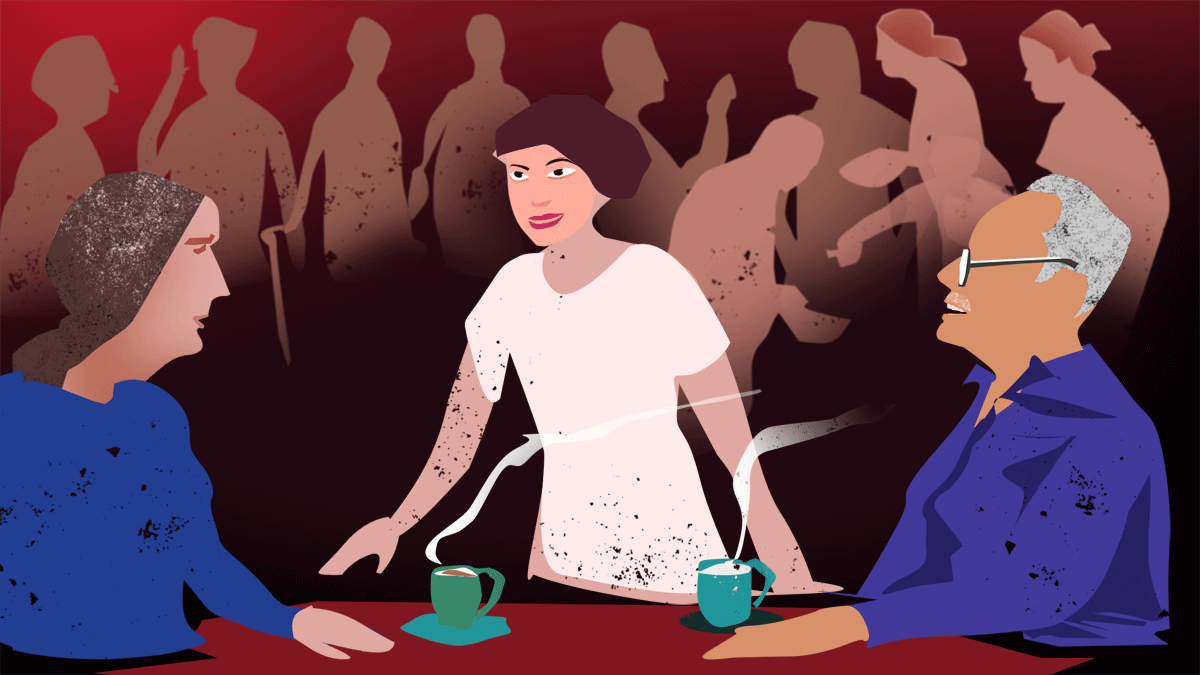
We began our day in the café, where the aroma of freshly brewed filter coffee mingled with the steam rising from idlis, pongal, and sambar.
The staff -- some from nearby villages, others from distant corners of the north east -- moved between tables with practiced warmth.
Language and ethnicity barriers seemed nonexistent as they joked with each other and with the people they were serving, nets on their hair and polythene glove covered hands.
"Which state are you from -- Arunachal? Nagaland?" I asked one young woman as she poured my coffee.
"Manipur," she said, her smile widening.
"My husband works here too -- so does half my family."
"How do you know Tamil?" I asked.
"Survival!", she answered and continued, "We too have taught English and Hindi to them!"
So much so for national integration.

After breakfast, we settle into the lobby outside the café, by the pool.
Sunlight shimmers on the ripples made by water walkers waddling gently through their morning exercise.
Around us, some residents read the day's newspapers; others debate, in low but animated tones, about what's right and wrong with the world.
Neither the headlines nor the gossip will change much here -- and no one seems to mind.
Snippets float through the air: "In my time..."
"I was CEO of..."
"When I lived abroad for years..."
"My children are in New Jersey..."
"My grandchild just got married..."
"The government should..."
"I played cricket for..."
It's a constant exchange -- part memoir, part news bulletin, part friendly banter.
It strikes me then: This isn't just a home for the elderly. It's a place where life stories, generations, and cultures weave themselves into something quietly extraordinary.
My friend conducts me around. They seem to have thought about everything -- well, almost.
"We have our music class here, we have jam sessions here, birthdays and some events are celebrated here...", she goes on.
There's table tennis, tennis, snooker, a well-equipped gym, card rooms and even a cricket pitch for net practice.
I wonder who all make use of these facilities, especially the outdoor games.
I will be surprised soon when I visit here in the evening. There is activity on everywhere.
"One English, one Hindi and one in vernacular... film is shown here every week," says my friend as she shows me a well maintained 50-seater auditorium.
Besides the facilities provided by the management, the inmates have found more to do.
There are some ladies who provide for home cooked non vegetarian food for the die hard, there are various activity clubs -- yoga, Sanskrit, Gita recital, Bhajans and more.
"There is never a dull moment here, something or the other is always happening!."
The campus is a hive of opportunities for small businesses and services.
Drivers and taxis are just a phone call away.
A compact laundry handles daily washing.
Gardeners tend to the flowerbeds in front of your home or the potted plants on your balcony.
Odd-job men are available to move furniture or fix that stubborn door -- whatever you need, someone here can do it.

At the café, the girls have even learnt to drive the little battery-operated rickshaws that deliver meals right to your doorstep if you prefer dining in.
Each residence has a call button placed in every room to buzz for quick help in an emergency.
Two nurses are on duty around the clock, and a small on-campus hospital ensures that doctors are always within reach.
"Some terminally ill residents, or those with medical issues, are moved here for closer care when the time comes -- and that's reassuring for all of us," my friend tells me.
"Another plus is that many retired doctors live on campus.
"We often turn to them for advice or the small but essential medications that are part of everyday life."

Our walk in the evening is interspersed with meetings and greetings with everyone who is out for a breath of fresh air.
'This is phase-1 built in ....as a model concept, Phase 3 is where I live which is a more refined version.. phase 5 is coming up now but there is not much greenery there..."
We sit down at the steps of a small tea shop which sells some sweetmeats and samosas.
"Where are you from?" is the best way to strike a conversation.
And strike we do. Politics, religion, movies, sports and of course 'my time' are discussed and along with plans for the next day's activities.
WhatsApp works here too. All information is passed through this media.
"I am enrolling for Sanskrit class," says my friend peering into her mobile.
She also looks up the menu for dinner and decides on whether it is interesting or not.
Someone messages that she needs to choose a song that she needs to sing for the next public appearance.
Everyone is enthusiastic to attend.
"They will come but the hall empties out as soon as the clock strikes 7 pm. It is dinner time and at this age, this is non-negotiable."

I bump into some veterans like me but from a different era.
Just as we finish saying hello, I am invited home for a coffee.
A 1971 War veteran insists that I have a drink with him for old time's sake. We go into nostalgia discussing forces life.
He has been out of uniform for 28 years but behaves as if he has just jumped out of his MiG cockpit just moments ago.
The enthusiasm bowls me over. I realise that these guys crave for 'outside' company-new blood...so that they can boast about their new home and tell you how happy they are.
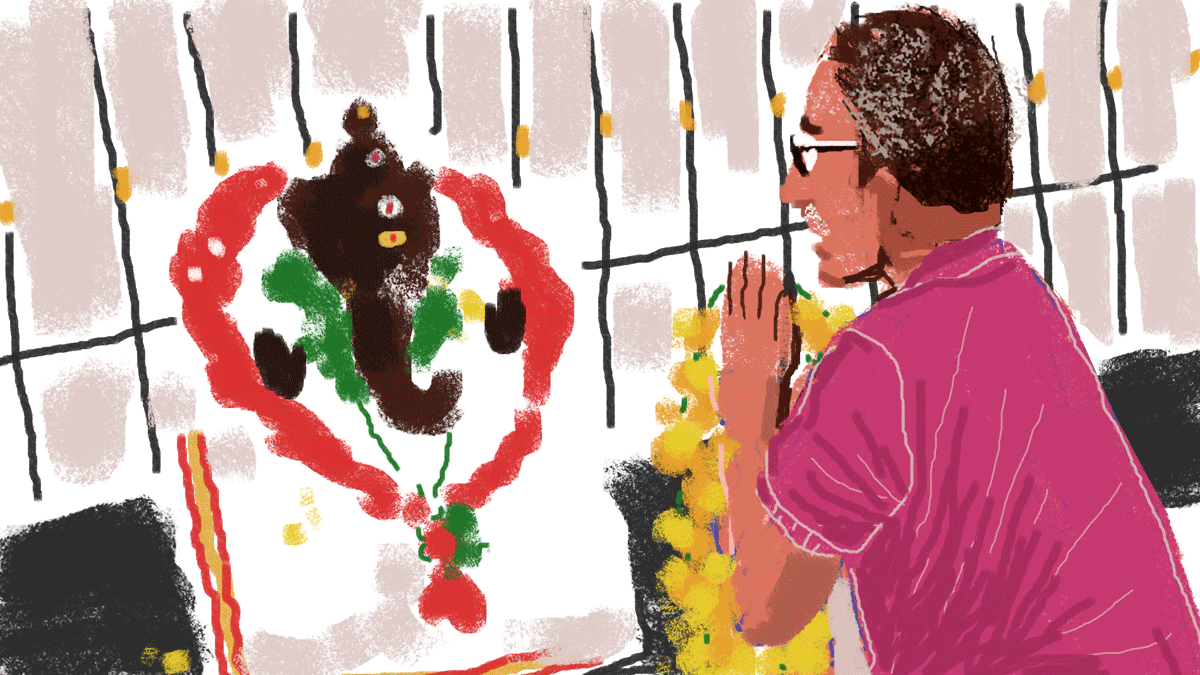
On my way out, I finally stop at the little Ganesh temple I had passed that morning.
I buy a small garland, offer a few flowers to the diety, and stand in the fragrant stillness.
I pray for the health and happiness of those who live here -- and, quietly, for my own.

It strikes me that India will need many more such senior living communities in the years ahead.
Not the grim 'old age homes' of the past, but vibrant places where people can live with dignity, purpose, and companionship.
The reality is simple: The present generation of children, bound by careers and distance, will not always be able to care for their parents in person.
Places like this will fill that gap -- not as a compromise, but as a choice for a better life.

As I walk away, I know one thing for certain: Someday, perhaps sooner than I imagine, I will be here too.
And I will walk these tree-lined paths, meet new friends, and tell my own stories --just as happily as they do today.
Feature Presentation: Ashish Narsale/Rediff









 © 2025