
'Editor M S Shinde deserves full credit because, I'm told, Ramesh Sippy had shot 300,000 feet of footage, which was brought down to 18,000.'
'He died in 2012, in a 126 square foot flat in Dharavi, penniless, a forgotten hero.'
Celebrating Sholay's 50th anniversary on August 15 with a special series, where contemporary film folk analyse the cult classic.
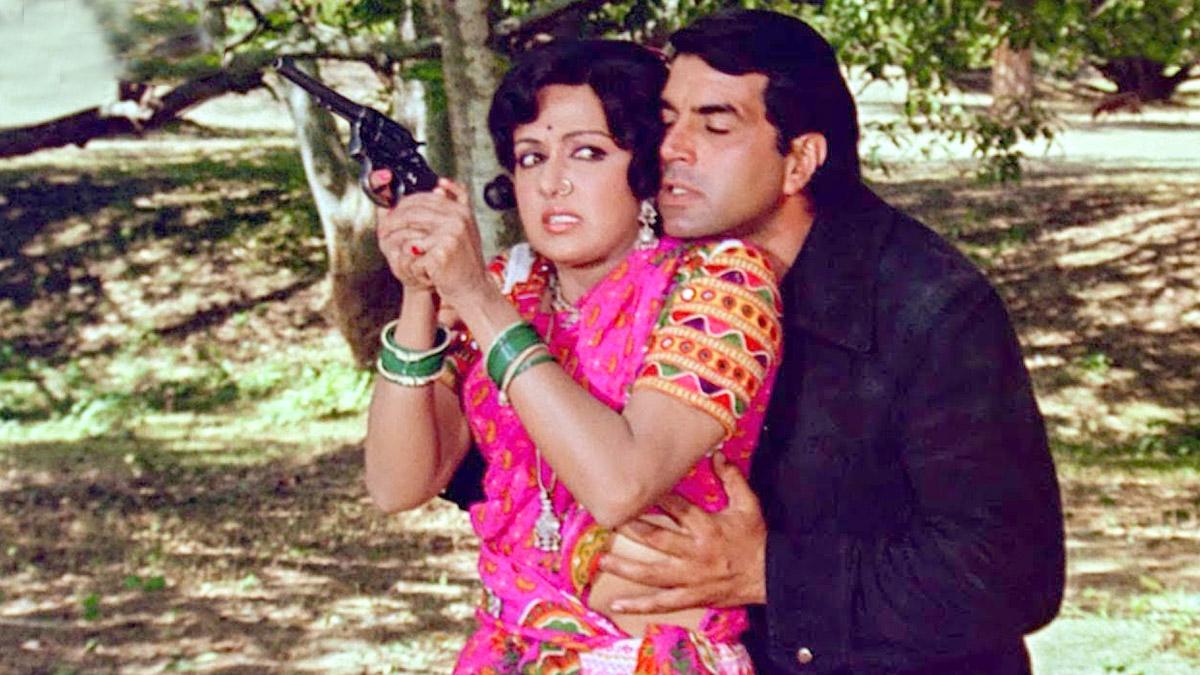
Apurva Asrani was only 19 when he won the Filmfare award for Best Editing for Ram Gopal Varma's Satya, following up with a National Award for Sunhil Sippy's Snip! and the Screen Award for Hansal Mehta's Shahid.
Besides being an editor, he is also the screenwriter of Hansal's critically acclaimed film, Aligarh, and the much-appreciated OTT series, Criminal Justice: Behind Closed Doors.
Speaking to Rediff Senior Contributor Roshmila Bhattacharya, he points out that the actual plot of Sholay unfolds only 37 minutes into the three-hour-10-minute film.
"It would be hara-kiri if a screenwriter put this build up on paper today, he would be certified crazy. But Salim Khan and Javed Akhtar pulled it off because of the surprise twists in their screenplay which is reflected in M S Shinde's editing."
'Sholay's Samba, Mac Mohan, was our neighbour'
I first saw Sholay as a child when I was six or seven years old.
My parents, both film buffs, met in a theatre in Bengaluru when they went to see Sholay and found themselves seated next to each other.
Mom didn't understand Hindi so dad translated the dialogues for her in English.
Ramesh Sippy's film is an integral part of my parents' cute love story, which I chronicled in Tera Mera Pyaar, a Kumar Sanu music video starring Nimrat Kaur and Bhanujeet, which I directed.
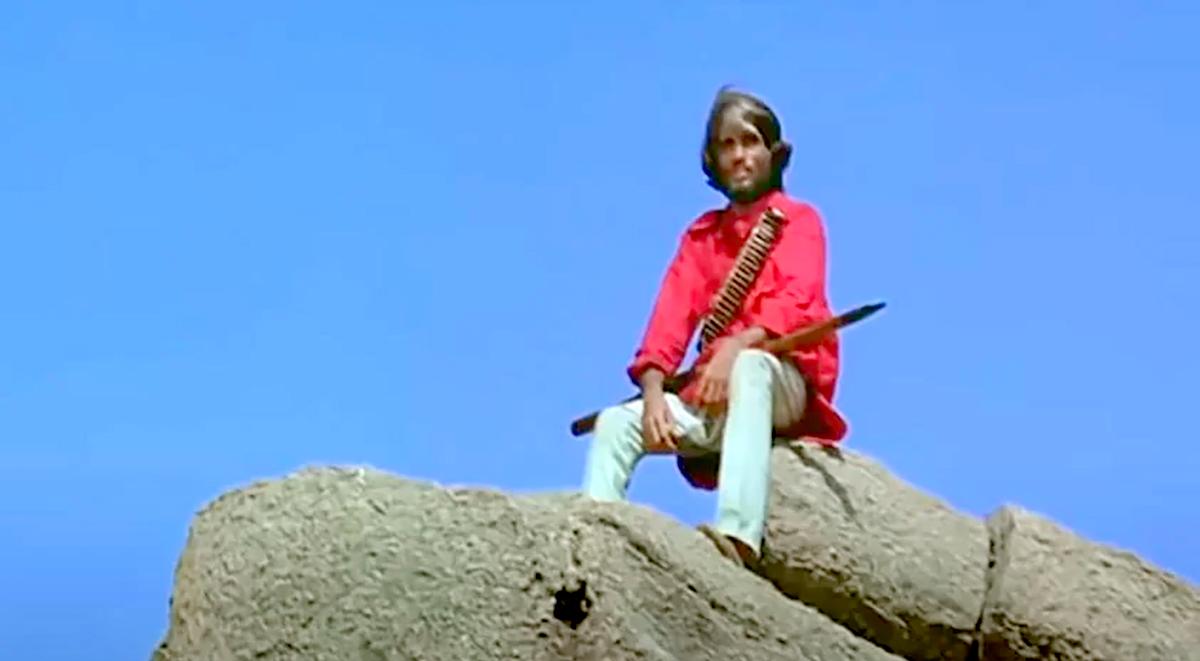
It has another connection with our family: Sholay's Samba, Mac Mohan, was our neighbour.
He gives the answer to Gabbar Singh's query: 'Arre O Saambha... kitna inaam rakkhe hai sarkaar ham par?'
Samba's only dialogue in the film, 'Purey pachaas hazaar' made him famous for life.
'Ramesh Sippy gets the credit for Indianising the Hollywood template'
Over the years, I must have seen Sholay at least six-seven times, the last being just a few days ago.
I clocked it this time and realised that the actual plot unfolds 37 minutes into the three-hour-10-minute film.
It would be hara-kiri if a screenwriter put this kind of build-up on paper today; he would be certified crazy.
But Salim Khan and Javed Akhtar pulled it off because of the surprise twists in their screenplay which is reflected in M S Shinde's editing.
Ramesh Sippy gets the credit for Indianising the Hollywood template.
Unlike the Hollywood westerns which, for me, get a little repetitive and boring with all the non-stop action, Sholay is wholesome entertainment.
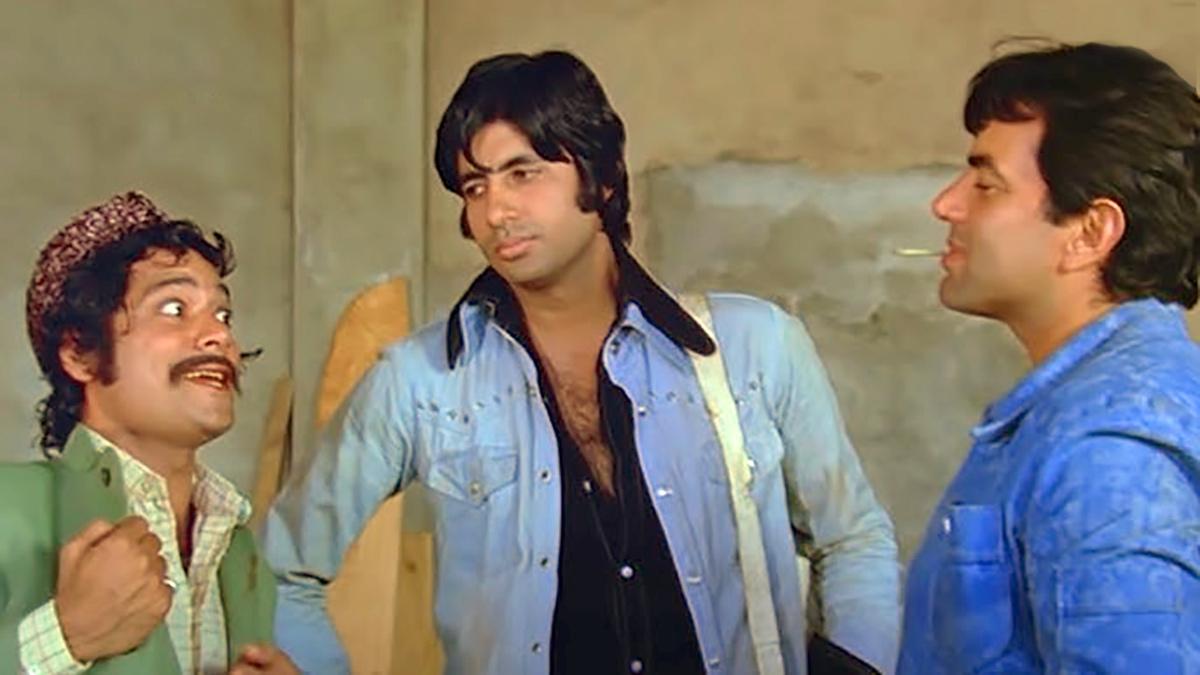
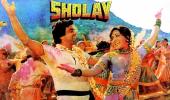
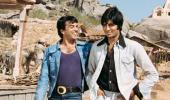
Along with the maar dhaad, there's a conventional love story blossoming between the carefree Veeru and the talkative Basanti, along with a simmering romance between the laconic Jai and the widowed Radha.
There are songs and dances too, and some great comedy tracks, like Jagdeep's Soorma Bhopali and Asrani's Hitlerian jailor, Jai's exchange with mausi and Veeru drunkenly threatening to commit 'soocide' from the top of the water tank, which make you laugh and give you a sense that all is well before shocking you with an attack or a killing.
'You are afraid to take your eyes off the screen even for a moment'
Sholay redefined mainstream cinema.
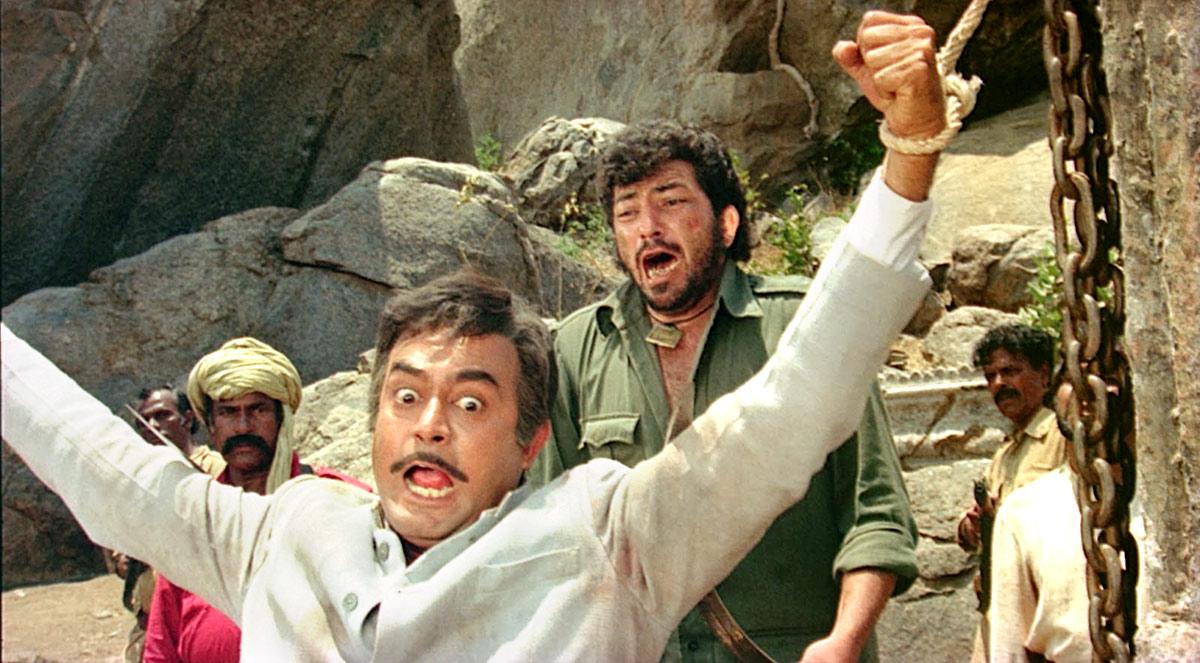
The film is never predictable. Even a song like Mehbooba Mehbooba builds up to a crescendo with Helen's stunning moves, and then, when you are waiting for R D Burman's final beat, there's an explosion as a bomb goes off.
You are afraid to take your eyes off the screen even for a moment because you don't know when the next plot point will be fired at you.
One of my favourite sequences is the attack on Jai and Veeru by Gabbar Singh that abruptly interrupts their Holi revelry.
While the duo successfully drives the dacoits away, they are upset with Thakur Baldev Singh for standing by silently and letting them get almost killed by refusing to pick up the gun lying at his feet.
Accusing him of having turned soft and cowardly, they are ready to dump his assignment and leave Ramgarh when Thakur launches into a stylised, atmospheric flashback detailing the bloody massacre of his family on another Holi day.
It ends with Gabbar Singh capturing him and demanding his pound of flesh, 'Yeh haath humko de de, Thakur.'
But just when the swords he is brandishing descend and you flinch, waiting for mutilation, the camera cuts.
You reel back to the present as the shawl Thakur always has wrapped tightly around him slips to the ground, revealing his amputated arms.
His widowed daughter-in-law Radha, the only survivor of the carnage, quietly picks up the shawl and puts it on his shoulders.
Together, they silently walk away from the village square, leaving you as shell-shocked as Jai and Veeru because not for a moment did you suspect that something so horrific had happened to fuel Thakur's vengeance.
And it's intermission!
'The violence is always implied...'
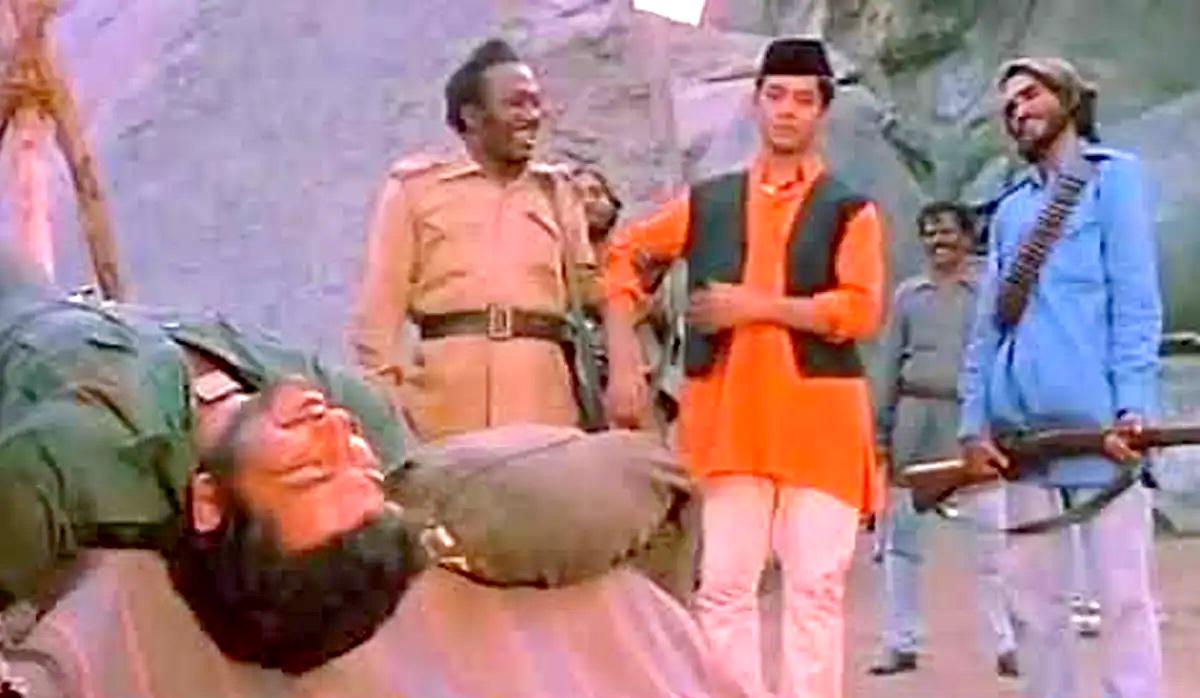
Sholay is a masterclass in storytelling, stylishly executed, the action going hand-in-hand with the cinematography, the choreography and the sound design.
Perhaps it was the need of the hour, given that the film released in 1975, during the Emergency, but the violence is always implied.
Ramesh Sippy had to even change the original ending because the censors found it too gory.
Not only is Thakur amputated without even a drop of blood spilling, even the imam's teenage son, Ahmed, is killed off camera.
The violence is seen through Gabbar squashing an ant, sparing you the agony of seeing his bloodied face from up close.
Even the scene where Thakur sees his dead grandson, reaches out to gently pull the sheet away from his face and you cringe, Dwarka Divecha's camera zooms in on his enraged face, never once revealing the dead body but implying the horror.
This inter-cutting of shots, showing rare sensitivity, not only ups the pace of the narrative, but also plays with the viewer's mind, keeping them engaged and on the edge of their seats.
'The film was literally made in the editing room'
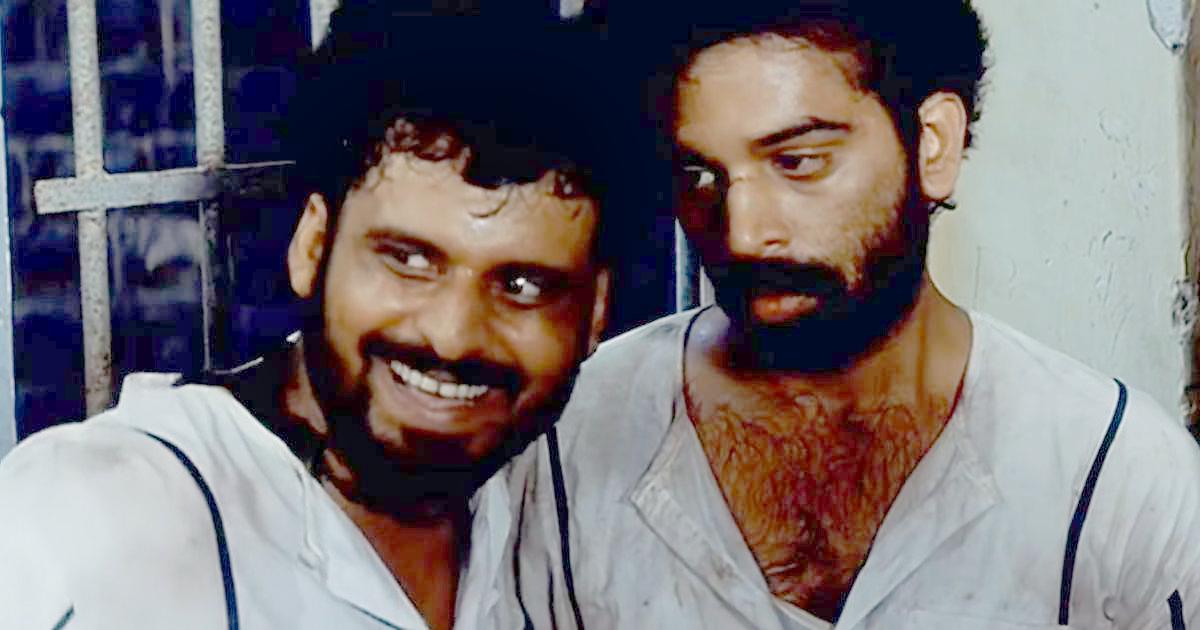
When Satya was being planned, Ramuji (Ram Gopal Varma) insisted I watch Sholay.
He wanted me to follow the same cat-and-mouse technique while cutting the footage -- building up the scenes in such a way that you never know when the gun will be fired.
Satya, which released more than two decades later in 1998, won Bhanodaya and me the Filmfare Award for Best Editing.
Incidentally, the only Filmfare Award Sholay won was for Best Editing.
M S Shinde deserves full credit because, I'm told, Ramesh Sippy had shot 300,000 feet of footage, which was brought down to 18,000.
The film was literally made in the editing room.
Had he chosen shots other than what we see on screen, it might have been a different film.
The film is a tribute to Shinde's patience, hard work, creative genius and yes, his invisible craft.
This man, in a career spanning three decades, edited more than 100 Hindi films, including blockbusters like Raaz, Brahmachari, Seeta Aur Geeta and Sohni Mahiwal.
His last films in 1995 were two Shah Rukh Khan starrers, Ramesh Sippy's Zamana Deewana and Rajiv Mehra's Ram Jaane.
He died in 2012, in a 126 square foot flat in Dharavi, (north central Mumbai) penniless, a forgotten hero.







 © 2025