
The banking, financial services and insurance (BFSI) sector has moved back into focus for investors this calendar year, after lagging the broader market for two consecutive years.
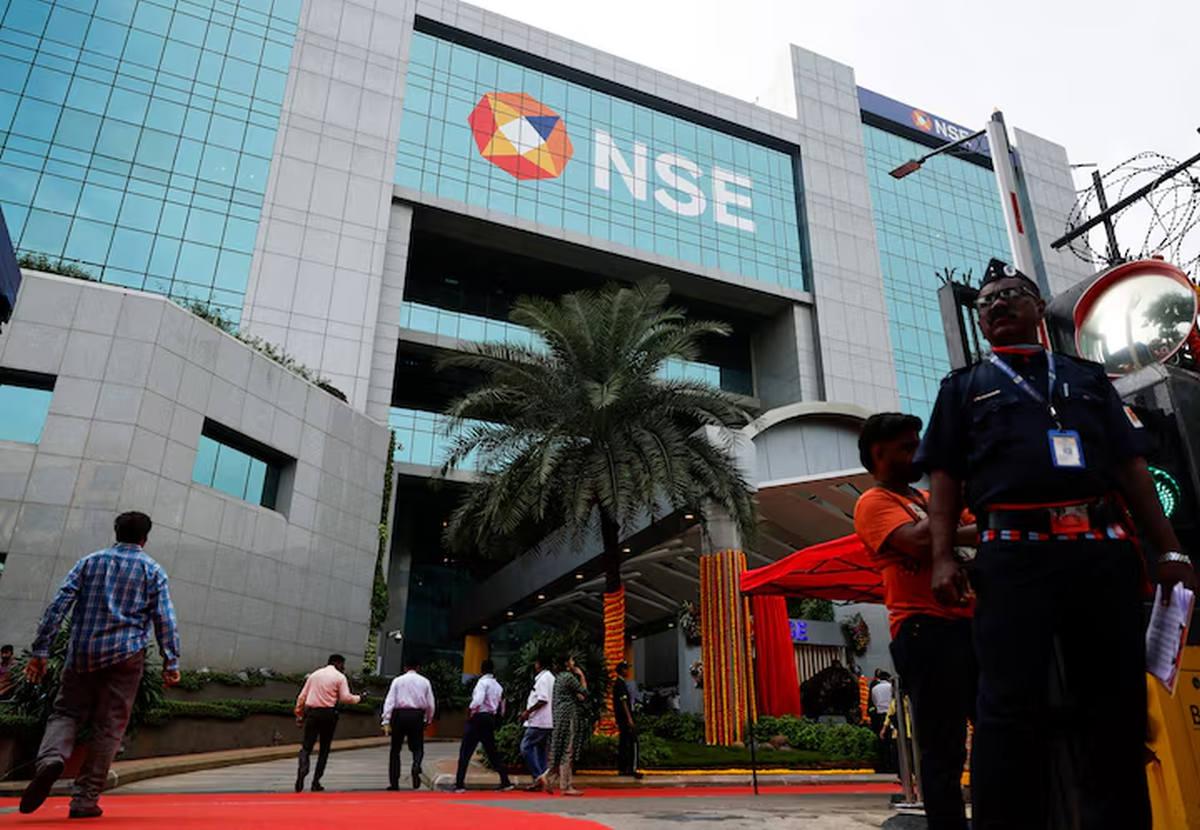
BFSI stocks have outperformed benchmark indices in 2025 so far, driving a steady rise in the sector’s weighting within the Nifty 50 index.
The BFSI sector’s weighting in the index has climbed to 35.4 per cent, up from 33.4 per cent at the end of December 2024 and 34.5 per cent at the end of December 2023.
At the end of 2022, the value was 36.7 per cent.
Furthermore, the sector’s current weighting remains below the record 40.6 per cent reached in December 2019.
The NSE Nifty Bank index, which tracks the market capitalisation of the country’s top 12 banks, has risen 14.8 per cent year-to-date in 2025, compared with around 10 per cent increase in the Nifty 50 over the same period.
In 2024, the Nifty Bank had gained 5.3 per cent, trailing the broader benchmark’s 8.8 per cent advance, while in 2023 it rose 16.9 per cent versus the Nifty 50’s 20.6 per cent.
The bank index closed at 58,385 on Wednesday, up from 50,860 at the end of last year.
The Nifty Financial Services index — which includes non-banking lenders and insurance companies alongside banks — has performed even better, advancing around 17 per cent so far this year, outperforming the benchmark by more than 700 basis points.
It also marginally beat the broader market in 2024, rising 9.4 per cent, though it had underperformed by nearly 470 basis points in 2023.
The index closed at 27,588 on Wednesday, up from 23,513 at the end of December 2024.
Banks continue to dominate the BFSI landscape. The country’s top five listed lenders — HDFC Bank, State Bank of India, ICICI Bank, Axis Bank, and Kotak Mahindra Bank — all part of the Nifty50, account for 71 per cent of the combined market capitalisation of all 11 BFSI stocks in the index.
Their dominance is even starker on a free-float basis, where they represent 81.4 per cent of the sector’s market capitalisation.
This is significant, as index weights are determined by free-float rather than total market capitalisation.
Market analysts attribute the BFSI sector’s outperformance, particularly among banks, to technical factors such as sector rotation by institutional investors, rather than superior financial results.
“Large private sector lenders gained from a shift in institutional money away from the troubled IT services and FMCG sectors -- traditional defensives.
"Many long-only funds rotated into banks and non-banking lenders as growth uncertainty and volatility rose in those sectors,” said Dhananjay Sinha, co-head of research and equity strategy at Systematix Institutional Equity.
The shift was aided by historically low valuations for major lenders at the end of last year.
The Nifty Bank’s trailing price-to-earnings multiple had fallen to 13.2 times in December 2024, its lowest since 2023, while the price-to-book ratio slipped to 2.09, the lowest in four years.
Attractive valuations and a lack of negative earnings surprises made BFSI appear a defensive haven for fund managers.
The sector’s renewed strength has come largely at the expense of IT services and FMCG, both of which have seen their index weighting shrink sharply in 2025 as investors have turned increasingly bearish on them.












 © 2025