
Indian stock market benchmark indices Sensex and Nifty closed higher for the second consecutive day, driven by robust foreign fund inflows, better-than-expected Q2 corporate earnings, and a sustained moderation in crude oil prices.
Indian stock market benchmark indices Sensex and Nifty rallied significantly in early trade, driven by robust foreign fund inflows, better-than-expected Q2 results, and a sustained moderation in crude oil prices. The 30-share BSE Sensex jumped 1,097.33 points, while the 50-share NSE Nifty rallied 274.30 points. Track Sensex, Nifty on November 11.

Indian benchmark indices, Sensex and Nifty, extended their rally in early trade, driven by strong buying in bank stocks, Reliance Industries, and positive global cues, despite foreign institutional investors offloading equities.

Indian benchmark indices Sensex and Nifty experienced a significant drop in early trade, primarily due to a sell-off in IT stocks, a surge in crude oil prices, and investor caution ahead of the US Federal Reserve's policy decision.

Indian benchmark indices, Sensex and Nifty, experienced declines in early trade due to persistently high crude oil prices and significant selling pressure in IT stocks, with global factors like US bond yields and upcoming Federal Reserve decisions also contributing to cautious investor sentiment. Track Sensex, Nifty on October 27.

Crude oil prices are set for another volatile week with an upward bias, as ongoing US-Iran negotiations and heightened geopolitical risks, particularly concerning energy shipments through the Strait of Hormuz, continue to influence the market, according to analysts.

Indian benchmark indices Sensex and Nifty experienced declines in early trade, ending a two-day rally, driven by a spike in Brent crude oil prices above USD 101 per barrel and investor caution ahead of the Reserve Bank of India's monetary policy decision. Track Sensex, Nifty on October 7.

Analysts predict that developments in the West Asia conflict, crude oil prices, and upcoming US inflation data will be the primary factors influencing the Indian stock market next week, alongside foreign investor activity and global market trends.
Indian benchmark indices Sensex and Nifty rebounded on Wednesday, driven by a decline in crude oil prices below USD 100 per barrel and optimism surrounding a potential de-escalation of the conflict in West Asia.

Indian benchmark indices, Sensex and Nifty, experienced a significant drop in early trade, with the Sensex falling over 600 points, primarily due to crude oil prices surging past the USD 100 per barrel mark and weak global market trends. Track Sensex, Nifty on September 24.

Indian benchmark indices Sensex and Nifty experienced a significant slump in early trade, mirroring a bearish trend in global equities, as escalating conflict in West Asia drove up crude oil prices and intensified investor concerns.
Indian benchmark indices Sensex and Nifty experienced significant declines in early trade, driven by soaring crude oil prices amidst escalating tensions in West Asia, coupled with weak global market trends and foreign fund outflows.

Indian benchmark indices, Sensex and Nifty, experienced declines in early trade due to elevated crude oil prices, escalating US-Iran hostilities, and renewed concerns over a potential US interest rate hike.

Indian stock markets, including the Sensex and Nifty, experienced a significant tumble in early trade, driven by escalating tensions in West Asia that pushed crude oil prices close to the USD 100-per-barrel mark, alongside selling in IT stocks and fresh foreign fund outflows.

Indian benchmark indices Sensex and Nifty opened higher, driven by a significant drop in crude oil prices and a positive trend in global equities, with foreign fund inflows further bolstering domestic markets.
Indian benchmark equity indices closed higher on Thursday, with the Sensex gaining 273.55 points to 77,928.15 and the Nifty rising 66.95 points to 24,317.15, driven by bargain hunting and short-covering in IT and auto sectors.

Crude oil futures surged over 3 per cent, snapping a three-session losing streak, as renewed military escalation in West Asia revived fears of supply disruptions, driving prices higher on both domestic and international exchanges.
Indian benchmark indices Sensex and Nifty saw declines in early trade, influenced by elevated crude oil prices stemming from renewed geopolitical uncertainties, particularly concerns surrounding the Strait of Hormuz. Track Sensex, Nifty on August 11, 2026.

Crude oil prices reached a new record high in futures trade, both domestically and internationally, as escalating military tensions between the US and Iran in West Asia continue to fuel market volatility. Diplomatic efforts concerning the Strait of Hormuz are being closely watched for potential price stabilisation.
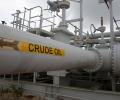
Crude oil prices experienced a significant drop following the announcement of a US-Iran ceasefire and the reopening of the Strait of Hormuz, leading to heavy selling by traders.

Crude oil prices have surged to record highs due to escalating tensions between the US and Iran, raising concerns about supply disruptions and market volatility.

Crude oil prices experienced a sharp decline after US President Donald Trump announced a temporary halt to military strikes on Iran's energy infrastructure, easing geopolitical tensions and supply disruption fears.

Live updates on the US-Israel-Iran war: Trump escalates threats, Iran retaliates, and oil prices surge as the Strait of Hormuz crisis disrupts global markets.

Bessent indicated that the U.S. is evaluating the status of Iranian oil as the current campaign progresses.

Egypt, Pakistan, Saudi Arabia and Turkey met in Islamabad in what analysts say is the formal opening of a new diplomatic formation that could reshape the post-war regional order. Their immediate goal is a ceasefire; their larger ambition is to ensure that neither Iran nor Israel emerges from this war in a dominant position. Pakistan's foreign minister then flew directly to Beijing and mooted a Chinese role as guarantor of any eventual agreement. Prem Panicker continues his must read daily blog on the Gulf War.
'Indian refiners can operate without Russian crude from a technical standpoint, but the shift would involve major economic and strategic trade-offs'

TCS will acquire 20.67 per cent in WTI Advanced Technology for which it has reached an agreement with the International Finance Corporation, the private lending arm of the World Bank.
India's purchase of US crude oil has picked up in 2025 and could easily double their previous levels, government officials said on Wednesday. The surge comes in the wake of the then-incoming Donald Trump administration's announcement that it would consider hiking tariffs on a reciprocal basis, and pushed some countries, especially those with large trade surpluses with the US, to buy more of its energy.

Even as Russia and West Asia have been slugging it out for market share in India to sell their crude oil, the US is quietly making its moves on the sidelines. The US has doubled its share of the Indian crude market in the past few months, according to industry sources and ship-tracking data. Some of the increase in America's market share may have come at the expense of Russia, India's biggest crude oil supplier, said industry sources.
Crude oil shipments from the US to India rose to the highest levels in November since the conflict began in Ukraine in late February, sparking hopes of a resurgence in oil flows from the US to the subcontinent, reveals shipping data. Shipments from the US have surged as Western nations prepare to impose additional sanctions on Russian crude flows. The US shipped around 450,000 barrels per day of crude last month to India, twice that of shipments in October, according to data from London-based commodity intelligence provider Vortexa.

'We expect market consolidation and recommend buying during market dips.'

If the war in the Israel-Gaza region escalates into a larger West Asian conflict, it could pose problems.

The Oil prices have surged and surpassed $85 per barrel after several oil producer countries announced surprise cuts in production, TASS Agency reported. According to the Russian News Agency, this is the first time since March 7 that the price of futures contracts of Brent crude oil surged. The price of futures contracts of Brent crude oil for June 2023 delivery on London's ICE surpassed $85 per barrel.

IndusInd Bank was the top laggard in the Sensex pack, sinking over 12 per cent, followed by Bajaj Finance, ICICI Bank, Axis Bank, M&M, Tata Steel, ONGC and Maruti. On the other hand, Bharti Airtel, Hero MotoCorp and Nestle India were the gainers. NSE Nifty plummeted 280.40 points, or 3.03 per cent, to 8,981.45.

A swift recovery in oil demand in India is not only helping the stability of the global market, it is giving huge fiscal headroom to the government in terms of additional excise duty.

Park officials said the striped cat, possibly a female, was spotted at 8.30 am near the national highway along the southern edge of the national park.

Stating that the economic costs of shutdown of the global economy are accumulating rapidly, Moody's projected that all G-20 advanced economies would contract by 5.8 per cent in 2020.

American refiners closed some of their production, leading to futures trade benchmarked to the West Texas Intermediate going negative.

Centre for Wildlife Rehabilitation and Conservation staff rescued rhinos, elephants, hog deer and even a tiger from the floods in the Kaziranga National Park.

A government official said out that with hardly any economic activity, an immediate duty hike will not be productive and could be announced once the lockdown eases and demand revives.
