
Finance Minister Pranab Mukherjee on Monday said adverse global economic developments, including the fallout of downgrade of the United States sovereign rating, present new opportunities to India and the country could become a source of stability for the world economy.
Once the envy of the world, these nations are now posing a threat to the world economy.
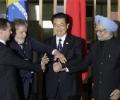
BRICS countries - Brazil, Russia, India, China and South Africa - should combine their "huge potential" to better coordinate on issues such as the world economy, the democratic and equitable world order and global governance reform, Singh told China's Xinhua news agency.
Emerging economies will take the centre stage in terms of GDP (PPP) growth by 2020.

In September, industrial growth fell to just 1.9 per cent, its lowest in two years. Inflation is at 9.73 per cent, its 10th month above nine per cent.

Protectionism and a rollback of regulation. Defusion of tensions with Russia and a lowering of geo-political risks. Looser fiscal policy and tighter monetary policy. At least Donald Trump can't be faulted for not trying something different where existing policies have disappointed, says T T Ram Mohan.
From World Bank to APEC, there are many financial institutions charged with keeping the global economy chugging.
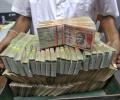
The rupee ended lower by six paise at 65.73 against the US dollar on Monday.
Most Asian markets are also trading in the negative over deepening concerns that the euro zone's debt crisis will dampen global growth
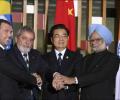
BRIC countries -- Brazil, Russia, India and China -- are expected to contribute one-third of the world's GDP increment in 2015, by which time their total economy will surpass America, according to a leading Chinese think tank.
Some emerging nations like India and China, however, are also facing the challenges of huge capital inflows and overheating.

The members resolved to foster a global economic governance architecture that is more effective and reflective of current global economic landscape
The crisis in Europe and the US and the short-sightedness with which it has been handled is enough to make people lose faith in governments across the world.

The global economy is projected to expand by 4.2 per cent this year, but rising oil and commodity prices and European debt crisis could hurt the overall recovery, according to Paris-based think-tank OECD.

Talking corporate heads are a barometer of the business community's engagement with the economy. If they have nothing to say now there should be cause for concern.
India's gross domestic product made a significant recovery, growing by 5.8 per cent in the January-March quarter as compared to 5.3 per cent in the previous quarter.

Top business leaders see a host of potential dangers facing the world economy - ranging from asset bubbles in emerging market countries to soaring world commodity prices and huge levels of state debt in Europe.
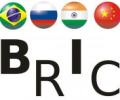
BRIC economies are currently worth around $11-12 trillion.

Sustained FII inflows and fresh spell of buying by domestic institutional investors fuelled the rally
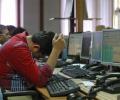
The laggards in the Sensex kitty were Vedanta, Tata Steel, M&M, HCL Tech, Bharti Airtel, Maruti Suzuki, L&T, Asian Paint and HDFC

The Geneva-based World Economic Forum would be playing host to 1,400 from top 1,000 companies around the world, 30 heads of states or governments, renowned academicians, artists and the faith leaders, including head of the Chinmaya Mission in New Delhi.

Quantitative easing and money printing is going to cause the world some problems.
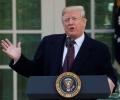
'We're not going to give up hundreds of billions of dollars in orders and let Russia, China and everybody else have them. It's all about -- for me -- very simple, it's America first'

Modi for completion of IMF quota reforms at earliest

The central bank maintained its bias towards a rate hike.
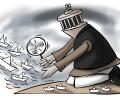
A combination of externalities such as global trade wars and slowing growth, continuing glitches in accessing offsets under the GST regime, which has created a liquidity crunch for smaller exporters, and the growing competitiveness of smaller countries are causing the slowdown.
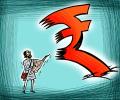
Barry Eichengreen, professor of economics and political science, University of California, Berkeley, analyzes the transparency of the Reserve Bank of India, the growth rate of the Indian economy and why he feels globalisation can never be rolled back.

India and China have not ruled out a Modi-Xi meeting during the summit.
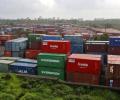
Imports too dipped by 23.1 per cent to $25.41 billion in the month under review as against $33 billion in April 2015.

Indian policy makers will have to evolve an exit strategy that maintains high growth with price stability.

According to the RBI report, the unrest in the global economy continue, it can impact the jobs in the country's labour-intensive sectors and may even affect domestic demand.

Shaktikanta Das said in Washington, DC, that there was nothing sacrosanct about the 25 bps rate cut and that monetary policy could be well served by calibrating the size of the policy rate to the dynamics of the situation, and the size of the change itself could convey the stance of policy.

India retains the tag of the fastest growing country among the world's major emerging economies

US continues to lead efforts to shake loose the economic promise of an agreement with real market access for all involved.
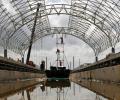
On the back of ongoing reforms and stress on manufacturing, India. he said, can look for much bigger share in global exports.

The global financial crisis has hit the realisation of Millennium Development Goals hard with loss of employment and food inflation slowing down the progress and an additional 64 million people expected to be thrown into extreme poverty by 2010-end relative to a no-crisis scenario.
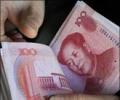
China can maintain its currency undervaluation practices only at the risk of global macroeconomic imbalances, says Dani Rodrik.
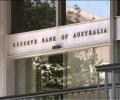
Reserve Bank of Australia said Indian economy has gradually strengthened over the past two decades and the Asian nation will continue to improve in the years ahead, The Australian reported.

'The fiscal deficit target of 3.9 per cent of GDP seems achievable.'

Despite the hue and cry, governments have imposed remarkably few barriers on imports
 © 2026 Rediff.com - Investor Information - Advertise with us - Disclaimer - Privacy Policy - Sitemap - Feedback - About us - Terms of use - Grievances