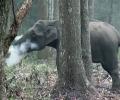
The mystery of the viral video has been solved.

A modern census technique used by Guwahati based bio-diversity conservation and research organisation Aaranyak has produced evidence of the presence of tigers in Namdapha reserve in Arunachal Pradesh.
India has been hailed for its 'unprecedented commitment' to save the endangered tiger by a prominent United States-based wildlife body.
Named after Arunachal Pradesh, where it was found, the Arunachal macaque -- a relatively large, brown primate with a comparatively short tail -- is described in a forthcoming issue of the International Journal of Primatology.

A new study has indicated that methods commonly used in censuses of tigers and other rare wildlife put the accuracy of such surveys in doubt.

Have India's tigers increased by 30 per cent in the last four years?

Close on the heels of Kenya, which recently set on fire over a hundred ton of its ivory stockpile, experts in India are mulling a similar provision to destroy the "white gold" to send a strong message against poaching.
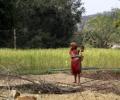
The government may claim planted trees compensate for forests lost, but that does not mean complex flora and fauna destroyed have been restored, points out Himadri Ghosh.


'We are rushing to 'develop' without carefully valuing natural areas.' 'With careful land use planning and scientific zonation at least 5 to 10 per cent of the country's land can be secured for tigers and other such species, and another 5 to 15 per cent kept under low-impact uses to support biodiversity that can coexist with human uses.'
 © 2026 Rediff.com - Investor Information - Advertise with us - Disclaimer - Privacy Policy - Sitemap - Feedback - About us - Terms of use - Grievances