
Even as non-life insurers reported muted premium growth in October, standalone health insurers saw a robust 38 per cent year-on-year (Y-o-Y) surge. This growth was driven by pent-up demand in the retail health insurance segment.
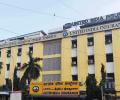
The NITI Aayog has recommended privatisation of state-owned insurer United India Insurance Company as the government aims to move ahead with its new public sector enterprise (PSE) policy for Atmanirbhar Bharat. The policy think tank has suggested that the public sector insurer be considered for privatisation in the banking, insurance and financial services sector, which has been classified as 'strategic' in the PSE policy, said an official. The policy proposes the "bare minimum" presence of government-owned companies in strategic sectors, and privatisation, merger or closure of remaining public sector undertakings (PSUs).

United India Insurance Company plans to enter the West Asia and South Asian Association for Regional Cooperation countries to tap the potential in these regions due to a presence of a large India diaspora.

The four public sector general insurance companies -- New India Assurance, United India Insurance, Oriental Insurance, and National Insurance Company -- have lost 800 basis points (bps) in market share in last five years to their private counterparts, the data from the Insurance Regulatory and Development Authority (Irdai) revealed. In 2018-19, the four had a cumulative market share of 40.04 per cent, with New India Assurance having a market share of 14 per cent and United India Insurance with a market share of 9.63 per cent. But, gradually in the past five years, these state-backed firms have lost their market share to private sector players, due to the declining health of their business.

The Commission concluded that the bank officials had evidently been negligent in failing to compare the signature prior to making payment, notes Jehangir B Gai.

Five state-run general insurance companies have a total exposure of Rs 347.64 crore, or 0.14 per cent of their total assets under management (AUM), in Adani group of companies, the finance ministry said on Monday. In a written reply to a question by Congress' Manish Tewari, Minister of State for Finance Bhagwat Karad said Life Insurance Corp (LIC) held Rs 35,917.31 crore in debt and equity of Adani group of companies as on December 31, 2022. This is 0.97 per cent of its total assets under management (AUM) of Rs 41.66 trillion.

The government has not set up any committee to probe allegations a US short seller labelled against the Adani Group, but stock market regulator SEBI is investigating market allegations against the group, the Lok Sabha was informed on Monday. A separate investigation into imports of Indonesian coal by the conglomerate hasn't reached finality, Minister of State for Finance Pankaj Chaudhary said. Lok Sabha saw several questions being put by MPs to the government on the Adani issue, which were replied through written responses by the minister.

The Centre's push to sell Air India on priority has led to delays in other strategic divestment proposals, such as privatising United India Insurance, as well as ongoing transactions, such as Shipping Corporation of India (SCI) and Bharat Petroleum Corporation (BPCL), revealed multiple officials involved in the process. The Department of Investment and Public Asset Management (DIPAM) is yet to take new privatisation recommendations of the NITI Aayog to the core group of secretaries on disinvestment (CGD) headed by the Cabinet secretary, said one of the officials. The priority now is to ensure all approvals for Air India are in place since the government intends to hand over the national carrier as early as this month.

Multiple reasons accounted for the losses, including manpower crunch and lack of clarity on the merger of National, United and Oriental, reports Namrata Acharya.
The Rs 12,450 crore capital infusion will enable the three public sector general insurance companies to improve their financial and solvency position, meet the insurance needs of the economy, absorb changes and enhance the capacity to raise resources and improve risk management.

According to the third batch of supplementary demands for grants tabled in the Lok Sabha, approval is being sought for gross additional expenditure of over Rs 1.58 lakh crore.

The Union Cabinet has approved amendments to the General Insurance Business (Nationalisation) Act, paving the way for privatisation of government-owned insurers. The amendments, approved by Cabinet, will remove the clause for the Centre to hold at least 51 per cent in public sector insurance companies at any given time. It will also have an enabling provision for the transfer of management control from the government to the potential buyer of the public sector insurance company. The finance ministry will move amendments to the insurance Act in the ongoing Parliament session.

Employees of public sector general insurance (PSGI) companies are observing nationwide one-day strike on Wednesday to protest against intended privatisation of state-owned insurers. The Joint Front of Trade Unions in PSGI companies met on Monday and decided to protest against the decision of the government to privatise PSGI companies. The unions have given a call for one-day strike against the passage of the General Insurance Business (Nationalisation) Amendment Bill 2021 in the Lok Sabha, General Insurance Employees All India Association general secretary K Govindan said. Employees of all four PSGI companies are participating in the day-long strike, he said.

'The plan is to secure nod of the Union Cabinet and other relevant regulatory approvals within the next three months,' a senior finance ministry official said, requesting anonymity.

Rates fixed by New India Assurance, Oriental Insurance, United India Insurance and National Insurance after long discussions have been agreed to by the corporate chains

Merely stating that parking was 'at owner's risk' would not absolve the hotel of its liability.

At present, the Insurance Bill is under the consideration of Select Committee of Parliament.

There are four public sector general insurance companies.

New India Assurance, National Insurance and United India Insurance are following Oriental Insurance Company in raising health insurance premium rates by 50 to over 100 per cent.

While the four general insurers will have equal stake in the TPA, Life Insurance Corporation and General Insurance Corporation might hold a less stake.

The finance ministry has asked state-run general insurers to increase premiums on health insurance, motor and other policies, and refrain from undercutting each other to get new business.

United India Insurance chief G Srinivasan has taken up the additional charge of CMD.

Since no insurance companies share data on their claims with each other, the finance ministry and Irdai suspect that a lot of the resultant claims are duplicates.

insurance firms need to look at solutions like co-payment to help reduce their rising losses.

At present, the rules do not allow the government to shed stake in the four public sector general insurance companies - New India Assurance, United India Insurance, National Insurance and Oriental Insurance.

After the Chennai floods, insurance companies had got 50,000 claims worth Rs 4,800 crore.

Motor insurance is expected to generate largest claims for the companies whereas for crop insurance, the Agriculture Insurance Company is expecting claims of about Rs 15-16 crore
The top-up policy is cost effective for both users and companies.
Sources close to the development said the three companies have sought permission from the Insurance Regulatory and Development Authority for new motor insurance products and are expected to launch the add-on covers in the first week of January. Add-ons are expected to be in the form of a replacement vehicle or payment on a daily basis when the vehicle is out for repair, and reduced or zero depreciation.
The insurance scheme of the United India Insurance was launched for the first time in the country at Sankarapuram panchayat in Sivaganga district on Sunday. Under the scheme, an individual would be charged Rs 300 a year as premium and Rs 545 for a family not exceeding five members, and Rs 600 for a family not exceeding seven members.
Public and private sector insurance companies are forming alliances to bid for state-run carrier Air-India's aviation cover worth $3.5 billion.
In a move that impacts long-term subscribers of medical insurance policies, leading insurers like Oriental Insurance Company and United India Insurance have stopped no-claim bonus for existing and new policy holders.
The Travancore Devaswom Board has insured the Sabarimala Ayyappa shrine for a value of Rs 30 crore (Rs 300 million) and also introduced a free-of-cost accident insurance project for pilgrims visiting the holy place.
Oil and Natural Gas Corporation has received Rs 864 crore (Rs 8.64 billion) in final settlement of an insurance claim for the oil facility at Mumbai High that was gutted in a fire in July 2005.

Companies think they are too big to bow before regulators.

'The target for next year is unlikely to be more than that of this year. The more you divest in any cycle, the less your potential pipeline for the next,' said an official. 'The first two issues we want to tackle and complete in FY20 are Air India and Hotel Ashok.'
 © 2026 Rediff.com - Advertise with us - Disclaimer - Privacy Policy - Sitemap - Feedback - About us - Terms of use - Grievances