
Sinha replaces former Sebi chairman C B Bhave who served as the head of the Asia-Pacific regional committee of IOSCO from June 2009 till February this year.
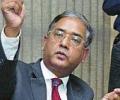
A 1976 batch IAS officer of the Bihar cadre, Sinha replaces C B Bhave who retires on February 17, 2011.
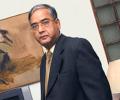
Under U K Sinha, Sebi became a pan-India organisation with local offices in 16 cities

Sinha started his tenure at Sebi a bit shakily making people wonder if he'd complete his three years. Eventually, he went on to stay twice that long.
U K Sinha's six-year tenure as chairman of Securities and Exchange Board of India ends later this week. Sinha held his last press conference in Mumbai on Monday, where he spoke on wide-ranging issues and his biggest regret.

A bench of justices S S Nijjar and P C Ghose dismissed a public interest litigation challenging the appointment of Sinha, observing that the petition was not maintainable on various grounds but it had decided to hear it as the appointment to a very senior position was challenged.

The second-longest serving chairman introduced quite a few measures for the primary market and implemented a new corporate governance framework.

The government on Monday appointed former Sebi member Madhabi Puri Buch as chairperson of the Securities and Exchange Board of India.

According to analysts, 11 PSUs, including Rashtriya Chemicals and Fertilizers and State Bank of Mysore, have government holding beyond the 90 per cent mark and the government will have to bring it down.

After unfavourable response to the safety net, Sebi considers instruments with an option of conversion into equity.
The education would help investors in protecting them from volatility in the equity market and also reduce volatility in individual stocks.

Expressing concerns over a fast-growing grey market in the financial sector, Sebi chief U K Sinha called for a single watchdog to regulate all entities collecting public money under various illegal means.
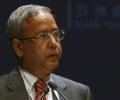
Due to present loopholes in the legislations, it is difficult for the regulator to curb dubious investment projects.
Move to make board accountable for performance appraisal.
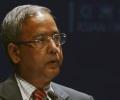
As per norms these companies should have minimum public float of 10 per cent by August.

Sinha recalled how Sebi started functioning as an independent regulator in 1988, when its first Chairman S A Dave picked up six officers from IDBI and began functioning from IDBI's office itself.

UP Sinha is the eighth Chairman of Sebi since its inception as an independent regulator in 1988, when the central government headed by then Prime Minister Rajiv Fandhi decided to give a boost to the stock market activities as part of its economic liberalisation drive.
Measures announced by Sebi will stimulate financial savings among households.

He is targeted because he is gone against corportates, says G E Vahanvati.

Sebi was also working on issues like the role of independent directors for board-level corporate governance, related party transactions and methodology for fixing of compensation of top personnel of companies.

In an interview with Business Standard, Sebi Chairman U K Sinha discusses investment advisory rules and how regulators are coming together to resolve issues.

The government is seriously considering strengthening of laws to regulate all kind of collective investment schemes.

Sebi chief U K Sinha questioned the credibility and feasibility of Shara's refund claims.
Concerned over the non-performance of some schemes over a long period of time, Sebi Chairman U K Sinha said that fund houses need to look into the matter and consider merger of some schemes.

The chairman said if companies want to raise money, they should follow rules of the game.

Sebi has directed promoters of all listed private sector companies to ensure they comply with minimum public holding of 25 per cent by June 2013.
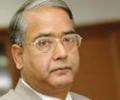
Petition was filed by former IAF chief S Krishnaswamy and retired IPS officer Julio Ribeiro.
Market regulator Sebi on Friday said it is yet to receive "all papers" in the high profile Sahara case where the Supreme Court has directed two group companies to refund money to bond holders.

Companies will not be able to access the capital market for at least one year if their IPO documents are rejected by market regulator Sebi, while managers of such public issues would also face penal action.

In an interview with Santosh Tiwari, Sebi Chairman U K Sinha also says he is not against consent orders, but is in favour of a predictable and transparent process.

Sebi Chairman U K Sinha has often chastised listed companies for not having enough women on their boards.
Market regulator Sebi has set a one-year target to complete investigations, saying that the long-drawn probe processes are a thing of past and manipulators can't escape the long arm of the law.
The court passed the order on a PIL filed by one Arun Kumar Aggarwal seeking quashing of Sinha's appointment.

The decision to quiz Sinha, as also former Sebi Chairman M Damodaran, was taken after examination of another former Sebi chief C B Bhave earlier this month, during which the agency sleuths were told that public interest was involved in grant of licence to MCX-SX to trade in currency derivatives.

Apart from consent orders, it has been decided to take fast and stringent action in surveillance and investigative cases in the coming months.
The latest request has been made by Sebi chairman U K Sinha after his predecessor C B Bhave failed at least twice in his attempts to secure an authorisation for Sebi to tap phone for its surveillance and investigative actions.
An electrical engineer by education and an IAS officer of 1975 batch, Bhave engineered and administered numerous changes in Indian markets ever since taking charge as Chairman of the Securities and Exchange Board of India on February 17, 2008.

Minority shareholders are disappointed after the Securities and Exchange Board of India (Sebi) increased the size of the mandatory open offer from 20 per cent to 26 per cent, ignoring the Achuthan panel's recommendation of giving all shareholders an exit option.

The Sebi chief said the exchange board has taken a number of measures in recent past.

Regulator proposes mutual fund model for infrastructure debt funds.
 © 2026 Rediff.com - Advertise with us - Disclaimer - Privacy Policy - Sitemap - Feedback - About us - Terms of use - Grievances