
Leading automakers in India, including Maruti Suzuki, Tata Motors, Mahindra & Mahindra, and Hyundai, reported increased vehicle dispatches to dealers in February, driven by sustained domestic demand.
Leading automakers in India, including Maruti Suzuki, Tata Motors, Mahindra & Mahindra, and Hyundai, reported increased vehicle dispatches to dealers in February, driven by sustained domestic demand.
Leading automakers Maruti Suzuki, Tata Motors, Mahindra & Mahindra, and Hyundai Motor India posted higher sales in January riding on the growth momentum ushered in by the GST reforms in the festive period last year.

Three additional vehicle makers and five more auto component makers will begin availing financial incentives under the production-linked incentive (PLI) scheme for the automobile sector from 2026-27 (FY27) onwards, Hanif Qureshi, additional secretary at the Ministry of Heavy Industries (MHI), said on Wednesday.

'The market is still very bullish. The demand is so strong that for eight models, we have no units in our factories to dispatch to dealers,' said Partho Banerjee, senior executive officer, marketing & sales, Maruti Suzuki India (MSIL).

Top carmakers led by Maruti Suzuki, Mahindra & Mahindra, Tata Motors Passenger Vehicles and Kia India on Saturday reported record sales in the domestic market riding on festive demand boosted by GST rate cut. Other manufacturers such as Skoda Auto India and Toyota Kirloskar Motor also posted impressive growth in sales in October.

With demand continuing to be strong post the festive season, leading automakers, Maruti Suzuki, Tata Motors and Mahindra & Mahindra, saw robust growth in sales in November as compared to the same month last year. Maruti Suzuki India reported the best-ever total sales, including exports, last month at 229,021 units, a year-on-year growth of 26 per cent as compared to November last year.

As of now, no firm has launched a flex-fuel vehicle in India, as these models are more expensive than comparable petrol-run vehicles.

Toyota Kirloskar Motor (TKM) has reported a consolidated net profit of Rs 4,787 crore for 2023-24 (FY24) - more than three times the earnings recorded the previous year. This growth can be attributed to robust demand for its vehicles, particularly hybrid models and cross-badged cars from the Toyota-Suzuki alliance.

Stock market sentiment is likely to remain optimistic going ahead, though some consolidation cannot be ruled out after the recent sharp rally in the benchmarks, analysts said. According to experts, the Nifty and Sensex could indeed move towards new record highs before the end of the year, if global cues stay supportive, crude oil prices remain benign and there is continued domestic earnings momentum.

After a record-breaking year, India's automobile industry is entering 2026 on a relatively strong footing, with sales growth expected in the 6-8 per cent range. The outlook is underpinned by policy support, including GST rationalisation, easing monetary conditions, and income tax relief, which together are likely to improve affordability and sustain consumer demand across vehicle segments.

Companies with "gas guzzlers" are trying to set up the wrong narrative against small cars getting relaxation in the proposed corporate average fuel efficiency (CAFE-III) norms on the basis of weight, Maruti Suzuki senior executive officer corporate affairs Rahul Bharti said on Monday, bringing to the fore deep division among carmakers regarding the upcoming rules.

Firm asks workers to sign undertaking; refuses to revoke suspension of 17.

Toyota Kirloskar Motor on Tuesday said it is recalling around 994 units of its recently launched mid-sized sports utility vehicle Urban Cruiser Hyryder to fix a faulty seat belt part. In a statement, the company said it has initiated a voluntary recall campaign for certain Urban Cruiser Hyryder units to investigate for a possible issue with front seat belt shoulder height adjuster plate assembly. Around 994 vehicles of the specified models may have been impacted by this concern, Toyota Kirloskar Motor (TKM) said in a statement.

Toyota Kirloskar Motor on Tuesday said it has lifted the lockout at its Karnataka (Bidadi)-based manufacturing plants.

The company said that as it expands in India, the team needs to take new roles and responsibilities.

Electric vehicle (EV) manufacturers breathed a sigh of relief after the GST Council on Wednesday night retained the concessional 5 per cent rate on EVs, though they now face competition from small petrol and diesel cars, which will attract a lower 18 per cent levy.

Toyota Kirloskar Motor (TKM) on Tuesday said the labour strike at its Bidadi-based manufacturing plant in Karnataka has come to an end. In November last year, the automaker had to declare a lockout at the facility following workers' union members resorting to a sit in strike at the factory premises to protest against the suspension of a worker.
Auto majors Maruti Suzuki, Tata Motors and Mahindra & Mahindra reported robust sales in September as reduced price tags owing to GST rationalisation led to record demand in the Navaratri period. The month also saw Tata Motors and Mahindra & Mahindra settling at number two and three positions, respectively in vehicle wholesales ahead of Hyundai Motor India.

Car-maker Toyota Kirloskar Motor today reported an 89.34 per cent increase in sales to 17,395 units in January, driven by robust demand for its latest 'Etios' and 'Liva' models.

The only other company working on hydrogen cars in India is Toyota Kirloskar Motor.

Toyota Kirloskar Motor is expecting a 58 per cent jump in revenues and a 3.6 per cent rise in sales for the current fiscal.
'The E20 usage accrues the huge benefit to the nation, to the society, to the farmer, to the environment, to the exchequer and all of us'

Japan is expected to increase its investment target in India from the earlier 5 trillion yen ($34 billion) to almost 10 trillion yen.
Leading automakers Maruti Suzuki, Hyundai, Mahindra, and Tata Motors saw a dip in dispatches to dealers in August amid dip in demand with many prospective buyers postponing their buys anticipating a reduction in vehicle prices on account of the new GST framework. The country's largest carmaker Maruti Suzuki India reported an 8 per cent year-on-year dip in dispatches of passenger vehicles in the domestic market last month.

"My understanding is that the rules are weighted in favour of big cars, even though smaller cars emit fewer emissions per passenger, use less material, and consume less fuel," Bhargava said in an interview with Business Standard.

'The reported deal between the European Union and China should mitigate it (shortage) for the medium to long term. Let's wait and watch how this plays out.'

Despite the benefits of hybrid technology, a lack of government backing and few launches have kept the segment from gaining ground.

Leading passenger vehicle maker Maruti Suzuki on Saturday reported marginal growth while Hyundai and Tata Motors posted a decline in their sales in February as a slowdown in the market continued with demand remaining muted. On the other hand, Mahindra & Mahindra and Toyota Kirloskar Motor posted double-digit growth riding on their SUV and MPV models.

Car market leader Maruti Suzuki India cut production of its passenger cars by 16 per cent last month but increased those of utility vehicles by 33 per cent compared to October 2023, according to a regulatory filing by the company. Its passenger cars production stood at 89,174 units last month against 1,06,190 units in October 2023, down 16 per cent, Maruti Suzuki India said in the filing.

Maruti Suzuki and Hyundai Motor India on Monday reported a dip in passenger vehicle dispatches to dealers in the domestic market last month as the companies tried to adjust vehicle inventory amid slowing demand. Maruti Suzuki India said it "calibrated supplies" to the dealers, aligning with the industry's retail sales projections amid India-Pakistan conflict and a dip in sales of entry-level cars.
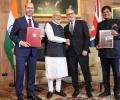
'That way you're not hostage just to US sort of exports to India.'

Amid challenging market environment, Maruti Suzuki India and Mahindra & Mahindra reported an increase in vehicle dispatches to dealers last month while Tata Motors and Hyundai saw a year-on-year drop in sales.

Amid slowing volume sales among India's major automakers, Toyota Kirloskar Motor (TKM) has defied the trend with strong growth, driven by demand for hybrid vehicles and a reliable product line up. The company expects this momentum to continue in 2025. "The overall response to our cars has been fabulous. So, we foresee the same momentum in 2025 as well," Sabari Manohar, vice-president, sales-service-used car business, TKM, said.

Sluggish urban demand, a high base effect, and weak sales of hatchbacks and sedans weigh down passenger vehicle sales in FY25.

Indian passenger vehicles market registered record wholesales of 43 lakh units in 2024, with companies like market leader Maruti Suzuki, Hyundai, Tata Motors, Toyota Kirloskar Motor, and Kia posting their best-ever annual domestic sales. The continued growth of SUVs, along with rural markets playing a key role in driving up car sales, helped the industry better the previous best of nearly 41.1 lakh units posted in 2023.
Auto majors report positive sales figs for November.

'We are not asking for incentives, but at least taxation can be aligned such that the rupee tax on consumers remains the same.'

Leading automakers Maruti Suzuki, Hyundai and Tata Motors reported decline in wholesales in August as the companies curtailed vehicle dispatches amid drop in demand and to cut inventories at dealer level. Market leader Maruti Suzuki India said its total domestic passenger vehicle wholesales were at 143,075 units last month as compared to 156,114 units in the year-ago month, registering a dip of 8 per cent. Sales of mini segment cars, comprising Alto and S-Presso, declined to 10,648 units last month as against 12,209 units a year ago.

The meltdown in Dalal Street that wiped out investor wealth to the tune of 44 trillion in 2025 also seems to be having a ripple effect on the country's vibrant automobile retail sales.
 © 2026 Rediff.com - Investor Information - Advertise with us - Disclaimer - Privacy Policy - Sitemap - Feedback - About us - Terms of use - Grievances